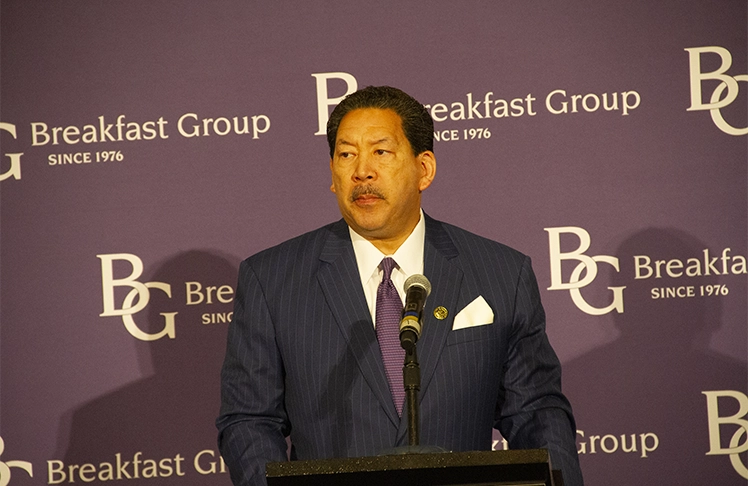
On Tuesday, Seattle Mayor Bruce Harrell has announced that the City of Seattle is seeking federal court approval to terminate the Seattle Police Department’s (SPD) consent decree, filing a motion that marks a major milestone in the city’s decade-long efforts to reform its policing practices.
According to Harrell, the City Attorney submitted the filing, which requests termination of the decree based on SPD’s record of improved training, policies, practices, and accountability.
“Over a decade ago, I supported the federal consent decree because we knew our police department could – and needed – to do better at living up to our highest values and aspiring to keep every person in Seattle safe,” Harrell said. “An end to the consent decree does not mean the work is done. What it does mean is that it is time to fully restore local control of our police department to our community.”
Seattle entered the consent decree in 2012 after a federal investigation found that 20% of SPD’s serious use-of-force incidents were unconstitutional. The agreement required broad reforms in policy, training, management, and operations, overseen by U.S. District Court Judge James L. Robart.
SPD Chief Shon Barnes said the department has transformed since then.
“Change doesn’t happen overnight, but I can say with confidence that SPD is not the same department that it was years ago,” Barnes said.
Barnes pointed to 2024 data showing SPD responded to 8,305 crisis incidents that year, with only 1.33% involving any use of force. Force was used in just 0.17% of all dispatches. In 2021, serious use of force occurred in only 0.003% of dispatches.
“These substantial changes are both real and measurable, and the data tells the story,” Barnes said.
The City’s filing highlights several major reforms, including the creation of a civilian-led police accountability system to investigate misconduct and review department practices. SPD has also expanded crisis intervention efforts, creating a specialized Crisis Response Unit and requiring annual crisis training for all officers. More than half of patrol officers have completed an additional 40-hour advanced crisis intervention course.
Barnes also emphasized SPD’s commitment to public safety and continuous improvement.
“Ensuring public safety is an ongoing responsibility that demands transparency, commitment, and collaboration,” he said.
Mayor Harrell said the City is ready to take full ownership of its policing practices moving forward.
“As we await a decision from Judge Robart, our commitment remains to being a learning, growing organization,” Harrell said.
The City achieved initial compliance with the decree in 2018, but the process was delayed after the 2020 mass protests, when court monitors found SPD did not always follow required use of force and de-escalation policies. In 2023, Judge Robart ruled the department had returned to compliance and outlined final steps toward full termination.
Analyses in 2024 confirmed use of force is rare, with the majority involving minimal or no injury. According to multiple years of reviews by federal monitors and Seattle’s Office of Inspector General, the pattern of unconstitutional force that led to the decree has ended.
City Attorney Ann Davison said the filing recognizes the years of effort invested by SPD and the community.
“Many individuals inside and outside the Seattle Police Department have devoted years to implementing constitutional policing in our City,” Davison said. “We are asking the Court to confirm that SPD has completed all requirements set forth since 2012.”
The filing also emphasized improvements in crowd management. Following the 2020 protests, SPD created the Police Outreach Engagement Team (POET) to engage event organizers, revised decision-making tools and tactical roles, and strengthened protections for media and legal observers. SPD also adopted a first-in-the-nation policy governing the use of ruses in policing.
Earlier this year, Mayor Harrell submitted legislation updating crowd management policies, which the City Council passed and signed into law. The new rules prohibit the use of less lethal tools in crowd settings except when there is imminent risk of physical injury or significant property damage.
Councilmember Bob Kettle, who chairs the Council’s Public Safety Committee, said this step marks progress toward improved public safety in Seattle.
“After more than 12 years and countless reforms within the Seattle Police Department, this step of requesting the consent decree be lifted marks a major milestone for both the department and our community,” Kettle said.
He said the focus should now shift to shaping the future of policing.
“My hope is that Seattle can soon move forward, turning our full attention to the future of policing and better serving our residents,” Kettle said. “We have full faith and confidence in our accountability partners to take on responsibilities of oversight and the police department’s continuous improvement.”
The City’s goal entering the consent decree was to ensure SPD delivered police services that protect public safety while promoting public confidence and trust. Mayor Harrell said ending federal oversight will allow Seattle to continue its work with full local accountability.
“Every person at SPD has spent years working to better protect and serve our community,” Harrell said. “We are committed to carrying this work forward.”