By Lornet Turnbull
Special To The Medium
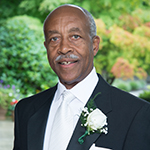
Gregory Lee Johnson had just graduated from Washington State University (WSU) in the summer of 1967 and was applying to law schools when he was presented with an opportunity that would set him on a most unexpected path.
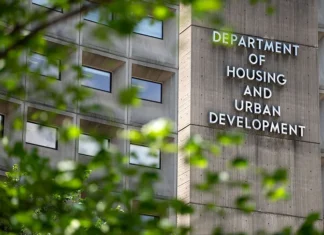
The civil rights movement was nearing an end, affirmative action was taking hold and a Ford Foundation-funded summer program at the U.S. Department of State was introducing promising young African Americans to careers in the U.S. Foreign Service.
For a bright-eyed young man from Seattle, those 13 weeks in the nation’s capital during a fiery summer of civil rights and antiwar demonstrations, would give rise to a 32-year career in international diplomacy that would span the globe.
His eight diplomatic assignments abroad would take him to seven different U.S. embassies and consulates on five continents, from rural villages in Vietnam to long food lines in Moscow during the Cold War.
He would play host to dignitaries and captains of industry in Osaka, Japan, where his family survived a bomb attack at their home. He would cope with angry protestors in Tokyo and Toronto and encounter economic hardships in Mogadishu, Somalia.
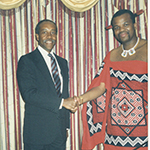
In Mbabane, Swaziland, where he capped his career with an ambassadorship, Johnson pushed for change in a country where change has been slow to come and assisted a Seattle-based organization in opening two training centers for women and girls.
Now 70, he speaks five different languages, (three of them fluently) and laughs when asked if he regrets not going to law school.
“I can’t image a more fulfilling experience in any profession,” he said. “My career fulfilled all the things as a young person I wanted to do – travel the world and have a lot of experiences and adventures outside the U.S. I never imagined I’d end up having the opportunities I did.”
Opportunity of a Lifetime
Johnson is one of about 149 African-Americans out of the 2,200 Americans overall whom the U.S. Senate has confirmed as ambassadors, according to Carlton McLellan, a senior fellow at the Association for Diplomatic Studies and Training.
Born in Ellensburg, he grew up in Seattle, graduated from Franklin High School and earned a bachelor’s degree in political science in 1967.
He was one of 40 young African Americans with their sights on careers in medicine and law who took a detour into the State Department’s Foreign Affairs Scholars Program that summer.
Johnson was assigned to the operations center, which monitors and coordinates the department’s response to events and crisis based on reports from embassies and consulates around the world.
“Here I was a young kid not knowing much about world affairs and meeting all these Foreign Service Officers, from the highest ranking to junior officers, telling me about their careers,” he said.
And when the internship ended, there was no question what career path he’d pursue. But the challenges were not lost on him.
“You are required to be a strong advocate for the U.S., representing its interests with high-level individuals, foreign dignitaries, heads of foreign corporations – some of whom may not share your perspective,” he said. “And you have to be able to do it in their language.”
Johnson was granted a Ford Foundation scholarship to pursue a master’s degree in international affairs at American University and in 1969 was among a cohort of 30 admitted into the Foreign Service.
The single, unmarried men among them were assigned to Vietnam, charged with implementing the foreign-aid component of U.S. operations there.
Assignment: Vietnam
Around midnight on his first night there, Johnson’s living quarters was attacked by the Vietcong. Unarmed, he scrambled for cover. He was unhurt but the next day he made sure he was issued a weapon. In fact at one point, he carried three.
With a South Vietnamese guide, he traveled to remote villages delivering supplies of medicine, food and educational materials to residents – most of them rice farmers, unconvinced the South Vietnamese and Americans could protect them from the Vietcong.
It was a tough assignment and more than once, Johnson questioned the wisdom of a career advocating for a government whose policies were igniting widespread protests on college campuses and elsewhere back home. “I’m fresh out of college; these were my colleagues. And I’ve just committed to this as a career.”

Because of his strong interest in Asia, he requested Tokyo for his post-Vietnam assignment. And through the mail proposed to his fiancée, Lyla Charles, a Garfield High School graduate whom he’d met at WSU. They were married within weeks of his return from Vietnam.
Lyla was in tears when he told her his next assignment would be Tokyo. Visiting Japan had been a lifelong dream and now they’d live there together as newlyweds.
Feeling at home in Tokyo
The bilateral relationship between the two countries made Tokyo a traditional posting and the couple settled into a nice life there. There were frequent visits by dignitaries and Congressional delegations. President Ford visited as did then-Secretary of State Henry Kissinger.
Within the Foreign Service, entry-level officers select one of five different career tracks, called cones: management, economic, consular, political and public diplomacy. Johnson was assigned to the management track, responsible for embassy operations, from real estate to personnel.
“As a young officer, I had the opportunity to observe senior officers dealing with their Japanese counterparts,” he said. “That was my first real exposure to traditional diplomatic work.”
In 1974, five years into his diplomatic service, he was tenured as a Foreign Service Officer, which brings permanency. When the couple’s son Carter was born, Lyla, who had been teaching elementary school, became a full-time mom.
But even in the friendliest nations, America can still inspire contempt. And the U.S. military presence in Japan and appearances of U.S. nuclear submarines in Japanese waters, triggered occasional protests.
Still, the family so enjoyed Tokyo, Johnson requested a second tour, giving the family four years there.
A different experience
Mogadishu, their next stop, was a different story.
At the time of Johnson’s assignment there, Somalia was a socialist country with ties to the Soviet Union and strained relations with the U.S. During his second year there, the country invaded neighboring Ethiopia, touching off a two-year war.
Then as now, Somalia was a poor country, its economy in tatters and unemployment high. Making matters worse for embassy staff, the Somalis distrusted Americans.
“Life there was very hard,” Johnson said. “We had trouble getting supplies of all kinds, basic necessities. It’s a desert country so getting fresh fruit, vegetables and meat into the country was not easy. We were living on the local economy, which was tough.”
With each move, Johnson said, he had to balance the health and safety of his family and his children’s education against his career aspirations.
“To be promoted and given more and broader responsibility sometimes meant a posting where the living conditions were not as attractive or the education not as good,” he said.
From Mogadishu, the family was assigned to the Consulate General in Rio de Janeiro, Brazil, intercepted by a slight detour to Seattle where daughter, Kimberly, was born.
The antagonistic relationship between the United States and the Soviet Union made their next posting to Moscow among the most challenging of Johnson’s career.
In 1979, the Soviet Union invaded Afghanistan and President Jimmy Carter retaliated by boycotting the 1980 summer Olympics in Moscow.
“The Soviets were so angry they turned up the ratchet, denying us permits to get around the country,” Johnson said. “They wiretapped our homes. They would follow us. It was bad before, but (following the boycott) it got worse.”
Moscow represented a severely restricted lifestyle.
“It was hard, everyday living, just to get everyday items, like bread and milk and meat. There were lines everywhere,” Johnson recalled.
On top of that, in countries like Russia and Japan during the 1970s and 1980s, many people were not used to seeing African-Americans.
“We were aware we were on display at all times,” Johnson said.
Taking a Break
After two years in Moscow and more than a decade of packing and unpacking their lives, the family was ready for a break. With such transience, Johnson said, “there’s a disconnect that takes place between us and our roots, our friends and family back in Seattle.”
Beginning in 1983 and for the next five years, he held assignments in the State Departments’ Bureau of Intelligence Research and attended the U.S. Army War College. He was subsequently appointed division chief in the State Department’s bureau of personnel.
By 1988, the Johnsons debated whether to remain in the U.S. or return overseas, an assessment many diplomatic families make at some point between assignments.
Some families choose to end the foreign assignments mid-career; the Johnsons chose to keep going.
Back to Japan
In what represented a turning point in his career, Johnson was named Consul General to Osaka-Kobe Japan, the highest ranking official.
He was also the first African American to head the Consulate there and it generated quite a buzz in the local press. Everyone in the family spoke Japanese.
“I was sort of a novelty,” recalled Johnson.
Johnson was also promoted to Senior Foreign Service, which comprises the top ranks of the Foreign Service.
Some diplomats build entire careers around the study of Japan and the Osaka assignment was a competitive and coveted one.
“I was not part of the Japan clique and I landed this assignment competing with others in the clique. So during our three years there, I had to deal with a bit of resentment,” Johnson said.
As Consul, he was responsible for promoting trade and business opportunities for American companies.
“We had some success in getting Japan to open its markets to American agricultural products and to automobiles,” he said.
During his tour, there was also increased participation by American contractors on large projects, such as the new Kansai International Airport.
And as his wife, Lyla became president, by default, of the Japan America Women’s Club, an organization that seeks to foster warmer relations between the two peoples.
It was something she learned only after the assignment was made and the prospect of hosting parties and other social events initially both intrigued and terrified her.
The Johnsons encountered what was possibly their biggest scare when motorcyclists lobbed a bomb over the walls of their personal residence in Osaka. Police suspected they were protesters, but the attack jolted everyone, Johnson said. “There’s always a bit of danger, some risk, in representing the U.S. abroad.”
The Final Stretch
From Osaka, Johnson was assigned deputy ambassador to Stockholm and for nine months served as interim ambassador, while the ambassador’s Senate confirmation dragged on.
Johnson’s next assignment, as Consul General in Toronto, was to be his last, allowing him to ease into retirement back in Seattle.
But those who knew of his plans to retire urged him to seek an ambassadorship – the apex of diplomatic service. So he began the political dance, making the right contacts, knocking on doors, making his interest known.

In 1999, his name was forwarded to the White House for ambassadorships in Swaziland and Iceland. And the Clinton administration later nominated him and the U.S. Senate confirmed his ambassadorship to Swaziland.
A tiny, landlocked country of about 1 million, Swaziland is the last nation in Africa to be governed by an absolute monarchy. HIV/AIDS there is epidemic.
Johnson said he employed democracy building, trying to encourage the government to be more accepting of criticism, political parties and press freedoms.
“It’s hard for them over the years to go that way,” said Johnson.
He worked with former Seattle First Lady Constance Rice and her organization, Strategic Education Centers, to establish a pair of locations providing sexual health education and training to women and girls.
Funded by the Gates Foundation, the local centers provided computer and other training and offered classes to help prepare girls for the limited career opportunities that exist in the country.
“The idea was to get them to escape the trap of being dependent on men, becoming the third or fourth wife and tied to becoming a homemaker and mother,” Johnson said.
Retired since 2001, Johnson, an avid golfer, has volunteered with a program at Jefferson Park Golf Course on Beacon Hill, helping young people master the skill of golf as a way of mastering life skills. And he spends a lot of time reading.
Looking back he said his experiences in the Foreign Service sharpened and enhanced his interest in the broader world.
“I think because of it, we learned to be more tolerant, appreciative and understanding,” said Johnson.