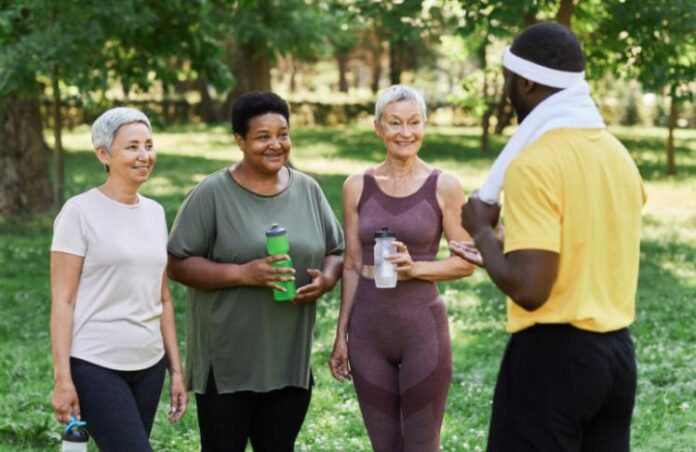

Active Aging Presented by Public Health Seattle-King County
Summer is a beautiful season for outdoor living. Many of the best activities with family and friends take place in the sun, so prepare appropriately before heading out. Heatstroke and sunburn are two of the biggest safety concerns during the summer, and the risks are higher for older adults. Fortunately, you can soak up some much-needed vitamin D without risking your health if you follow a few simple tips for summertime activities.
Stay Hydrated
You should never be too far away from a glass of water during the hot summer days. Staying hydrated is the best tool you have to avoid heatstroke this season. Experts recommend drinking half your body weight (in pounds) in ounces of water daily. If you’re exercising or sweating more than usual, you’ll need to increase your water intake. Dehydration is a bigger problem as you age. The Mayo Clinic points out that “your body’s fluid reserve becomes smaller, your ability to conserve water is reduced, and your thirst sense becomes less acute.” Be vigilant and take it seriously if you notice signs of dehydration, including dizziness, confusion, and fatigue.
The best way to avoid dehydration is to proactively follow a routine that includes plenty of fluids. Begin and end your day with water, drink water with every meal, and carry a water bottle whenever you leave the house. If you’re like many people and don’t particularly enjoy drinking water, try to make it fun. The water doesn’t have to be tepid and flavorless! Add fresh fruit, cucumber, or mint to your water for a tasty change. You can freeze this infused water in an ice cube tray and add it to your water bottle on the way out the door. Also, remember that many fruits and vegetables are high in water content, so adjust your meal plans to include as many as possible over the summer.
Invest in Sunscreen
As we age, our skin becomes more sensitive to the sun. Make sunscreen an integral part of your daily summer routine to avoid damaging your skin, even if you’ll only be outside for a short period or plan to stay in the shade. If you’ve pulled out a bottle of sunscreen from last season, check the expiration date before use. A broad-spectrum sunscreen that protects against both UVA and UVB rays is best. Look for one with an SPF of 30 or higher. Reapply sunscreen every two hours, and let it soak in for 15 minutes before jumping in the water.

Cover Up
Even if you’re wearing sunscreen, covering up when you’re in the sun is also beneficial. The most essential item? A good hat. These days, there are many stylish options made from UV-blocking material so that your hat not only provides shade but reduces sun exposure. If you like hiking, water activities, or anything with lots of movement, purchase a hat with a strap so you don’t worry about it flying off when you need it!
In addition to a hat, it’s best to cover your arms and legs when you’re planning to stay outside for several hours at a time. Lightweight cotton or linen shirts and pants help block some of the sun’s rays without trapping too much heat. Avoid synthetic materials like polyester that trap heat and sweat, making you more susceptible to heatstroke. If you’ll be sitting outdoors for an extended period, take an umbrella or shade structure to block even more heat and sun.
Plan Extra Breaks
It can be hard to stop in the middle of an activity to take a rest break, but during the summer, these times to recharge are essential. Your body is working overtime in the heat, and we often don’t notice how tired our muscles have become until it’s too late. Plan breaks into your activities to sit in the shade, drink water, have a snack, and recharge for the next round.
Take Advantage of the Night
Even though most of your summer plans may take place during the daytime, remember the potential of evening and nighttime activities to avoid the heat. Tending a garden, taking a walk with friends, or sitting at the local park watching the evening birds are all ways to enjoy the outdoors without the risk of overheating. If you will be out during dusk or dark, plan for your safety accordingly. A reflective vest and flashlight are useful for neighborhood walks. Use a headlamp for convenient lighting if you need your hands free for an activity.
With a bit of preparation, you can enjoy the best that summer offers safely.
Active Aging is presented by Public Health- Seattle & King County. Public Health- Seattle & King County recognizes the important and untold stories of innovation, service, and sacrifice by the Black community and supports efforts to improve equity and achieve social justice. We want everyone to get health insurance and access health care. Visitwww.kingcounty.gov/health for health insurance, flu and COVID-19 testing locations.