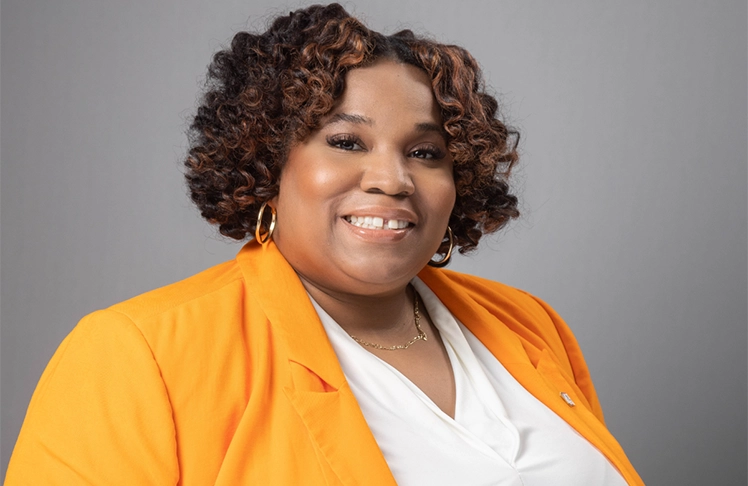
By Cherika Carter
Secretary-Treasurer of the Washington State Labor Council, AFL-CIO
Labor Day has always been more than a long weekend for me. It’s a reminder of the struggles and victories of working people—especially Black workers.
I keep coming back to this truth: if not for the union, there go I. Without unions, I don’t know where my family would be. The union difference has meant dignity on the job, food on the table, and stability in moments when the system wasn’t built for us to survive.
But this Labor Day, as the Coalition of Black Trade Unionists marks Black Labor Day 2025, we must face a sobering reality: Economic mobility for Black folks is under siege amid Donald Trump’s ongoing war on Blackness.
Black Workers Under Attack
Black workers are living through an economy stacked against us. We are leaving jobs at twice the rate of white workers, pushed out by toxic racial bias. Black unemployment has surged to 7.2%, nearly double the 3.7% rate for white workers—the highest since the pandemic.
Nearly 1 in 5 federal workers is Black, but Trump’s dismantling of government agencies and stripping away of union contracts has destabilized entire communities. These attacks aren’t abstract—they are cutting directly into Black families’ paychecks and futures.
The Crisis for Black Women
Black women, in particular, are carrying an unbearable weight. Nearly 300,000 of us exited the workforce in the past three months. More than 226,000 lost jobs during Trump’s purge of DEI programs. Families that counted on us as their anchors are being left adrift.
When Black women are in crisis, the alarm should sound for everyone. We’ve always been the backbone of our households and our movements. If the canary in the coal mine is sounding the alarm, danger is coming for all workers.
The Union Difference
This is why I say again: if not for the union, there go I. Unions remain the most powerful way Black workers can secure fair wages, affordable healthcare, and retirement security. Without strong unions and good contracts, there would be no Black middle class.
The fight for racial justice is inseparable from the fight for economic justice and that is the fight of our unions. Our power has always come from standing together. “Without community, there is no liberation.”
Young Workers and the Future
I see so much brilliance in young Black workers, yet they are being failed by this economy. They face chaotic work schedules, crushing debt, rising rents, and shrinking opportunities. The Black-white unemployment gap among youth remains 2 to 1.
This tinderbox of ambition and frustration should concern us all. Their future is our future.
Joy and Justice
Amid the struggle, I also see resilience. More Black workers, especially women, are prioritizing wellness, family, and peace of mind—not just hustling for survival.
As Audre Lorde taught us, “Caring for myself is not self-indulgence, it is self-preservation, and that is an act of political warfare.” Choosing rest, choosing joy, and choosing life on our own terms is resistance.
Joy itself is part of my politic. Joy and justice walk together. Joy is how we sustain the fight and how we remind ourselves that freedom isn’t just a destination—it’s how we live and love along the way.
Happy Black Labor Day
This Labor Day, my mind is on every Black worker fighting to keep food on the table and protect their dignity on the job. The challenges are enormous, but so is our collective strength.
I keep coming back to the truth that shapes my life: if not for the union, there go I.
That is why, this Labor Day, I choose both justice and joy. And I will always choose the freedom side.
Cherika Carter is Secretary-Treasurer of the Washington State Labor Council, AFL-CIO, and an executive officer of the Coalition of Black Trade Unionists, the nation’s largest independent voice of Black workers. She writes from her experience as a worker, organizer, and Black woman in the labor movement.