
Active Aging
Like many adults, you probably have a list of skills and hobbies you want to take up someday. Maybe you’d love to start woodworking or learn coding basics; maybe you hope to try sewing or knit your first scarf.
Despite our highest aspirations, numerous barriers can hinder our ability to learn new things. In the information age, it can be challenging to find qualified online tutorials that actually answer your beginner-level questions. It can also be tough to find an in-person class that’s conveniently timed or priced.
One potential remedy for the overwhelm of trying to learn something new? Skill swaps.
Here’s what a skill swap is — and how you can start thinking about organizing your first.
What Is a Skill Swap?
A skill swap is an event of any size at which attendees teach each other new skills. Each attendee will come with expertise in a specific area and share that knowledge with others in exchange for their own expertise.
The concept runs on a kind of bartering system — but with knowledge and learning instead of physical items. Best of all: Skill swaps are generally free or very low-cost, meaning anyone — regardless of income — can learn something new.
Skill swaps don’t have to involve dozens of people — you can start small, even exchanging skills between yourself and one other person. You can also start by gathering a small group of people you already know, like close friends, neighbors, and colleagues with knowledge to share.
Why Should I Host One?
Of course, a skill swap will teach you new ideas and empower you with new knowledge, but it’s also a great way to build a strong community and make new friends (both of which are especially important as you age and your needs change).
Sharing what you know with others, and vice versa, is a fantastic way to get to know your neighbors and create an environment where people can lean on each other for help and where skills and knowledge are shared across families, not siloed into individual households.
Skill swaps are also an ideal way to create intergenerational bonds, since people at any age can teach or learn something new.
One annual skill swap event in New Hampshire, Epic Skill Swap, attracts everyone from octogenarians to families with kids, ensuring the presence of passed-down wisdom and new ideas alike. If you or seniors in your community are struggling with loneliness, a skill swap event is the perfect excuse to form deep connections and combat isolation.
Of course, a skill swap could also expose you to brand-new cultures and backgrounds, giving you new perspectives that expand your horizons.
When it comes down to it, a well-organized skill swap event is a win for everyone involved.
What Kinds of Skills Could I Swap?
Of course, if you volunteer to teach others about a skill, you should ensure you’re well-versed in the practice yourself. Skills should be shared by professionals or experienced practitioners — especially when it comes to higher-stakes areas that involve health and wellness.
That said, there are plenty of areas where your skills can shine. Here are some ideas for the kinds of knowledge you could share at an event:
- Outdoor skills – Wilderness skills like building a fire, using a compass, setting up a tent or building a shelter, or foraging and plant identification skills; Gardening skills like pruning and tree care, native planting, seasonal planting, or crop rotation.
- Medical or wellness skills – Becoming confident in emergency medicine basics and CPR, emergency medical care for babies or pets, reflexology or massage, weightlifting for beginners, or building a workout plan as a gym newbie.
- Sports skills – The basics of skateboarding or rollerskating, mountain or dirtbiking, any type of dance, or organized sports skills, like throwing the perfect pitch or nailing your free-throw form.
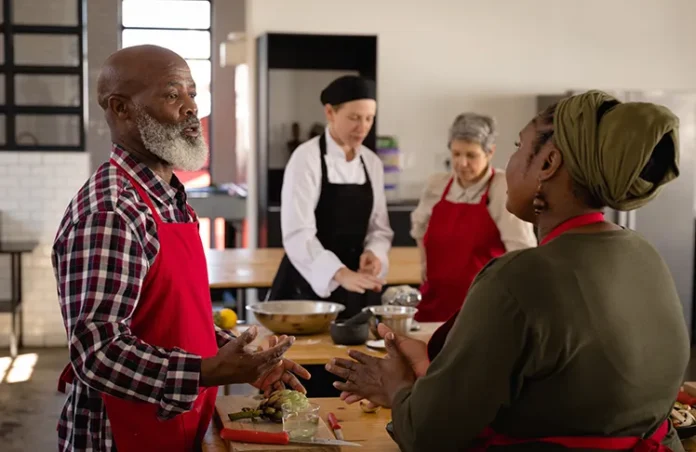
- Culinary skills – Kitchen essentials like knife skills or knife sharpening basics, food preservation (canning, freezing, or dehydration), fermentation basics, cocktail mixology or basic barista skills, meal prepping, pastry basics, or building a deep pantry for emergency preparedness.
- Workplace skills – How to negotiate higher pay or promotion, nail your resume and interview, organize a workplace union, or master specific software tools like Excel or PowerPoint.
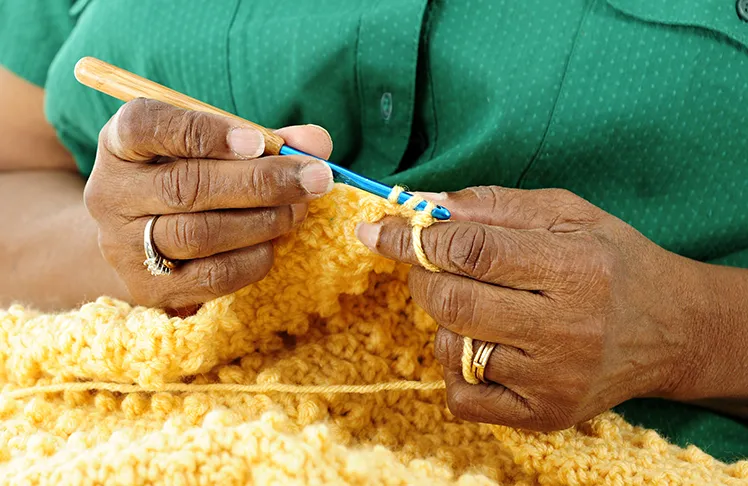
- Art skills – Fiber arts (knitting, crocheting, embroidery, cross-stitching, felting, etc.), printmaking (linocut, screenprinting, gelli printing, cyanotype, etc.), photography and videography, sewing and mending, quilting, woodworking and carpentry, art framing and mounting, or graphic design basics.
- Around-the-house skills – Drywall repair, the basics of household appliance upkeep, safely hanging and mounting decor, light fixture installation, troubleshooting basic plumbing repair, or interior decorating for beginners.
- Hobby skills – Introductions to D&D or Magic: The Gathering, DMing for beginners, social media and influencing how-to, mini figure customization, or board game tutorials.
Of course, these are only a few of the endless skills you could teach your friends and community. Even if you don’t think of yourself as having a particularly distinct skill, you probably do have an area of experience or expertise that others would love to learn from.
If you’re all in on hosting your first swap event, here are some good logistical considerations to keep in mind as you plan.
We hope you’ve gotten some great ideas for your first skill swap — whether you start by exchanging knowledge with a friend or organizing a whole community event.