By Aaron Allen, The Seattle Medium
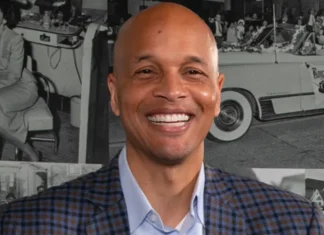
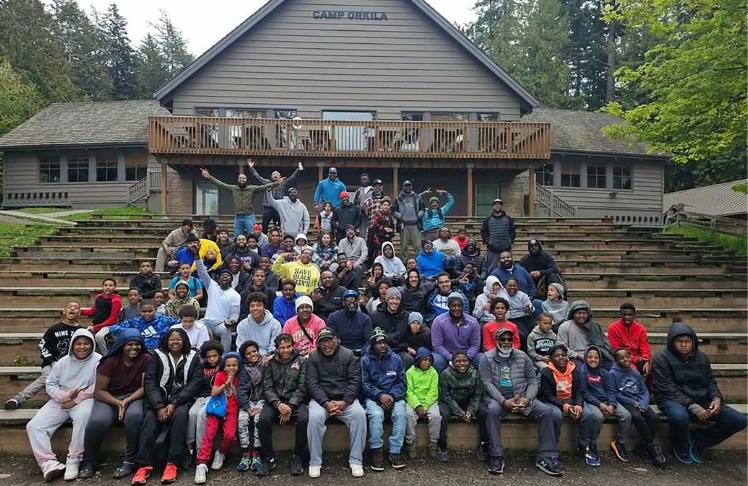
Chukundi Salisbury, a manager for the City of Seattle’s Parks and Recreation department and a community activist, along with 100 other Black men and young men, recently took an excursion into the wilderness to provide young Black men the opportunity to bond and learn from role models or mentors.
This year marks the fifth year of the event, which is designed to help young boys develop relationships that will teach them the skills, knowledge, and confidence they need to succeed in life.
The gathering witnessed the presence of numerous generational relationships, including fathers and sons, and even some three-generational groups. Salisbury draws a parallel to the initiation into manhood depicted in the movie “Roots,” where young men were sent into the jungle to meet with the village’s elder men. This tradition, to some extent, continues through mentorship programs.
“We’ve always focused on trying to get Black men and boys to come out,” says Salisbury. “But this year, we focused on the family unit and making sure people came with someone they were related to.”
“We had a whole bunch of generational relationships,” Salisbury continued. “We had fathers and sons; we even had a father with all six of his sons. We had a three-generation father/son group – a grandfather, father, and son. We were also honored with some gentlemen who were uncles and nephews.”

Why is having good Black male mentors so important? Well, according to Salisbury, representation is everything, especially for our youth, who are easily impressionable. Representation helps them expand their mindset and see that they can achieve anything they want in life.
This notion places significant emphasis on the roles of mentors, particularly for underserved youth. For many, a mentor is integral to reaching their goals and their character development.
“It’s [mentorship] important because of just the things we deal with as Black men, Black fathers, and that we can exchange ideas and talk to one another about the best approaches and how we should approach fatherhood and raising our young men,” says Tonye Wokoma, a participant who brought his nephews. “The boys need a lot of input; they need people pouring into their cups. It’s one thing to learn from your father; it can affect a young mind differently when they gain knowledge from a multitude of people.”
With all the challenges Black men and boys have to encounter in today’s society, the need for parents and caregivers to have “the talk,” events such as this are important as men and youth exchange ideas and knowledge with the purpose of raising responsible young men.
By taking young men out of their comfort zones and facilitating constructive interactions with their role models, Salisbury aimed to set the stage for positive development and foster camaraderie that is often lacking within the Black community. Despite facing external forces that may not recognize their presence and significance, this excursion exposed these young men to a different perspective on the world.
“The camp offers a turnkey experience,” explains Salisbury. “We can escape Seattle, reconnect with nature, and enjoy a safe environment. Often, when we visit places like Camp Orkila or Orcas Island, these beautiful locations in Western Washington, people look at us as if we don’t belong. But it was an incredible experience as 100 Black men and boys took over the ferry and the camp.”
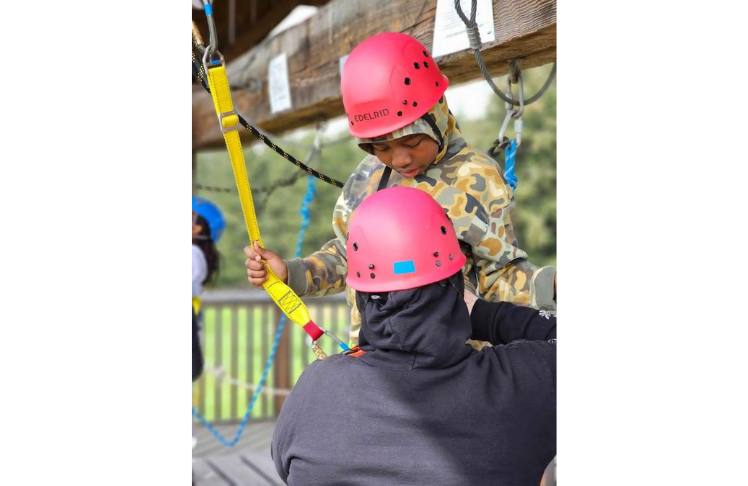
The young men who attended the camp came home with a better and healthier understanding of self and the world they will inherit.
“This was pretty cool; we had a lot of fun,” says Adonis January, nephew of Wokoma. “We learned how to relate to others. This was important because we were learning how to be critical thinkers and learned to think for ourselves. With bullying and peer pressure, it can get hard out here, so we learned a lot about thinking for ourselves.”
“This is important to me because it helped us fully understand what is going on in this world,” says Jahyel Seck, who attended the event with his father Mamadou Seck. “It helped us understand the world as it relates to us as young Black boys and Black men. It’s important to me because it helped me to be better.”
According to Salisbury, the excursion has become a tradition that he hopes will continue to flourish and expand. But the real takeaway from the event is the smiles, interaction, and renewed bonds between the Black men and the Black boys in attendance.
“I thought it was a wonderful weekend,” says Wokoma. “I usually look for opportunities to spend time with my nephews; we even had one nephew come from out of town. Just having all those Black men and boys in one space, those mentorships. The shared experience. I will say this is something that we need to do on a regular basis, something that needs to be expanded upon. I know that with this program, I can see it really being effective in spreading out and taking care of a whole lot of issues that our communities and families are dealing with in these weekend gatherings.”
The elder Seck was in agreement and offered his own spin on the potential and future of this endeavor.
“New friendships that are established, new connections, that connectivity, we need this when we are looking at a Black community that is not as connected as we once were,” says Seck. “This should be expanding, for young Black girls and Black women, it is needed.”