By Kiara Doyal, The Seattle Medium
Autistic children and adolescents face significantly higher risks of anxiety, depression and suicide than their peers, yet gaps in care, awareness and research continue to leave many without adequate support.
In recent decades, autism diagnoses have risen steadily, bringing increased attention to the condition. But amid public debate and growing scrutiny at the national level, the lived reality of autistic youth, particularly their mental health needs, is often overlooked.
According to the American Psychiatric Association, approximately 70% of individuals diagnosed with autism spectrum disorder have at least one co-occurring mental health condition, most commonly anxiety disorders and depression. Rates of suicide attempts and deaths are also higher among autistic adolescents and young adults than in the general population.
“A diagnosis of ASD is associated with increased risk for a host of mental health concerns, and there are a number of reasons why people on the autism spectrum might be susceptible to mental health challenges,” said TK Brasted, PsyD, a licensed clinical psychologist and autism services lead at Odessa Brown Children’s Clinic. “Two areas identified by research are high rates of adverse childhood experiences and limited access to needed services.”
Brasted said the quality of mental health care for autistic adolescents often falls short, in part because widely used therapies are not always adapted to meet their needs.
“The quality of mental health care for autistic adolescents tends to be poorer, due to a lack of evidence-based psychotherapies that are adapted to suit their unique needs and communication styles,” Brasted said.
Even when research exists, it does not always reach the families and providers who need it most. Corinne Purtill, a science and medicine reporter for the Los Angeles Times, said many existing services and interventions are not well-suited for autistic individuals, leaving families to navigate a fragmented system.
“The standard childhood and mental health interventions that parents assume would be helpful for their child don’t necessarily work as well with kids on the autism spectrum,” said Purtill. “This slow pace we see in getting this information to people who need it, I think, is not really that uncommon in certain areas of child health.”
Purtill said the issue is less about a lack of research and more about a disconnect between those conducting the research and those providing care.
“The people who are doing the work are busy doing the work, and the people who are caring for children are busy caring for children, and they don’t necessarily have the time or the mechanisms to be able to talk to one another,” added Purtill.
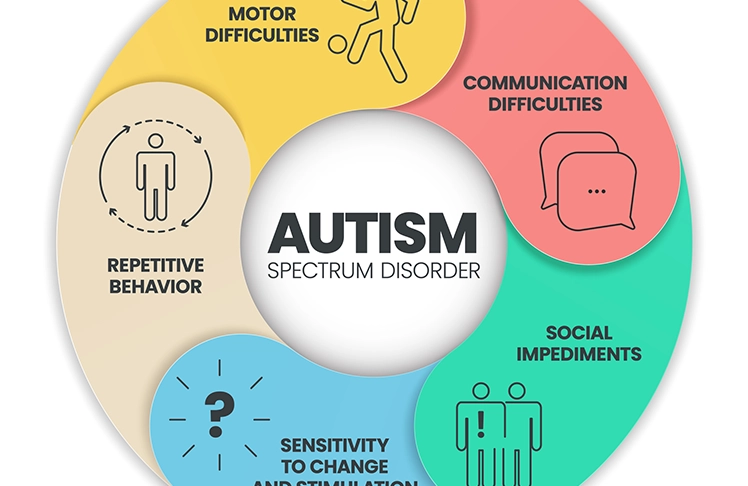
Autism affects social communication, including how individuals engage in interactions, interpret nonverbal cues and develop relationships. For younger children, these differences can present as behaviors that, if not addressed, may contribute to later mental health challenges.
“[They have] temper tantrums, aggression, elopement, and/or sleep disorders. Certainly, such behaviors can be secondary to mental health conditions. However, for the age group that I work with, they are more common due to communication delays, learned interaction patterns, and/or biological differences,” said Brasted. “If not addressed, these behaviors can be risk factors for mental health challenges down the road.”
At the same time, mental health conditions in autistic youth are often overlooked or misdiagnosed. Symptoms may be attributed to autism itself, delaying appropriate treatment.
“I once worked with an autistic teen who was experiencing frequent auditory and visual hallucinations,” said Brasted. “Her parents raised concerns about her unusual behavior to other providers in the community, but they failed to do sufficient assessments because they assumed it was probably related to ASD.”
For many individuals, co-occurring mental health conditions can have a greater impact on daily life than autism itself.
“While autism and mental health conditions have very different symptoms, they also have very different effects on the quality of life of the individual living with them,” said Purtill.
One contributing factor to these challenges is masking, the conscious or unconscious suppression of autistic traits in order to fit social expectations. Purtill described masking as a significant mental health risk, particularly among intellectually gifted individuals.
“Intellectually gifted individuals tend to have very high masking abilities. It is very much a survival mechanism for a lot of people to navigate the world,” said Purtill.
Purtill also noted that children who are both intellectually gifted and autistic are significantly more likely to experience suicidal thoughts.
Despite growing awareness, gaps remain in both research and clinical practice. Standard screening methods may miss key warning signs, and therapies designed for neurotypical populations may be less effective for autistic individuals.
“Even though mental health conditions, like anxiety and depression, have been found to be more common among adolescents diagnosed with ASD, and autistic individuals are at increased risk of experiencing adverse childhood events, there continues to be significant gaps in research on autism-specific symptom presentation and therapies,” said Brasted. “To date, there have been few studies that have investigated the use of well-established therapies, like cognitive behavioral therapy (CBT), on an autistic population. We have more to learn about how to modify these therapies to best suit the needs of neurodivergent individuals.”