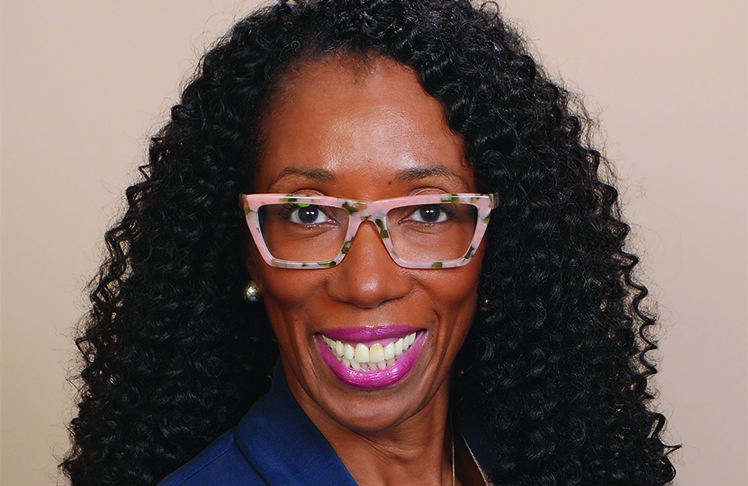
By Kiara Doyal, The Seattle Medium
Alonda Williams began her career in the tech industry at Microsoft. However, she soon realized that her true passion would be in a profession centered on giving back and making a meaningful impact. Now, as president and CEO of Big Brothers Big Sisters of Puget Sound (BBBS), she channels that passion into helping vulnerable youth thrive, with more than 400 children currently on a waitlist for a mentor.
“Certainly, at Microsoft, I learned a ton, but I just felt like I wanted to do something that mattered beyond a balance sheet, and I really wanted to work with people,” Williams said. “Impacting people and not just profit, and that is what brought me into the nonprofit space. I got a call from a recruiter, and it made so much sense because I was a mentor in this program when I graduated from college, and I was impacted by my mentor my whole life.”
Now in her fourth year as president and CEO of BBBS, Williams is deeply driven by her personal connection to mentoring and its transformative impact on vulnerable youth — a passion that brings her joy and purpose every day.
“It’s simple. The impact drives me to continue. Some new research that came out recently from Harvard University and the Department of Commerce talked about how those who are mentored go on to earn almost 15% more than their peers who are not mentored. So, there’s an economic benefit to mentoring for the young people who are involved in the program,” Williams said. “There is a societal benefit as well because mentors are impacted just as much, if not more, than those they are mentoring. But for me, like I said, I wanted to impact more than products and profits and really wanted to impact people.”
While BBBS is a nationwide organization, Williams says that the Puget Sound chapter focuses on serving communities of color and historically marginalized youth in a way that reflects and meets the unique needs of the local population.
“We hire staff who represent the community and make sure that we have people on our staff who have similar life experiences to those they are mentoring,” Williams said. “They have had some advanced childhood experiences in their lives that can essentially relate to a lot of what people are going through. Number two is nothing for us, without us. So, we are very much connected to the community and the people who are in our program. We are in the schools connected to what educators are seeing that their students need, and that helps us to stay connected.”
Williams believes that what truly sets Big Brothers Big Sisters apart from other youth mentoring organizations is, first and foremost, the strong support from its national infrastructure and the use of data to drive impact.
“We are very data-driven; we have been around for a long time, and that gives us an opportunity to really perfect and study what works and what doesn’t work,” said Williams. “We have history, connections, and brand strength. We have perfected the support model and have learned how to recruit people who are going to ensure safety for the children that we serve.”
“We have evidence to support the work that we do in our methods, from mentor support to the staff training, and that is something that would set us apart from maybe a smaller organization,” she added.
Despite their historical record of success, Williams says that BBBS, like many other nonprofit organizations, is facing challenges in funding and mentor recruitment, especially in today’s economic environment.
“Our state deficit has really negatively impacted nonprofits, ours in particular,” said Williams. “We lost a significant amount of funding from the state budget, and that has really impacted us.”
“We also have a mentor shortage,” she added. “We have about 400 kids on our waitlist right now who are just waiting for a mentor. People think they have to give up so much time, but it really takes little time, in terms of commitment, to be a mentor. Really, you are investing anywhere between two to four hours a month to spend with a young person.”
According to Williams, the biggest mentorship gap continues to be the recruitment of male mentors, especially men of color, as there is always a need for more male role models in their program. In addition, she stressed that there is no such thing as a “perfect” mentor, and what matters most is showing up and following through on your commitments to the youth.
“The most important thing we look for in mentors is presence and consistency. There is no particular background that we are looking for; you just have to be 18 and over,” said Williams. “A lot of our kids have had some trauma in their lives, and we don’t want to create additional trauma by making them feel abandoned, so your presence and commitment to be consistence are the most important things.”
Over the next five to ten years, Williams says that her primary focus is to ensure that the organization is preparing young people to be future-ready.
“I really want to improve and unleash their potential, and mentoring has the ability to unlock social capital. Getting youth future-ready means connecting them with mentors who can help them learn about what careers are going to be needed in the future, and help them prepare for such,” Williams said. “We have so many stories about kids who were going into a career because their mentor is in that career, and it just has a ripple effect.”