By Aaron Allen, The Seattle Medium
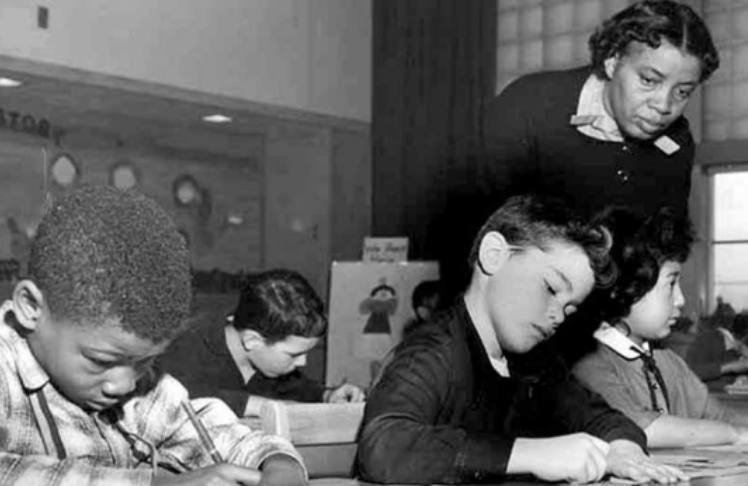
Through their roles as educators, many Black women have used their influence to not only educate our young people, but they have also served as leaders, organizers, and coalition builders that contributed to the rise of the Black middle class.
Throughout history, many Black women educators were heavily involved in building and sustaining Black churches, social clubs, and many Black community based organizations like the NAACP, Urban League, and others that helped build a strong and vibrant Black community all across the country.
Apart from the biographical sketches of a few major black female educators and several monographs that survey Black female graduates, there are few scholarly articles and essays, and hardly any books that solely document the history of Black women in American education. Black female educators such as Mary McLeod Bethune, Charlotte Hawkins Brown, Lucy Laney, Fanny Jackson Coppin, and Nannie Helen Burroughs are a few that are mentioned in some Afro-American history sources.
Seattle’s own legacy of educators has had a major impact not only on the school district but on the lives of young people throughout several decades. The list of influential women includes such legacies as Thelma Dewitty, Louise McKinney, Peggy Johnson, Iva Tolliver, Inus Hall, Gladys Lee, Virginia Galloway, T. Marie Floyd, Jeannette Jones, Mona Lake Jones, Dorothy Hollingworth, Sharon Williams, and others. Their work and effort can be attested to by generations of Seattleites.
“I think the roles we play as educators were and are extremely important,” says Dr. Sarah Pritchett, Assistant Superintendent of Human Resources for Seattle Public Schools. “Being a Black woman and the role that Black women played in our community and the significance of that role was what was holding communities together. I think we have played a huge role in building first our community and contributing economically to build a middle class, and the teaching profession played a major part in that.”
Research and history show a funneled transition in the role of Black women educators. From slavery to the 1970s, society had no issue with Black women as caretakers to take care of society’s babies and children, both Black and White.
Over time, the natural abilities of Black women to care for children transitioned from being a “nanny” into being a primary “teacher,” and Black women have taken that role, leveraged its power, and turned it into leadership.
“I think that it’s kind of two-fold, and I think the teaching profession is an extension of caregiving in some respects,” says Dr. Prichett. “For example, there was an acceptable level or acceptable standard of Black women providing care for children. All the way back to slavery and everything else, it was okay for us to care for your children and be seen in that type of a way, so in some respects, teaching starts to fold into that as an acceptable kind of caregiving, upbringing, raising, so I see that as kind of a natural transition.”
Although career choices for educated Black women were limited at the time, many of them found a fulfilling career in education. And in doing so, they helped facilitate the growth of the Black middle class and instill a sense of dignity, respect, and self-pride throughout their respective communities.
“They [Black women] very much held positionality, authority, and not just in schools but in the community,” says Bev Redmond, Chief of Staff and Assistant Superintendent of Public Affairs for Seattle Public Schools. “They were very much the leaders in all sectors. In their families, my role models and professional Black women were some of the first evidence of professional life or as we see it as the middle class.”
African-American teachers educated African Americans and taught each other to read during slavery in the deep South. People who were enslaved ran small schools in secret, since, at the time, teaching slaves to read was a crime.
During the post-Reconstruction era, African Americans built their own schools, as the Black middle class believed that it could provide a quality education for their community. This resulted in the foundation of teaching as a profession for Blacks. Some Black families had multiple individuals who dedicated their lives to teaching. They felt that they could empower their communities. In the late 19th and early 20th centuries, African American teachers made up about half of African American professionals.
Women, particularly Black women, were the ones who many times led initiatives to further education for colored students, advocate for the attainment of higher education, and promote equitable education opportunity. And they did this despite their own struggles to overcome racism, sexism, and discrimination.
“I had a great benefit growing up in what I called a ‘chocolate city,’” says Redmond. “I grew up knowing and seeing a lot of Black professionals around me. All types of professions. Among those, I saw a great deal of my teachers, Black women, who were among my first role models of what I could become, and that went from the teachers to the principals to administrators.”
“They made a very specific impact on my life,” added Redmond. “I knew that I could excel, and that college was for me, and that I could take my ranks and my place and then hand them off to someone else.”
Promoting future generations in the face of dwindling representation in classrooms, Black women educators have been at the forefront of encouraging the next generation of academics to take on the mantle of being an educator, having a voice in the profession, and using that voice to exercise leadership.
“That’s where I see that the struggle continues,” says Redmond. “It’s not enough to be at the table; we’ll make room for you at the table, but we are also fighting and continuing to stand where we are to lead and be seen as bonafide leaders, not just position holders.”