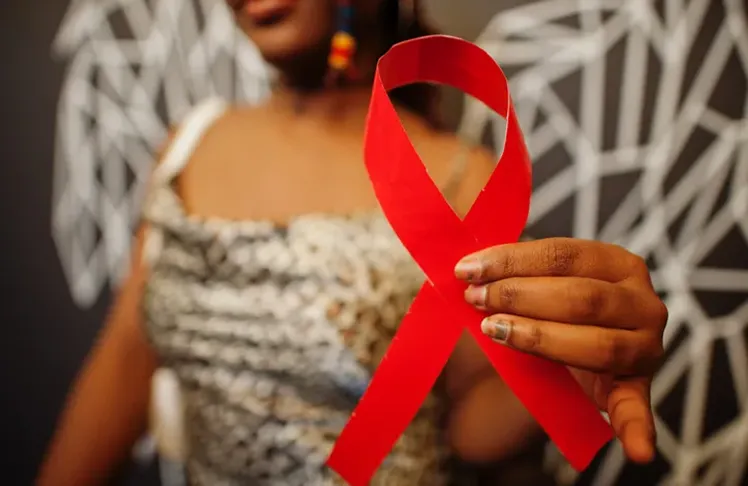
When the HIV/AIDS crisis first emerged roughly 40 years ago, it was widely perceived as a virus that primarily affected white gay men. But Black women have for decades made up a disproportionate share of the ongoing HIV epidemic in the United States — without getting nearly as much attention.
In 2023, for example, Black women accounted for fully half of all new HIV diagnoses among women in the U.S., even though they are just 13% of the country’s female population.
The stunning disparity — and the lack of attention given to HIV-positive women — spurred activists to create National Women and Girls HIV/AIDS Awareness Day. For two decades on March 10, healthcare professionals like Dr. Zandraetta Tims-Cook, a physician who specializes in infectious diseases, work to inform vulnerable Black women and provide them tools to keep themselves safe.
“For women, we have to realize that the risk of HIV acquisition does not lie solely in what we do as behaviors,” says Tims-Cook, medical director at Faebris, an Atlanta clinic that specializes in infectious diseases. The biggest driver of the disease among for Black women, she says, is unprotected sex with HIV-positive men.
Misperceptions About Risk Leave Many Vulnerable
“I think that’s where a lot of women, ultimately and sadly, get caught off guard,” Tims-Cook says. “They think, ‘I only have one partner; I’m not one of those people [with multiple partners]’ — not realizing that your risk of HIV acquisition or infection is tied to what your partner does.”
HIV “really is an infection and an issue that involves everyone,” she says. “There are no gender barriers. There are no sexual orientation barriers. Anyone who is engaged in sex with another person and without the consistent use of a condom, is at risk, pure and simple.”
Created to highlight the impact of HIV on women and girls, National Women and Girls HIV/AIDS Awareness Day is designed to raise awareness, promote testing and encourage prevention and treatment. The Trump administration, as with other observances related to HIV/AIDS, has not acknowledged the day.
Nevertheless, the commemoration helps local, state, federal, and national health and medical organizations to spotlight the impact of HIV and AIDS on women and girls, show support for those living with the disease and spread information about prevention and treatment.
While the virus has had an outsized impact on Black women —their rate is approximately 11 times higher than that of white women — the HIV epidemic also disproportionately impacts women in some parts of the country more than others. In 2023, for example, new HIV diagnosis rates among women in southern states were nearly twice as high as in other U.S. regions.
Given the data, Tims-Cook says, it’s hard to overstate how critical testing and prevention are to prevent the spread of the virus.
“It’s important to get tested and simply know what your HIV status is,” she says. Unlike the early days of the AIDS crisis in the 1980s, Tims-Cook says, a positive diagnosis isn’t an automatic death sentence.
“There are very convenient, very effective and very safe tools that people can use to still enjoy their sexuality,” she says, pointing to PrEP, a drug regimen that is some 90% effective in barring transmission. “You can still enjoy all the benefits of being in relationship with another person, but do it where you can control the controllables.”
Tims-Cook compared maintaining sexual health awareness to defensive driving.
“When I learned to drive, my mom and dad said that you got to drive for yourself and the other person too,” she says. “And in this arena of sexuality, [considering] the various ways that people can come together and meet you, you have to do things with a little bit of defense tied into it.”
Testing, PrEP, and Education Can Help Close the Gap
Tim-Cook’s clinic stresses knowing about HIV prevention medications including PrEP and the various ways patients can use it. Women made up just 9% of PrEP users in 2024, according to AIDSVu.org.
“There are pills that one can take, and then you have injections, things like say, Apretude, that you can safely and conveniently, privately have administered just six times a year.”
While HIV is often connected to rising rates of other sexually transmitted infections, among younger people there may be opportunities to change this trend.
“But we do see that with HIV infections if it’s increasing in any age group, it’s increasing [among them] — and it’s occurring with the other sexually transmitted infections, like chlamydia, gonorrhea, sometimes even syphilis and their other types of sexually transmitted infections.”
Patients who have STIs face greatly increased chances of HIV transmission. So, having strategies to give young people, teens, and young adults, education and access to prevention medications is crucial.
“There have been ongoing studies of tools saying we can offer one that’s called Doxy Pep,” Tims-Cook says. “This is somewhat of a morning-after strategy for sexually transmitted infections.We’ve seen the data where this tool has been effective in preventing chlamydia, gonorrhea, even syphilis infections in men.”
In her clinic, Tims-Cook approaches patients with conversations about both prevention and reassurance.
“Everyone who is seen in this office — I don’t care what age, if they’ve ever engaged in sex, If they’re still engaging in sex — I let them know that my gift to them, before they leave the office, is I will confirm that they are HIV negative,” Tim-Cooks says “That’s something I think every adult should expect and also demand from his or her healthcare provider.”
Women in particular should lean into prevention and know their HIV status, Tims-Cook says.
“And if your provider has never checked and screened you for HIV, that is part of the issue that I think needs to be addressed,” she says.
Despite decades of awareness campaigns, the numbers show that HIV prevention still requires continued public attention and should never be seen as falling on deaf ears.
For those who haven’t been diagnosed, “that’s a wonderful thing that’s letting us know that you’re hearing about it, and hopefully, it is having an impact,” Tims-Cook says. “But for those who are living with it, their question always is, why didn’t someone tell me?”
“Why didn’t someone let me know?”