By Kiara Doyal, The Seattle Medium
Black women serving in the Washington State Legislature say they face persistent barriers shaped by both race and gender, despite working in a state often considered progressive. While the number of Black lawmakers in the Washington State Legislature has increased in recent years, many still navigate systems that remain structurally exclusionary.
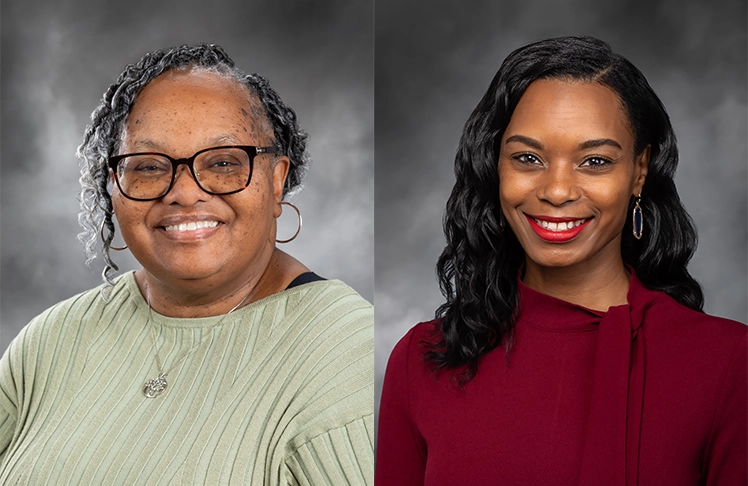
“Washington often sees itself as progressive in many ways, but that perception can sometimes make it harder to name and address the very evident structural barriers that exist here,” said State Senator T’wina Nobles (D-28). “Me being here in representation alone is not going to erase the inequities in access to power, decision making, and political opportunity. It is just not enough.”
“For elected leaders who are also Black, navigating systems that look inclusive on the surface but still aren’t built with us in mind can be challenging, and progress will require more good intentions,” added Nobles.
State Rep. Debra Entenman (D-47) echoed similar frustrations and says that the unfortunate reality of working in this space is that sometimes people will treat you as though you don’t belong here.
“I know that being on campus, people aren’t used to seeing a lot of Black people on campus or just seeing a lot of Black legislators. There is a group of folks who work in security, and they need to understand that we actually have Black elected officials and that we belong on the floor,” said Entenman. “It is a very diverse community but there are challenges [as a woman]. Finding a place to get our hair done or even feeling comfortable and safe where we are living during session.”
Nobles said that as a Black woman, her experiences are always on her mind, and there isn’t a day she doesn’t bring that perspective with her to work.
“I am also a mom and someone who has worked in education and in the community. So, when I think about how I want to make policy decisions, I want to make sure that I lean into my experiences, and I am thinking about equity and injustice and what it means to be oppressed,” Nobles said. “I know as a Black woman what it feels like to have a community of people to have their voices ignored, and what it feels to have systems fail people and not reflect the people that they serve.”
“I just keep in mind that I am here to serve, hold accountable, be held accountable, and make sure that community members who are most impacted by our decisions are never an afterthought,” added Nobles.
These experiences point to a deeper reality: that representation alone does not dismantle the institutional structures and cultural dynamics that continue to marginalize Black women in positions of power. And for many, the weight of that struggle is not only personal — it carries the responsibility of making space for those who come next.
Entenman said those daily struggles underscore the importance of being seen and recognized — just as legislators, but as full participants in a space that hasn’t always welcomed them.
Nobles, who grew up in Alabama and Georgia, said that the experience of a Black woman in politics can vary by state.
“My foster father in Alabama was a city council member, and that is who inspired me to think about elected office and public service. So, I have been able to see and live with a Black elected in the South. One of the greater differences that I see is the actual population of Black legislators, which helps with shared experiences,” said Nobles. “Washington is much different. When I came to the legislature five years ago, I was the only Black senator in the house. But I am so grateful that I have roots in the South and understand Black culture in the South.”
“My experiences in the South definitely shaped me, and I recognize that when you just have more people, you have the opportunity to have more political power. But for myself, someone who is a Democrat, I also recognize that I am very fortunate that I get to be a part of a Democratic party that is in the majority here,” Nobles continued. “So, while it’s a different experience, I definitely feel my own political power here in Washington state.”
Given the current political climate, Nobles is concerned about the potential impact on the Black community, especially as it relates to Black women.
“How quickly the political discourse has shifted towards exclusion and fear, and how that environment disproportionately has impacted Black women breaks my heart, and it breaks my heart to hear that 400,000 Black women have lost their jobs. There is just a lot going on,” said Nobles. “There is a growing expectation to carry away a representation while also navigating clear hostility, scrutiny, clear misinformation, and an effort, I would say, to discourage participation and to silence very important perspectives that Black women bring to the table.”
“My overall concerns are not just about individual policies, but about whether our democracy can remain accessible to all, accountable and responsive to the people that it is meant to serve, and especially folks who have historically been pushed to the margins,” she added.
Despite those fears, Entenman says that many people underestimate the power and influence the Black lawmakers currently maintain in Olympia.
“I think that there are some people who don’t know that we have 14 members of the Legislative Black Caucus in our state. I think that people don’t understand that 13 votes can move a legislature, not to say that we want to hold up bills, but we have influence over bills,” said Entenman. “We understand what our political power is and I think that some people underestimate that. Underestimating a legislative Black caucus and Black women in general.”
Still, Entenman said she worries about how the political landscape is shifting—and what it might mean for future generations.
“We now have people who are truly anti-Black in a way where it used to be hidden, and now it is out in the open. They don’t want to hire us and we don’t have the protections that we used to have. I feel that if I went to the federal government today with a case of discrimination, that I might not be successful,” said Entenman. “We are living in such a toxic world, and the interpretations of things that we took for granted are being changed in such a way, and that is frightening.”
“I honestly can say I have more fear for my children and my grandchild, than I do for myself. You have your whole life in front of you, and it makes me sad to think that you might not have the same opportunities that I have,” Entenman said.