Home Sweet Home is presented by The Washington State Housing Finance Commission
Does your deck need repairs, or are you looking to install a new one? You can likely handle some fixes or build a basic deck. Often, however, it is best to hire a contractor. How do you know when that time is, and how do you find someone qualified and reputable? Here is a guide to DIY deck repairs and hiring a contractor.
DIY Deck Repairs
Inspect your deck regularly for signs of damage and wear and tear. It could be a matter of life or death. The Consumer Product Safety Commission “estimates that between 2016 and 2019, there were about 2,900 injuries and two deaths associated with collapses/failures of decks, balconies, and porches.”
Look for loose boards, cracked or split posts, and rotting or moldy wood. Also, ensure that railings are secure and metal connectors are still in place and not rusted. Decks should be built into concrete footings and attached to the home with bolts, not nails. Check that yours has these safety components, that the bolts are in place, and the posts are not off-center.
Fixing a deck in disrepair is usually less expensive than building a new one. You can do several easy deck repairs on your own. Most homeowners can replace rotten wood, paint or stain their deck, and tighten loose bolts or screws. It’s essential to ensure you have the right tools and safety gear before you begin and a clear plan to follow while repairing your deck.
DIY Deck Builds
Are you starting from scratch? There are several simple deck designs that you can build with minimal experience. These include building a freestanding platform deck that isn’t attached to your home or using interlocking deck tiles. More experienced builders might have the skills for a basic attached deck. Read the instructions carefully and take your time to ensure the deck is secure and safe.
You must also check with your local zoning boards and home association for deck building codes and requirements. Building regulations ensure the deck is safe and secure. Often, freestanding decks do not require an inspection—another reason they make a good DIY option.
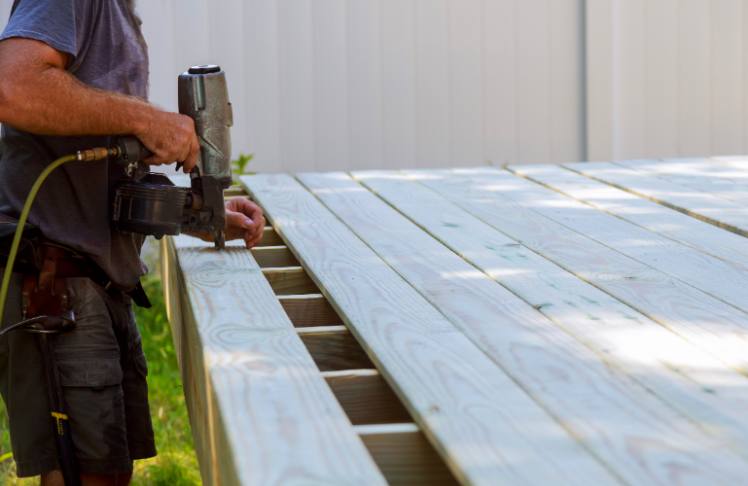
Hiring a Deck Contractor
A deck contractor specializes in designing, constructing, and repairing decks. Hiring a contractor is the best way to go for several reasons, particularly for complicated, high, and multi-level decks. They have the tools, know how to apply for permits, and can get better pricing on materials. They can help you with all aspects of the deck-building process, from helping you choose a design to completing the actual construction. They can also provide advice on the maintenance and repair of existing decks.
It may also be wise to hire a contractor for structural deck repairs. Unsafe decks can cause accidents or worse. If joists or beams are unstable, talk with a contractor about options.
How to Find a Reputable Deck Contractor
You can find a qualified and reputable deck contractor by asking for recommendations from friends, family, and neighbors or through research online. Always check any contractor’s credentials and reviews before hiring. Also, ask if the contractor offers a warranty for their work and carries liability insurance.
What solution will you select for your deck needs? Can you DIY some simple repairs or a basic deck design? Or will you hire a professional deck contractor to ensure your current or new deck looks great and meets all the safety and regulatory standards?
Home Sweet Home is brought to you by the Washington State Housing Finance Commission’s Washington Homeowner Assistance Fund. The Homeowners Assistance Fund helps homeowners who have fallen on hard times because of the pandemic. Call 1-877-894-4663 for more information on how they can help.