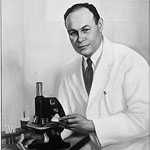
Dr. Charles Drew revolutionized medical treatment when he discovered a process for separating and preserving blood. Dr. Drew applied this knowledge to help develop large-scale blood banks during World War II. The British military used his process extensively during World War II, establishing mobile blood banks to aid in the treatment of wounded soldiers at the front lines. In 1941, the American Red Cross decided to set up blood donor stations to collect plasma for the U.S. armed forces. Drew protested against the practice of racial segregation in the donation of blood, as it lacked scientific foundation, an action which cost him his job. In 1943, Drew’s distinction in his profession was recognized when he became the first black surgeon selected to serve as an examiner on the American Board of Surgery.