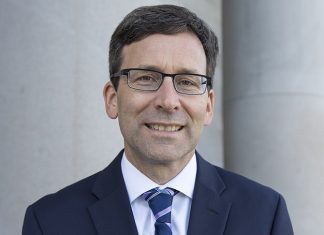
By King County Councilmember Girmay Zahilay, Special to The Seattle Medium
These days it’s hard to believe the arc of the moral universe bends toward justice. Brick by brick, the foundations of a functioning society feel like they’re falling apart. The most deflating part is that human beings have everything we need to avert societal collapse, but we can’t seem to come together and agree on the solutions. Worse yet, in the era of social media, we are becoming more polarized and incapable of working together to solve problems than ever before.
In today’s digital world, those who seek to divide and distract us are rewarded with likes, retweets, exposure, career opportunities, and money. Division, sensationalism, and conflict are becoming more profitable every day. Publicly slamming an out-group is the fastest path to going viral. Influencers are trusted more than doctors. Inflammatory rhetoric and hyperbole galvanize the base more quickly than nuance. Consequently, social media has become a breeding ground for extremism, misinformation, hate, and polarization. In turn, our collective ability to solve the many existential threats we face is increasingly diminished.
On the flip side, some proponents of fixing the toxicity of social media create other problems. Their advocacy for “civility” is often a guise, not just for practicing kindness, but for tempering peoples’ politics, encouraging them to assimilate to the status quo, and pushing them closer to the political center. This version of “civility” can be harmful for many, especially those living on the margins. So, the question becomes how can we come together without casting aside our respective core principles? How can we promote unity, in person or on the internet, without asking people to water down their vision for justice?
In my view, the life of the Reverend Dr. Martin Luther King, Jr. gives us excellent answers to these complex questions. Dr. King implored a divided nation to come together. He reminded us that we are stronger when we are united. He dreamed of a day when “we will be able to work together, to pray together, to struggle together… to stand up for freedom together.” By marching forward as one, we would be able to “hew out of the mountain of despair a stone of hope.”
But unlike many of the “civility” advocates today, Dr. King was able to promote unity without asking people to adjust their revolutionary politics to fit more mainstream preferences. He himself said “I never intend to adjust myself to racial segregation and discrimination; I never intend to adjust myself to religious bigotry; I never intend to adjust myself to economic conditions that will take necessities from the many to give luxuries to the few, leaving millions of God’s children smothering in an air-tight cage of poverty in the midst of an affluent society.”
Indeed, the Reverend understood that he could do both – he could maintain his bold political stances while also promoting unity, not sowing division and hate.
If Dr. King were alive to see the devolving nature of our public discourse via Twitter and Facebook, I believe his advice would not be to subdue our outrage in the face of injustice. I believe he would not tell us to lessen the scale of the solutions we propose. I believe he would never suggest that we fight for what’s right with any less tenacity nor embrace more middle-of-the-road policies.
I believe Dr. King would tell us to log off the internet and go talk to people in person. I believe he would tell us to step outside into the physical world and form authentic relationships with more communities that are different from our own. I believe he would tell us to listen for understanding and communicate with one another in accessible terms. I believe he would tell us to avoid getting hung up on political buzzwords or relying on confusing internet jargon. I believe he would tell us to eschew personal attacks on the internet and direct our rhetoric toward the true enemies of systems of oppression. I believe he would tell us to acknowledge nuance, the pain of those different from ourselves, and the realities of competing public interests. And I believe Dr. King would tell us to form coalitions and march together toward shared goals of prosperity, especially for those who are struggling the most in our society.
The Reverend Dr. Martin Luther King, Jr. remained firm in his ideals and bold in his vision, yet he avoided many of the toxic tactics we see in today’s internet era. If we use his approach as a guide, we can harness the powerful organizing tool of social media to collaborate and forge together a path toward the promised land.