By Sarah Kahle, The Seattle Medium
Seattle farmers’ markets are known for many things: vibrant flowers, strong coffee, an abundance of dogs. They’re not usually known for affordable produce — but several government-funded programs are increasing Washingtonians’ ability to purchase fresh, healthy food while also stimulating sales for small-business farmers.
Under a patchwork of food assistance programs, low-income shoppers can use federal Supplemental Nutrition Assistance Program (SNAP) benefits and receive extra money to purchase fruits and vegetables at more than 120 farmers’ markets across the state. In 2022, 1 in 9 Washington residents received SNAP benefits, totalling 11% of the state’s population. SNAP allotments are based on income and family size; to qualify in Washington, a four person household must have an annual pretax income of $60,000 or less.
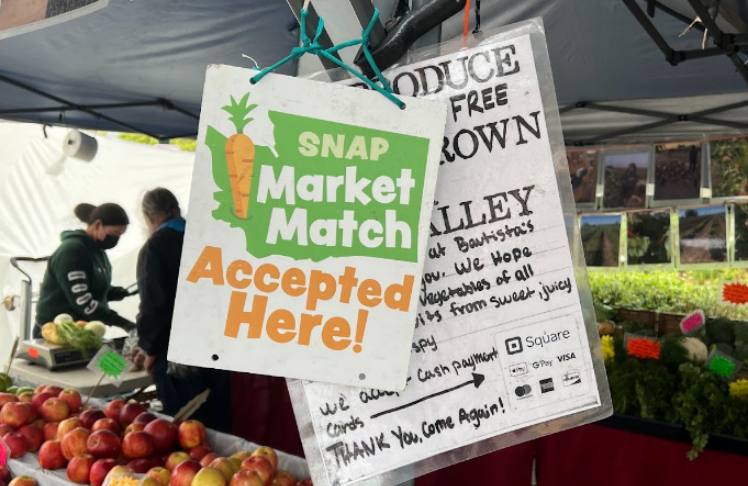
Through the state’s SNAP Market Match program, shoppers can redeem an extra $25 or more in special farmers’ market currency to spend on fresh produce. Since its launch in 2015, Market Match has funneled more than $8 million back to local farmers and initiated more than 210,000 interactions between SNAP shoppers and market vendors.
In King County, food assistance programs like Market Match were crucial throughout the pandemic, getting healthy produce into the bellies of hungry customers while also bolstering business.
Sales from food access programs like Market Match increased over 100% from 2020 to 2021, indicating strong momentum and promising economic recovery since the peak of the pandemic. In 2022, SNAP shoppers redeemed almost $700,000 worth of fruit and vegetable incentives in the Seattle metro solely through the Market Match program. Overall, farm vendors made $16.6 million in 2021, up from a low of $11.3 million in 2020 (though still short of 2019’s $18.9 million).
But while farmers’ markets revenues are back on the rise, so is food insecurity, which increased throughout 2022 and remains higher than before the pandemic.
According to a survey run by researchers from University of Washington and Washington State University this past winter, food-insecure Washingtonians say that affording groceries is their number one financial worry, above even rent or transportation. The team also found that the food received from hunger relief programs, especially food banks, rarely lasted more than a week.
“It doesn’t look very good to the community, they’re struggling. They’re trying to keep up with being healthy,” said Maymuna Haji-Eda, Othello clinic outreach coordinator for the Somali Health Board, a nonprofit working to reduce health disparities among immigrants and refugees within King County. “People are getting food from other places, but they tell me that things expire right away from the food bank and lines are too long.”
Even before the pandemic, food insecurity was (and still is) largely dictated by privilege. People of color, households with children, LGBTQ+ individuals, and low-income residents in South King County are all disproportionately likely to encounter barriers in their efforts to afford healthy food, according to a King County report on food insecurity.
Many communities prone to food insecurity were especially slammed by rising grocery prices in February, when the federal government rolled back pandemic-era boosts to food assistance programs. Washington SNAP households lost the benefits that many had come to rely on since the beginning of the pandemic, causing a monthly $95 million deficit in federal grocery aid statewide, according to the UW Center for Public Health Nutrition.

SNAP households with children received an average of $334 per month before the pandemic, but in March 2020, the federal government added an average of $171 to families’ budgets. Now that those additional benefits have expired, Washington SNAP customers will receive less than $180 for each household member per month, averaging out to less than $6 per household member per day.
The biggest hurdle to combating food insecurity is that King County doesn’t have stable funding streams to address the issue, instead relying on networks of partnerships to leverage federal, state, local and private dollars.
The Food and Vegetable Incentives Program (FVIP), part of the state Department of Health, typically receives about $3 million from the Legislature every two years to fund Market Match and a handful of other food assistance programs. But fully funding a statewide fruit and vegetable incentive program could cost anywhere from $15 to 31 million according to an economic analysis by researchers from Colorado State University.
However, additional funds are on the horizon: In the state budget passed last month, the Legislature appropriated to FVIP a one-time bonus of $6 million, which will be used to apply to a competitive cost-sharing award from the U.S. Department of Agriculture.
“I wish that that six million could be stretched even larger,” said Alyssa Auvinen, FVIP program manager. “[But] if we’re asking the feds for a million dollars, we have to show [with] state, local, or private funds that we have a million dollars in Washington to support that as well.”
If FVIP receives the USDA grant, which it has in 2015 and 2020, it could more than double the extra money received from the Legislature, receiving nearly $15 million to begin working with direct-market farmers, especially in rural areas with high food insecurity.
The biggest focus of the extra money from the Legislature, however, will go toward supporting SNAP Produce Match, the supermarket equivalent to Market Match through which SNAP shoppers receive incentives to purchase fruits and vegetables. The program exists in more than 200 grocery stores across Washington, but according to Auvinen, FVIP is working to expand Produce Match to an additional 30 stores.
Despite high economic uncertainty and rising grocery prices, food assistance programs like Market Match have worked for years to promote fresh, local fruits and vegetables and close Washington’s nutritional gap, thereby strengthening ties between health and community.
“Small-scale farmers in our markets have been very dedicated to programs like SNAP Market Match,” said Josie Hinke, marketing and communications manager for Seattle Neighborhood Farmers’ Markets, in an email.
“At the end of the day, they want to feed their community and earn a living as farmers, and programs that help to reduce the high cost of food grown at a small scale or through sustainable methods are a win-win.”