James Hasting…
I’d like to say that we are still in the forefront but I think that the only way we can become more in the forefront is through economic empowerment. I think that means that when there is opportunity to financially protest, that’s the way to protest. Often times we can caught up in the social media formats, but I think the only thing that we really stand to gain or grab someone’s attention is going to be through the almighty dollar. Unfortunately, the capitalistic society that we live in the only way that we can, being the number one consumers, as we often are as the African American community, is if we make a stance financially and that means as a business owner, can’t be concerned about being Blacklisted. Those are the things that we need to take on. And the brothers and sisters before us would want us to do that.
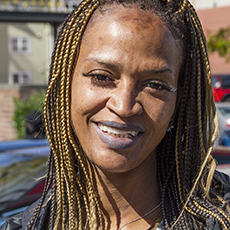 Djomme Howard…
Us as Black African Americans are being pushed back. I just believe that we as well as Native Americans should be given the opportunity and we are not given that opportunity and I feel that it is not righteous and it is unfair
 R.J. Johnson…
Well absolutely we are, we can never be removed. But, I said that with the caveat of saying “who’s forefront are we talking about?” Because the powers that be are trying to push the African American causes back to the back and they’re putting all kinds of other causes in its place. But, we’ll only be not in the forefront if we allow that, if we cave in to that push to overlook us or push us to the side, or push our issues to the side, then we’ll be guilty of letting them run that agenda on us. I think what has happened with us is we are becoming more aware or “awoke” as the young people say and we understand that economics is going to be the ladder that we use to climb out of the belly of the beast.
 Hayward Evans…
I absolutely believe that Black folks are in the lead in terms of the Civil Rights Movement. What I see though is everybody coattails and we get so far and it snatches you back and as soon as it snatches you back, it springs forward everybody else and that’s why every time we get legislation based on the 1964 Civil Rights Act, that was pushed by Black people, when they started writing the legislation, writing the Bills, they always pushed the White women, they always pushed every other group ahead of us. So then, when it comes to funding are we reaching our goals? Are they reaching their goals of inclusion and diversity? But the African American are at the bottom end of the table. Everybody coattails but when it comes to cutting that pie, when it comes to the financial and economic growth and development, we get the crumbs on the side and that’s why we have to keep on pushing.
 John Yasataki…
African Americans have always led the way in the fight for civil rights and equality and equity and it’s unfortunate that generations have passed on, so I look to the younger generations of African Americans especially because of the historical aspect of civil rights. All the groups that have benefitted from what African Americans have done, we owe a debt of gratitude to the African American community, I’m talking Asians, Latinos, Native Americans, LGBTQ, all the communities that are underserved, underrepresented and disenfranchised, we owe the African American community a debt of gratitude. Until every African American is free, we are not going to be free as a nation.
 Terry Calloway…
I feel African Americans are still at the forefront of Civil Rights. There has been a lack thereof in the ability to communicate effectively and network as a group entity. But, I still feel there are power in numbers and when we do work with each other we can shake some things up in order to receive what we need to receive. So my answer is Yes.