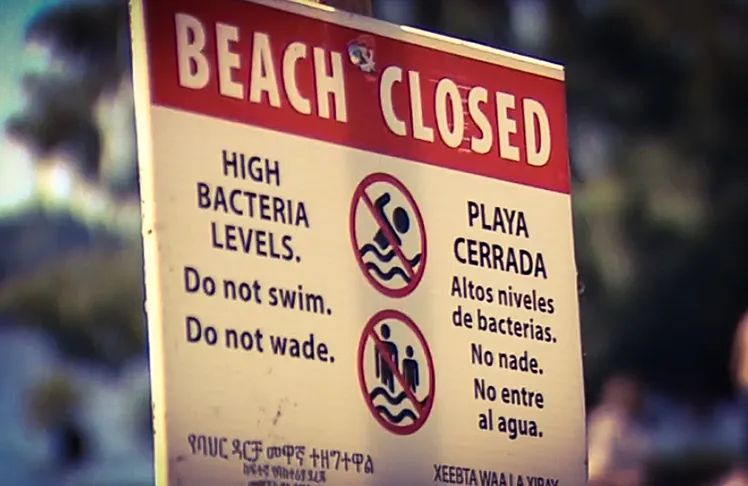
King County Public Health (KCPH) conducted a series of water quality tests at various beaches on September 9, 15, and 16, revealing concerning levels of bacteria in the samples collected. The health department’s assessments were based on the number of Colony Forming Units (CFU) detected, which quantifies the number of bacteria present per 100 mL of water—approximately equivalent to half a cup.
A beach is classified as contaminated when two or more samples taken on the same day exceed the threshold of 320 CFUs. The following beaches reported elevated bacterial levels in their water samples:
Madison Park Beach: Sample A recorded 760 CFUs.
Houghton Beach: Sample A showed 700 CFUs, Sample B had 500 CFUs, and Sample C reached 720 CFUs.
Gene Coulon Beach: Sample B indicated 340 CFUs, while Sample C reported 390 CFUs.
Newcastle Beach: Sample B recorded 330 CFUs.
Echo Lake Beach: Presence of toxic algae detected.
Cottage Lake: Presence of toxic algae detected.
Green Lake Beach East: Presence of toxic algae detected.
Green Lake Beach West: Presence of toxic algae detected.
Notably, on September 9, Newcastle Beach exhibited alarmingly high bacteria levels, with two samples significantly surpassing the KCPH threshold of 320 CFUs. Sample A recorded an astonishing 2,500 CFUs—eight times higher than the established contamination baseline for beaches in King County. Sample B was even more concerning, showing a staggering 4,100 CFUs, nearly 13 times the acceptable limit.
As temperatures soared back into the high 80s this week in parts of the greater Seattle area, residents seeking relief from the heat faced limited options for safe beach access. Nonetheless, several beaches remain open for public enjoyment, including Madrona Beach, Seward Park, Magnuson Beach, Meydenbauer Beach, and Enatai Beach, providing some respite from the summer heat. However, beachgoers are advised to exercise caution and stay informed about water quality conditions before heading out.