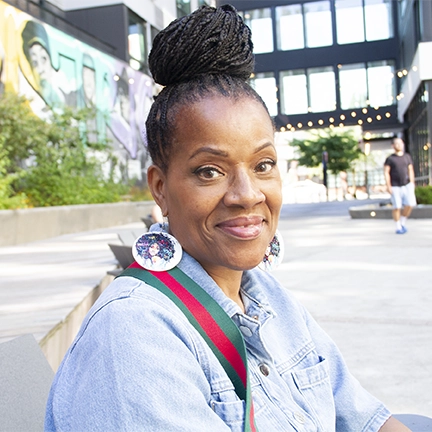
“I am concerned to some degree that they will, just as computers have. And I feel like it’ll have a definite negative impact just from what I see online now. I’m kind of over some of the stuff that AI is doing, and a lot of people are falling for it and believing what they see. I think there’s a need for AI, and in some aspects of our lives it can be helpful—facial recognition, those sorts of things—but just in everyday life, I could do without AI.”

“I think in the next ten years, some people’s jobs will be impacted, unfortunately, but I also think that some new jobs will be created. I don’t know if there are going to be more new jobs than there will be jobs that are eliminated, but there’s definitely change coming. And I don’t think we’ll really know until the time actually comes.”.

“I don’t think that they’re going to be taking jobs. I mean, I work in the healthcare industry as an IT analyst, and I actively work with AI tools for that company. And I still have my job. So, I feel like there is room for us to work with AI to help better some of the processes we already have, especially when it comes to healthcare tools or even engineering and things, but I don’t think it’s going to be taking jobs away. It’s probably just going to enhance the tools we already have.”

“I’ve been thinking about this a lot. We’re out of the industrial age. We were in an industrial age at first. It was about you going to school, you get in a trade, you build yourself up, you go to college, you learn these things, and then you go out and get a job. Now, the currency is not a trade anymore. The currency is your knowledge. That’s what’s moving right now. I believe it’ll be something to be concerned about for sure.”
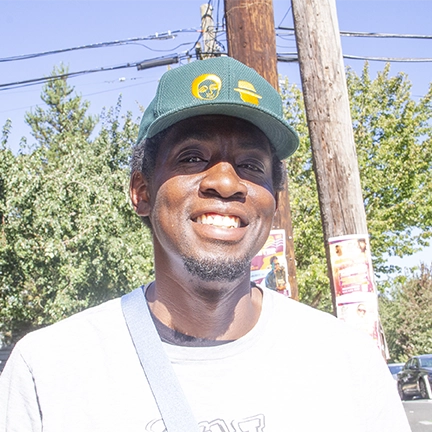
“I think AI has its place for specific jobs. And I mean very specific jobs that could speed things up. For instance, if I have a recipe book in English and I want to convert it into two or three other languages in a matter of no time, AI can do that in a matter of no time. In that way, it speeds up the process for me getting the information to my staff. And then there’s the other side of it: there will always be jobs that AI just can’t do, such as plumbers and tradesmen. AI can’t replace tradesmen. We need those. Those jobs will always be around. So, I think it’s kind of a give and take. It’s pros and cons. It’s a win or lose, but it can’t just be one way with all AI, period, regardless of how far we go with technology.”
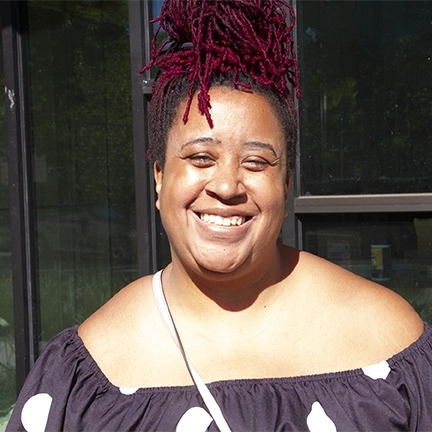
“I am worried about AI. However, am I concerned about how much we depend on AI? Yes, I am. Because I’m in mental health, I have a lot of clients for counseling who are using AI as therapy. And instead of asking questions, they’re using it to vet or using it to dispel a lot of personal things. So, it makes me afraid that years from now, even with doctors and hospitals, they’ll use it to diagnose. Doctors are not diagnosing anymore. And so, my question is, what does that do for people who are getting into certain fields and the ability of what they’re able to do? What does that do with the work ethic of the young people who are being born now, who will enter the workforce later?”