By Elizah Lourdes Rendorio
In the basement of Beacon United Methodist Church, a grocery bag hangs from the walker of 87-year-old Helen Sangin as she chats with other Filipino seniors waiting to receive their biweekly food donations.
Sangin, along with the more than 150 seniors who attend the IDIC Filipino Senior and Family Services Center, relies heavily on the center’s food pantry as benefits from federal food assistance programs dwindle due to the federal government shutdown.
The federal government shutdown has halted funding for the Supplemental Food Assistance program (SNAP), also known as the Basic Food program in Washington state. According to the Washington Department of Social and Health Services, the department will be unable to issue food benefits by the start of November, forcing many senior centers across King County to scramble for resources.
“When they cut off, oh my god,” Sangin, a SNAP recipient who takes three buses twice a week from Tacoma to IDIC, exclaimed. “What will happen to us?”
Senior centers are pivotal spaces for immigrant elderly adults to not only socialize but to get food, either through hot meals on site or food-bank groceries to take home.
The International Drop-in Center (IDIC) offers both programs in partnership with Sound Generations, a Seattle nonprofit organization that provides health and wellness, transportation, and food assistance services for older adults over the age of 60. Seniors come every Wednesday and Friday to eat and receive food supplies, such as rice, fresh produce, and Filipino imports while also participating in Zumba and bingo activities.
The center’s program manager, Lanvin Andres, said seniors enrolled in SNAP rely on the lunch program and food pantry to help stretch their SNAP electronic benefit transfers. However, the center has already seen an uptick in need, as senior participation has doubled post-pandemic.
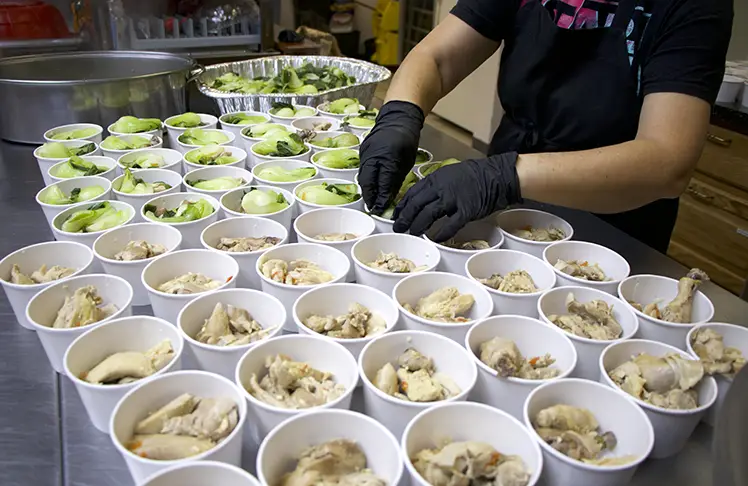
“We have seen a jump from a typical 50 to 60 individuals coming in on a Wednesday, double it up to 100 nowadays,” Andres said. “On a Friday, a typical 80 to 100 seniors have jumped up from 120 to 150 seniors. We are bursting at the seams.”
Similar trends are occurring in North Seattle, too. Siddiq Kakar, program manager at Lake City Senior Center, which primarily serves immigrant and refugee seniors, said they are unable to offer more than one meal a day despite previously having enough food to offer extras.
“Now we don’t have leftovers,” Kakar said. “Sometimes we witness fights, sometimes people want an extra meal to take with them home — we have to cut them because not even all of the participants would get the first meal.”
According to the Center on Budget and Policy Priorities, as of 2024 more than 888,000 low-income Washingtonians were enrolled in SNAP with more than 38% either elderly or disabled.
Brittinay Blue, chief of marketing and philanthropy officer at Sound Generations, said immigrant seniors will be disproportionately affected by cuts to SNAP because they face language, technological, and digital literacy barriers that make them more vulnerable to “falling through the cracks.”
Yikealo Beyene, program manager of the East African Senior Center, said many immigrants and refugees have little choice but to rely on government assistance programs due to their limited or non-existent employment history in the United States.
“To take away something that has been like a lifeline to them —it’s unimaginable.” Beyene said.

Andres said many seniors are unaware that these cuts are even happening in the first place and that those who do usually learn from community leaders like himself.
“They come to us and get an explanation about the changes in their EBTs, but for the most part, they just don’t complain anymore.” he said. “Unlike for people who grew up here, that this is a government program, we have the right to demand for more. Their generation does not have that thinking. We cannot expect them to voice out their frustrations.”
Bienvenido Credo, 91, is a longtime member of IDIC and a SNAP recipient. She lives with her daughter near Beacon Hill and goes to the center twice a week to receive hot meals, food supplies, and sing in their choir.
“Well, what can I do?” Credo said after learning about the potential cuts. “It’s there, whatever.”
Kakar said that the Lake City Senior Center will host an educational presentation to teach seniors how to navigate existing resources in their communities such as nearby food banks or private bakeries donating soon-to-be expired bread. The center is also working to provide education materials translated into multiple languages to bridge any communications gaps.
Beyene said the East African Senior Center is strengthening their relationships with local food banks to find ways to distribute food donations more effectively among the growing immigrant and refugee senior participants.
Andres said IDIC is hosting a series of fundraising events, including its end-of-year gala celebrating the center’s 54th anniversary with the goal of garnering community support and raising funds to sustain its programs.
Washington has joined a coalition of 25 other states Tuesday, filing a lawsuit against the United States Department of Agriculture, challenging their decision to withhold SNAP benefits as the federal government shutdown continues.
As Sangin and others patiently wait along the corridor of the church basement for their next food donation, Blue emphasizes that this is a vital time for communities to come together.
“The reality is we have so many older adults who have really paved the way and have created the opportunities that we have now,” Blue said. “It’s so often we forget about them and push them to the side and that’s what we’re trying to undo.”