By Aaron Allen
The Seattle Medium
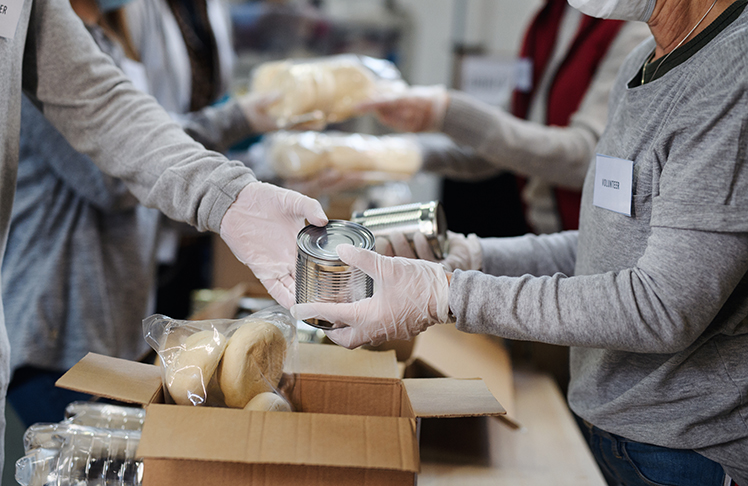
Last week, the King County Council unanimously approved a motion allowing King County to identify resources that can help nourishing networks and local food banks that are struggling to meet increased demand amidst the impacts of inflation, supply chain disruptions and labor shortages.
The legislation, co-sponsored by Councilmembers Reagan Dunn, Girmay Zahilay, and Sarah Perry, asks King County to look at all possible ways to support food banks, Nourishing Networks, and other organizations working to reduce food insecurity by performing outreach to identify what kind of assistance needed, and then determining what form of aid the County can provide, such as grants or volunteer recruitment.
“It’s no secret that grocery bills are soaring across King County, causing more and more folks to turn to their local food bank for help feeding their families. In turn, our food banks need a little help so they can meet those increasing needs as operating costs rise,” Dunn said. “I am grateful to my colleagues on the Council for unanimously supporting this legislation so that we can amplify the efforts of the organizations that are working day in and day out to serve those in our communities who are struggling to make ends meet.”
“I believe this is one of the most important decisions the county has made,” says Glen Turner, Director of the Emergency Feeding Program. “In the recent years we have experienced high levels of food insecurity, and our homeless community is suffering even more greatly so I think this is an excellent outcome.”
As emergency COVID-19 aid is coming to end, food banks are struggling with fewer resources. With record inflation rates people are turning to food banks for assistance. Ironically, those same inflation rates are a catalyst to the reduction of donations food banks are receiving and have also increased the costs of buying food to keep their supply sufficiently stocked.
“We know it’s our responsibility to not only feed families but feed them well,” said Maple Valley Food Bank Executive Director Lindsey Habenicht. “Now, increasing client counts paired with increasing costs of goods are forcing organizations like ours to ask ‘how?’ Currently, we are prepared to face the devastatingly grim reality that some of our programs may need to be cut if we don’t soon find new financial supports to help us bridge the gap.”
Councilmember Zahilay believes the legislation provides vital tool that the county can utilize to strengthen the community safety nets that are in place to help families in need.
“Food banks are vital pillars of our communities,” says Zahilay. “They feed families in need, provide water during the many heat waves over the summer, and even connect individuals to resources like rental assistance, job training, health services, and more. If we want healthy and happy communities, we must support our food banks. I’m proud to work directly with food banks and community members to create this legislation to promote food security in District 2 and throughout King County.”
According to the most recent Bureau of Labor Statistics Consumer Price Index report for Seattle in August 2022, inflation is up more than 8% from 2021. Food prices have jumped 10.8% from a year ago, led by a 13.4% increase in the cost of groceries. The report also detailed how energy prices increased 20% percent over the year, largely due to the 24.3% increase in gas prices.
“Hunger insecurity is at a critical point in our region and so many more of our families, loved ones, friends and neighbors are turning to our local food banks to help make ends meet for themselves and/or their families. We need to do all that we can to support our community members who are Seniors, Veterans, single parents and their children as they are the most vulnerable and depend the most on our food support programs to get by,” Perry said. “Approving this motion will allow King County to focus on solutions that support organizations working hard to reduce food insecurity across our region.”
Whether or not this a big step in addressing hunger, some believe more can be done and as community it is vital that not only the government, but the people of the community must step forward and take responsibility for its most vulnerable and underrepresented members.
“I truly believe from the standpoint of someone who works directly with organizations and individuals that are in food insecurities situations this is a great step by the county, but it is not a big enough step,” says Turner. “I believe that communities need to be more involved, I believe those that have the wherewithal to support these initiatives should step forward. We as a community should not leave this all up to the government to take care of these issues, I believe if we walk hand in hand and start to work together and try to offset hunger insecurity in our community it will go a lot further to irradicating this situation.”