By Kendall Black, The Seattle Medium
The U.S. Senate has advanced legislation to fund most operations within the Department of Homeland Security (DHS), moving to end a partial government shutdown that has disrupted air travel nationwide and left some federal workers without pay.
The bill, H.R. 7147, would provide fiscal year 2026 funding for key DHS agencies, including the Transportation Security Administration (TSA), U.S. Coast Guard, Federal Emergency Management Agency (FEMA), and the Cybersecurity and Infrastructure Security Agency.
However, the Senate-approved measure excludes new funding for U.S. Immigration and Customs Enforcement (ICE) and certain U.S. Customs and Border Protection operations, underscoring ongoing divisions in Congress over immigration enforcement policy.
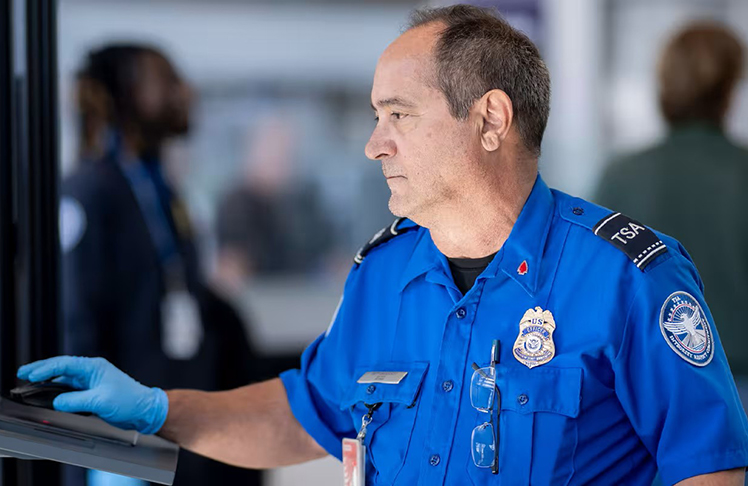
The funding lapse has already affected airport operations, with TSA workers missing paychecks and travelers experiencing long security lines as spring travel ramps up.
Senate Majority Leader Chuck Schumer said the bill reflects a necessary step to restore essential services while negotiations continue over more contentious immigration issues.
Schumer said the agreement ensures that critical agencies remain operational and that federal workers impacted by the shutdown will receive back pay. He described the measure as a way to stabilize key services while allowing lawmakers to continue debating broader policy disagreements.

U.S. Senator Patty Murray, vice chair of the Senate Appropriations Committee, emphasized the urgency of restoring funding for frontline workers, particularly those affected by the shutdown.
“Democrats have been clear for weeks: there is absolutely no reason that TSA agents’ paychecks should be held hostage to Republicans’ demands to provide another blank check for ICE and Border Patrol—and it is just plain wrong that their pay has been held up this long,” Murray said.
She added that the legislation would help restore stability for both workers and travelers.
“This is very good news for the TSA agents who’ve been working without pay and all the families who are looking forward to spring break travel,” Murray said.
At the same time, Murray criticized the breakdown in negotiations over immigration enforcement provisions, saying lawmakers were unable to reach agreement on reforms.
“But it is a shame that instead of working with Democrats to land the plane on several common-sense reforms to ICE and Border Patrol that the White House had already agreed to, Republicans walked away from constructive conversations,” she said.
According to congressional leaders, the bill is designed to fund areas of agreement while leaving unresolved immigration policy debates for future negotiations. It also includes provisions to ensure back pay for federal workers affected by the shutdown.
The legislation outlines funding across multiple DHS divisions, including departmental management, intelligence and oversight, enforcement and investigations, and emergency preparedness and response.
While the bill maintains funding for a wide range of federal functions—from aviation security to disaster response—it explicitly sets funding levels for ICE and certain border enforcement operations at zero in the Senate-amended version.
The measure now heads to the U.S. House of Representatives, where lawmakers are expected to act quickly ahead of a scheduled congressional recess.
If approved, the legislation would restore funding for most DHS operations while leaving broader disagreements over immigration enforcement to future negotiations.