By Kaanita Iyer, Katelyn Polantz, CNN
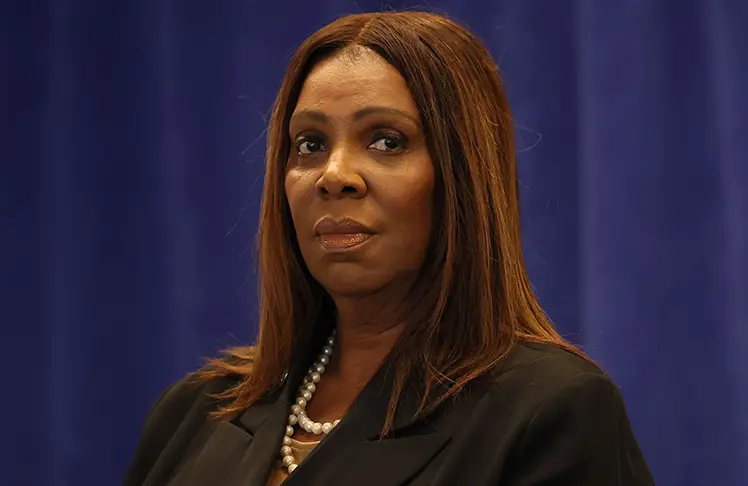
(CNN) — The Justice Department tried to add a third felony charge related to mortgage fraud against Letitia James when attempting to reindict the New York attorney general last week, according to court documents.
The attempted third criminal count, which was first reported by Politico, would have added to the allegations against James of making false statements to a financial institution. A grand jury in Alexandria, Virginia, declined to bring the new indictment that would have included the additional charge on December 11, as CNN previously reported.
James currently faces no criminal charges in the mortgage fraud probe, and prosecutors’ inability of securing a grand jury indictment – a rarity – against Trump’s political opponent has been an embarrassment for the Department of Justice, which is increasingly being accused of pursuing cases to satisfy the president rather than on sound legal reasoning.
The Justice Department, a day after the grand jury declined to bring an indictment, also attempted to seal the failed indictment, calling for the tradition of grand jury secrecy to be protected, including the jurors’ identities. However, a magistrate judge declined to do so, pointing to the fact that the grand jury’s decision was already reported by news outlets.
James, a Democrat, was indicted in October on one count of making false statements to a financial institution and one count of bank fraud. She pleaded not guilty to the two charges before the case was dismissed last month.
The Justice Department’s attempt to revive – and add – charges against James comes as President Donald Trump has used the department to target his political opponents.
Trump’s chief of staff Susie Wiles said in an interview with Vanity Fair that the president’s efforts to do so “may look like retribution,” adding, “there may be an element of that from time to time.” She said of the alleged prosecution of James: “Well, that might be the one retribution.”
When bringing the initial charges in October, prosecutors alleged that James had claimed on mortgage paperwork that a home she purchased in Norfolk, Virginia, would be her second residence, allowing her to get a favorable mortgage rate. Prosecutors said that James didn’t use the house and rented it out instead.
James’ indictment was dismissed in November after a federal judge found that Trump’s appointment of interim US Attorney Lindsey Halligan to the district which prosecuted the case was invalid. Since then, the Justice Department tried and failed to reindict James twice.
Prosecutors could go back to a grand jury again and continue their efforts to reindict James over the same allegations in the hopes that it will approve charges.
Slight changes to planned James case
The new court filings in the Eastern District of Virginia capture the latest iteration of a US attorney’s office scrambling to place James under indictment, and a judge and jury unwilling to sign off on the approach.
One of the documents, reporting the grand jury’s decision not to indict James, says the US attorney’s office was unable to convince the necessary 12 grand jurors out of a possible 23 that there was probable cause to indict James on mortgage fraud.
Typically, it is notoriously easy for prosecutors to secure indictments for multiple reasons: because they have to meet a lower standard of evidence than in a full criminal trial; the jurors’ vote only needs to be a majority and not in unanimity; and there is no defense-side pushback available for grand jurors to hear before they vote in the secret proceedings.
A grand jury’s approval is a necessary step in the federal justice system for approving felony charges against a criminal defendant.
While a grand jury in Alexandria had approved a now-dismissed mortgage fraud indictment of James earlier this fall, grand juries in two different Virginia federal courthouses declined to charge her twice in December, in what’s called in court a “no true bill.”
James had pleaded not guilty to the first round of charges, and her attorney Abbe Lowell has repeatedly said the Justice Department’s investigation of her is borne from unfair political animus.
The failed December 11 indictment isn’t fundamentally different from the allegations in the original case against James, despite the additional criminal count prosecutors wanted to add.
But it does tweak the false statements charges prosecutors sought, according to the court records. In the original indictment, prosecutors sought to charge one count of false statements regarding representations she made to the mortgage lender OVM Financial. In the December 11 version of the indictment, there are two separate false statement charges, each regarding two different documents James sent to OVM Financial in which she allegedly listed her Norfolk, Virginia, property as a second home, according to the court record.
The Justice Department did remove from the latest version of a possible indictment, however, any mention that James had rented the home out to a family, which was included in the first version of the case, and instead asserted she stayed in hotel rooms when visiting Norfolk instead of staying at the house.
The latest version of the proposed indictment also omits exact figures for the loan amount and James’ alleged unfair financial gain.
The judge in Alexandria, William Porter, who received the grand jury’s no true bill on December 11, noted the history and public interest of the James investigation in deciding to make the full proposed, failed indictment public this week, after the grand jury presented it to him in open court.
“The grand jury’s decision to make this no bill public serves the interest of transparency when an individual has already suffered the stigma of public criminal charges,” Porter wrote.
CNN has reached out to the Department of Justice for comment. A spokesperson for James’ legal defense declined to comment on this story.
CNN’s Devan Cole, Hannah Rabinowitz, Casey Gannon, Katelyn Polantz and Kaitlan Collins contributed to this report.
The-CNN-Wire
™ & © 2025 Cable News Network, Inc., a Warner Bros. Discovery Company. All rights reserved.