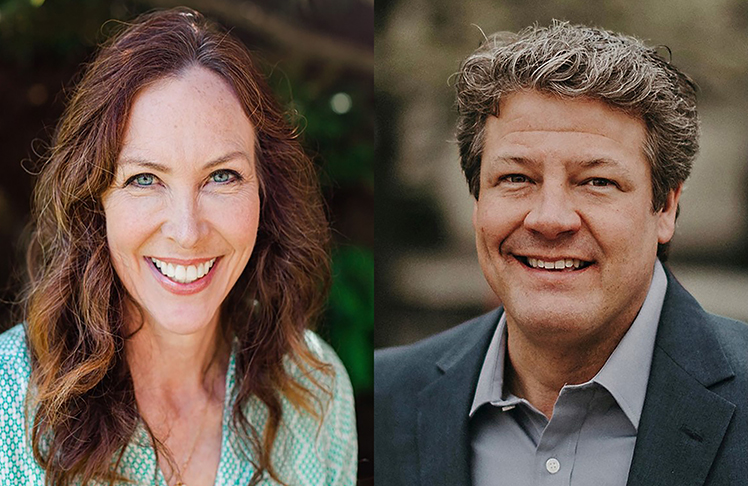
By Aaron Allen, The Seattle Medium
King County Council Vice Chair Reagan Dunn and Seattle City Attorney Ann Davison are both proposing legislation to address public intoxication and drug use, by criminalizing public drug use.
Dunn’s proposal follows the Washington State Legislature’s failure to provide a permanent state-level drug possession law after the State v. Blake decision. While Davison’s proposed legislation, in partnership with City Councilmembers Sara Nelson and Alex Pedersen, seeks to prohibit the use of drugs in public places like parks, sidewalks, bus stops, and public transit.
Davison’s legislation is modeled after a similar ordinance recently passed in Bellingham, and acknowledges the public health crisis of substance use disorder, and, according to Davison, will provide a new tool to engage those using drugs in public. In 2022, Seattle had 589 overdose deaths, with the majority attributed to fentanyl and methamphetamines.
“Enabling open-air drug use in our communities hurts everyone, not only our children and law-abiding citizens, but the drug users themselves who are, tragically, dying in droves from overdoses,” said Dunn. “King County must act immediately to protect the safety of our communities by making the consumption of dangerous drugs in public an arrestable offense.”
“The epidemic of drug use is killing Seattle residents and depriving the public of spaces intended to be safe for everyone,” said Davison. “We will not give up areas of our city to overt drug use and antisocial behavior, and this legislation will bring a critical tool to disrupt open-air drug markets, reclaim our green spaces and sidewalks, and protect transit riders.”
According to Dunn’s proposal, local jurisdictions have until July 1, 2023, to pass their own ordinance penalizing drug possession before the stopgap state possession law expires. After July 1, there will be no state law prohibiting individual possession of drugs, including fentanyl, methamphetamines, and heroin, at any location, including sidewalks, bus stops, parks, and playgrounds.
Both proposals seek to make public consumption a misdemeanor, as data shows an increase in overdoses and overdose deaths.
“More than half of King County overdoses in 2022 happened in Seattle, predominantly in the downtown core,” said Davison. “Overdose deaths in Seattle have increased by 72% year over year. Limited tools currently exist to require engagement in treatment for substance use disorder. By making public consumption of controlled substances a misdemeanor, this legislation provides the City Attorney with the ability to prosecute public drug use or divert those cases for treatment in appropriate circumstances.”
In King County, overdose deaths have nearly doubled since 2020, largely driven by the spread of fentanyl. In 2022, 690 people died from a fentanyl overdose, which is a shocking 551% increase since 2019. 2023 is on track to be an even worse year for overdose deaths; in 2022, an average of 1.95 people died of fentanyl overdoses each day, and so far in 2023, the average is 2.7 deaths per day.
“Our hands-off approach to people using illegal drugs in public has resulted in rampant street crime and a death toll rivaling that of COVID-19 in Seattle. Complacency is no longer an option,” says Seattle Councilmember Sara Nelson.
Under Dunn’s proposed ordinance, it would be unlawful to knowingly use a controlled substance in public places, including streets, alleys, parks, cars, and public buildings in unincorporated King County. Dunn also sent a joint letter with Pierce County Councilmember Dave Morell and Snohomish County Councilmember Nate Nehring to the Washington State Association of Counties, encouraging a more aggressive approach in dealing with the state Legislature’s inaction, including providing model legislation that cities and counties can adopt to make public drug use illegal in their respective jurisdictions. Dunn’s legislation will be heard in the Law, Justice, Health, and Human Services Committee at a later date.
The proposals have received support from various sectors, including business owners, residents, and community groups. They argue that the increase in public drug use and overdose deaths has created an unsafe and unhealthy environment for everyone, and that criminalizing public drug use is necessary to address this crisis.
However, some groups have raised concerns about the potential negative consequences of criminalizing drug use. They argue that criminalizing drug use could lead to an increase in arrests and incarceration rates, further stigmatize drug users, and undermine efforts to address substance use disorder as a public health issue.
“It’s simply not okay for people to smoke fentanyl or to use other illegal drugs in our public spaces or on our public transit,” says Seattle Councilmember Alex Pedersen. “The laws on the books need to reflect those basic public health and safety standards so everyone knows it’s no longer the ‘wild west’ in Seattle.”