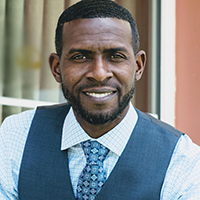
By Will Hausa
Chairman, Washington State Commission on African American Affairs
My goal as the Chairman of the Commission for African American Affairs is to increase the African American community’s readiness to be economically empowered for years to come. In this role, I have the opportunity to learn about what our lawmakers are working on in Olympia. This session, I was glad to learn that the Legislature was working to address the affordability of childcare and preschool for hard-working Washington families.
This is an economic issue and indeed goes to the heart of my goal for the community. A recent report from the Association of Washington Businesses (AWB) found that half of Washington families could not find and keep affordable and reliable childcare. 27% of our state’s parents leave work, school, or other professional development opportunities because they can’t afford childcare or preschool. The lost wages from leaving the workforce have long-term financial consequences for families.
The fact is, childcare and preschool are very expensive. I am concerned about the affordability for young families. This issue hits people across the income spectrum. I know folks who are making a comfortable living and paying for childcare is still a problem. I’m blown away by families making $40,000 or $50,000. That income used to be considered average, but with the high cost of living in growing cities like Tacoma and Seattle, those folks are just surviving. They have to make hard financial decisions about if and when they start a family.
This is true for me as well. I am a father of two. My five-year-old has just started Kindergarten and we have a 2-month old baby at home. My wife and I are talking about working from home or building flexible schedules to make sure our baby is cared for. In a two-working parent household, these conversations are very real and hard. Eventually our youngest will be going to pre-school and we’re looking at $1,500 per month bill.
Our eldest attended a quality pre-school, but still had to catch up when he entered Kindergarten. It took him time to learn how to be a student. Kindergarten is different, it’s more structured and formal. For children who are not exposed to this kind of environment, their learning curve to catch up to their peers who are prepared is even steeper. Because the cost of childcare and preschool is so prohibitive for many Washington families, their children are starting school less prepared. And that’s not fair for our youngest learners. Equity should start at birth.
In a perfect world, I would love to have a parent stay at home for a couple of years – not out of financial necessity, but because they want to. But that’s not the reality. In my city, Tacoma, prices are rising faster than wages, so the cost of living is increasing. Home values are skyrocketing, and that means rents are going up too. Very often two people need to work to make ends meet. Parents have to send their kids to childcare, but childcare and pre-school cost as much or more than rent or a mortgage. It’s a catch-22.
Childcare and preschool business owners are also looking at the economics. They are struggling to pay their workers a reasonable rate. So, they increase tuition costs. Our childcare providers and preschool teachers need the motivation and support to do a good job, and that includes a good wage. But that leaves families in a bigger bind because they get priced out of the system.
Finding ways to cap off or buffer costs and promoting an early childcare and learning system that is wage-based can help working families keep their jobs while building a strong foundation for their children. This will likely have to come from an outside source, rather than within this broken system. I encourage you to learn more about these issues and keep the conversation going at home, in your community, and with your lawmakers in Olympia.
Will Hausa is the Chairman of the Washington State Commission on African American Affairs representing Peirce County. He is an engineer who oversees the biochemical treatment of The City of Tacoma’s industrial and municipal resource water.