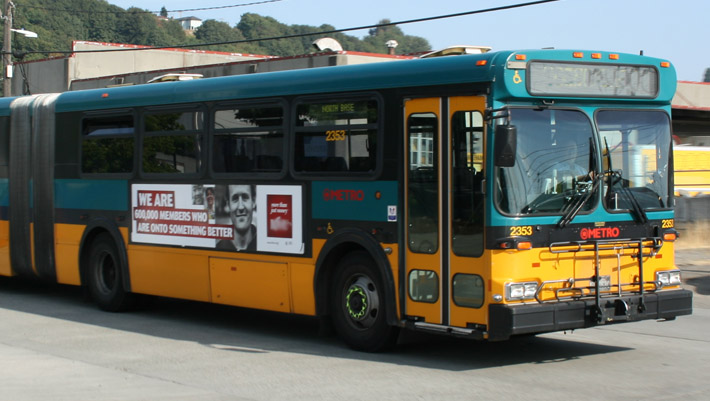
Last week, The King County Council gave its unanimous approval to a contract agreement with the city of Seattle that will allow the city to purchase additional transit service hours from Metro Transit. The approved legislation will implement an increase of 223,000 additional hours of transit service starting in June.
“We must keep our buses rolling throughout the region and avoid transit cuts that have a devastating impact on our mobility, economy, environment and vulnerable populations,” said Council Chair Larry Phillips, a co-sponsor of the legislation. “This agreement is the first step in what I expect to be a larger process to keep buses serving our region and I appreciate Seattle’s willingness to restore, sustain and grow service and help keep King County moving.”
Seattle is one of the first cities in the County to take advantage of a program allowing cities to purchase additional bus service. Last November, Seattle voters approved a ballot measure generating revenue that would go toward the purchase of increased transit service. The proceeds received from an increase in license tabs and Seattle’s sales tax will go towards bus routes with 80 percent or more of their stops in Seattle.
“Seattle voters made it clear they understand the valuable service Metro Transit provides for all bus riders,” said Councilmember Larry Gossett. “This agreement means there are now funds to restore night and ‘off-peak’ service to the riders in my district that depend on Metro Route 27 to get them to their jobs and the services they need in Downtown Seattle.”
The increased service hours will be implemented starting this June. The second phase will be put in place with the scheduled September transit service changes. Seattle will pay for each hour of bus service provided, with the hourly rate reflecting Metro Transit operating costs for each type of bus used. Metro agrees to maintain current bus trips on route that Seattle invests in. The agreement also defines Metro Transit’s commitment to maintaining service in areas where bus service is restructured.
The investment in service will focus on:
• Overcrowding. Added bus trips on crowded routes listed in the Metro 2014 Service Guidelines Report – the top priority in the Metro Service Guidelines for adding service. All identified Seattle route needs are included.
• On-time Performance. Added service hours to improve schedule reliability on bus routes identified as having poor on-time performance in the 2014 Service Guidelines Report – the second highest priority in the Metro Service Guidelines for adding service hours. All identified Seattle route needs are included.
• Underserved Transit Corridors. Added service hours for some transit corridors identified as “underserved” in the 2014 Service Guidelines Report – the third highest priority in the Metro Service Guidelines for adding service hours.
Some transit service reductions that had been part of the September 2014 transit service change will be reversed in this agreement: Route 19 peak service will be restored, with five morning and six afternoon peak direction trips; the Route 47 will be partially restored; and Route 27 off-peak and night service will return.
Additional Seattle bus service investments provide more service on Metro routes that are identified as priorities in the Seattle Transit Master Plan, a City-generated plan. These investments include peak period, midday, evening, and weekend service.
“This action signifies a strong partnership between Seattle and King County to improve transit service in Seattle that will help mitigate growing congestion in our region,” said Council Vice Chair Joe McDermott. “Increased bus service is desperately needed demand for affordable and efficient means of transportation grows.”