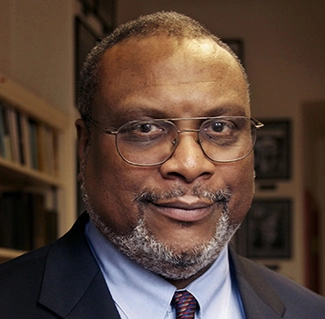
Dr. Quintard Taylor, a pioneering historian, educator and founder of BlackPast.org, transformed the study of African American history and expanded its reach to millions across the globe. A grandson of formerly enslaved people and the son of sharecropping parents who cherished education, Taylor built the world’s largest online encyclopedia dedicated to Black history and spent nearly five decades ensuring that Black stories were researched, preserved and made accessible to all.
Through his scholarship, teaching and digital innovation, Taylor insisted that Black history was central to the American story. He often said his own life was wrapped up in Black history, a reflection of both his ancestry and his professional calling. That conviction shaped a career defined by rigor, vision and public engagement.
Born Dec. 11, 1948, in Brownsville, Tennessee, to Quintard and Grace Taylor, he grew up in a segregated South where education was both a challenge and a lifeline. He attended George Washington Carver High School, an all-Black school originally founded in the 1860s as a Freedman’s School for Blacks and funded by African Americans. The school’s principal, Mr. Bond, had been trained by W.E.B. DuBois at Atlanta University and instilled in his students a sense of intellectual purpose. Under that influence, Taylor developed an early commitment to studying and teaching Black history.
After graduating high school, he enrolled at St. Augustine’s College in Raleigh, North Carolina, earning a bachelor’s degree in American history in 1969. He went on to complete a master’s degree in 1971 and a doctorate in 1977 in American history at the University of Minnesota Minneapolis. His academic formation came during a period of social upheaval and transformation in the United States, and he emerged determined to broaden the scope of historical inquiry to include voices long marginalized in mainstream narratives.
Taylor began his academic career as an assistant professor of Black Studies at Washington State University from 1971 to 1975. It was there that he deepened his interest in African Americans in the American West, a field that would become a hallmark of his scholarship. From 1977 to 1990, he served as a professor of history at California Polytechnic State University. During that period, he was also a Fulbright Hays Professor of History at the University of Lagos in Nigeria from 1987 to 1988, an experience that further expanded his global perspective on the African diaspora.
From 1990 to 1999, Taylor taught at the University of Oregon, where he served as department chair and acting director of the Ethnic Studies Program. In 1999, he was appointed the Scott and Dorothy Bullitt Professor of American History at the University of Washington, the oldest and most prestigious endowed professorship at the university. He held that position until his retirement in 2018. In recognition of his impact, the university renamed its seminar room the Dr. Quintard Taylor Seminar Room.
While teaching at the University of Washington, Taylor launched what would become one of the most influential digital resources in Black historical scholarship. BlackPast.org began in January 2004 as an online reference center featuring materials from his lectures. Taylor and his graduate assistant, George Tamblyn, posted short entries describing historical figures and events discussed in class. They later added bibliographies, timelines and links to other resources exploring the Black historical experience.
In December 2004, his daughter, Jamila Taylor, joined the small team and redesigned the website, creating a new architecture that made it easier to navigate and manage. The project’s global reach soon became evident. In the summer of 2005, Taylor received an email from Anna Griffiths, a high school student in New Zealand writing a paper on African American history. Her questions about the civil rights movement signaled that the site had traveled far beyond the University of Washington campus.
That same year, students at Urals State University in Yekaterinburg, Siberia, discovered the website, prompting a U.S. State Department sponsored invitation for Taylor to lecture in several Russian cities, including Yekaterinburg, Omsk, Tyumen, Ishim and Surgut. Those international connections confirmed the enormous potential of an ungated, freely accessible online encyclopedia devoted to Black history.
On Jan. 1, 2006, the team began tracking users and found the site drawing hundreds of visits per day. They partnered with Grip Media of Portland, Oregon, to redesign and streamline the platform. On Feb. 1, 2007, BlackPast.org officially launched as an independent site with approximately 600 entries, 90 major speeches, 80 full text primary documents and seven major timelines.
The growth that followed underscored the global hunger for accessible Black history. In 2007, the site received 455,963 visits from more than 100 nations. By 2008, annual visits exceeded 1 million. In 2023, 6.5 million people visited the website, bringing total life of site users since its official launch in 2007 to 60 million. Nearly 1,000 contributors from six continents have written more than 7,200 entries, with new material added regularly.
BlackPast.org now features timelines spanning from 5,000 B.C.E. to the present, full text speeches dating back to 1789, primary documents such as court decisions and executive orders, and links to 50 digital archive collections, 75 African American museums and research centers, 12 genealogical research websites and more than 500 additional resource centers. With the addition of Global African History, the site extends its coverage to Africa and people of African ancestry in Latin America, the Caribbean, Europe and Asia. It is available around the clock to anyone with internet access and charges no fee.
Taylor viewed the democratization of knowledge as essential to social progress and healing. He often reminded audiences of the stakes involved in preserving the historical record. “As long as BlackPast exists, Black history will not be erased.” Those who worked with him often noted that he treated history not as a distant discipline but as a shared inheritance.
His published scholarship reinforced that mission. Among his books are The Making of the Modern World: A Reader in 20th Century Global History, The Forging of a Black Community: Seattle’s Central District from 1870 through the Civil Rights Era and In Search of the Racial Frontier: African Americans in the American West, 1528 to 1990, which was nominated for a Pulitzer Prize in History. He also coauthored Seeking El Dorado: African Americans in California: 1769 to 1997, African American Women Confront the West: 1600 to 2000, From Timbuktu to Katrina: Readings in African American History and America I Am Black Facts: The Story of a People Through Timelines, 1601 to 2000. His final published book, Dr. Sam, Soldier, Educator, Advocate, Friend: The Autobiography of Samuel Eugene Kelly, appeared in 2010.
At the time of his death in Pearland, Texas, on Sept. 21, 2025, Taylor was completing Urban Archipelago: African Americans in the Twentieth Century Urban West with Dr. Herbert Ruffin II of Syracuse University. Before his passing, he arranged for Dr. Albert Broussard of Texas A and M University to assist Ruffin in finalizing the manuscript for posthumous publication, ensuring that his final scholarly contribution would reach readers.
Over the course of his career, Taylor received numerous honors, including the Carter G. Woodson Award from the Association for the Study of African American Life and History and the National Education Association, the Washington State Jefferson Award for Public Service and the Lifetime Achievement Award from the Pacific Northwest Historians Guild. In 2017, he was featured as an honoree in HistoryMakers. He also served on the boards of the Washington State Historical Society, HistoryLink and the Central District Forum for Arts and Ideas, and consulted on projects for the Schomburg Center for Research in Black Culture and the Smithsonian National Museum of African American History and Culture.
Through classrooms, books and a digital platform that spans continents, Dr. Quintard Taylor demonstrated that Black history is not peripheral but foundational. By bringing that history into homes, schools and institutions worldwide, he ensured that it remains visible, studied and celebrated for generations to come.