By Aaron Allen, The Seattle Medium
This past weekend, the Roosevelt High School Foundation announced its 83-member inaugural class for their Wall of Honor. This first class includes distinguished alumni and staff of Roosevelt High School and marks the culmination of nearly a year-long process involving input from the school and its alumni community. This effort is part of the Roosevelt High School Centennial Celebration (1922-2022).
Out of the inaugural class, eight individuals of color are members, with four of them being part of the initial students participating in Seattle’s Voluntary Busing Program. Three of the honorees – Les Young, Allan Bergano, and Joe Hunter – shared their experiences with The Seattle Medium.
According to Hunter, a counselor at Washington Junior High School, whose husband was a teacher at Roosevelt at the time, he and a few other students were approached about the busing program to gauge their interest. Ten of them decided to participate and began attending Roosevelt in 1968.
“There were low expectations [for us],” recalls Hunter. “Looking at us, I think we showed everyone that it wasn’t a question of area, ethnic group, or race; it was about the opportunity to be there. Given the opportunity, we took advantage of it. I didn’t realize I was a minority until I went to Roosevelt, because everyone at home looked like me.”
After the assassination of Martin Luther King, Jr., the nation began seeking solutions and alternatives to the ongoing racial crisis of the 1960s. Allan Bergano, Founder of the Filipino American National Historical Society and a member of the Roosevelt class of 1971, remembers the backlash related to the assassination and how it affected his community.
“Back in those days, Seattle was very segregated,” says Bergano. “People of color weren’t allowed to live in certain parts of the city, and we didn’t realize that was a limitation until we got older. I went to all-Black schools in the 1960s. The whole nation went through a racial reckoning where we got sick and tired of the racism that was going on.”
“The entire community was up in arms, and they had redlining back then. Housing started opening up, and people moved to other parts of the city,” he continued. “The busing program was one of the initial actions to address this race issue and bridge the racial divide. So, they began with a voluntary busing program where students from the Central Area were bused to any white school, and at that time, Roosevelt was the best school. They had the resources, teachers, and reputation.”
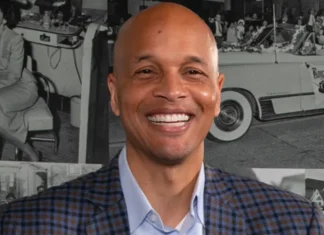
Les Young, also from the class of ’71 and a former Assistant Chief with the Washington State Patrol, reflected on how nostalgic the experience was and how the comparisons between the negatives and positives they fought for over 50 years ago can still be seen today.
“My experience in the voluntary busing program was bittersweet,” says Young. “Looking around and seeing what’s happening in the country right now is a reflection of what we tried to address 50 plus years ago. And guess what? Not only has very little changed, it has even worsened. So, it truly is bittersweet.”
“The sweet part is looking back at the people of color in our class, those being recognized, all of whom went to Roosevelt, contributed not only to that scene out there but also had a positive influence on many students, Black and white. They had great careers and are now being recognized for their contributions not only to the community but to society at large,” added Young.
For these three honorees, the pride they have in their accomplishments doesn’t compare to the experience of 1968 and the impact it would have on the Puget Sound’s education future. Proving that no matter the color of your skin, success in life can be attained by all if you believe and put in the work.
“The small group of people that I transferred to Roosevelt with were among the original classes. We were trying to figure out what we were supposed to do,” says Bergano. “Were we supposed to become Uncle Toms now? Were we supposed to dress and act like them (white people)? So, we made a pact; we were going to do our best just to show people that we can compete with them academically, musically, and that we’re here to be part of the solution.”