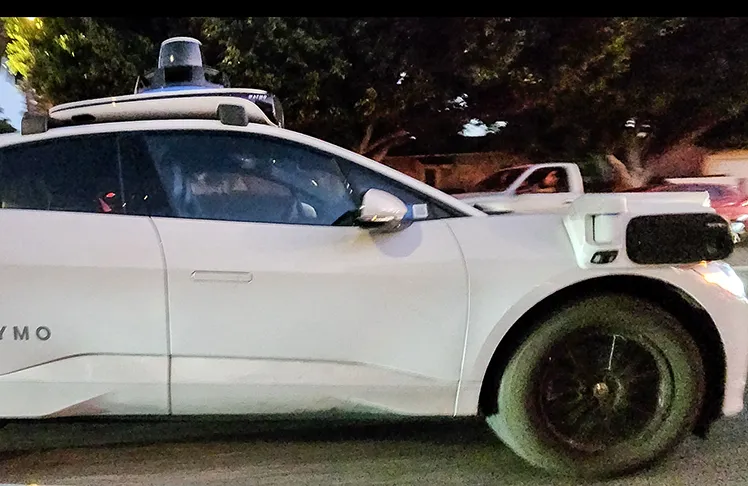
Robotaxis are increasingly becoming a common sight in various U.S. cities, including San Francisco, Phoenix, Los Angeles, and Austin. However, their presence raises concerns about how these autonomous vehicles will navigate streets during emergencies, such as fires or major accidents.
In response, Seattle is actively working on a solution to ensure that emergency information is quickly relayed to robotaxis. Armand Shahbazian, the electric and automated mobility policy advisor at the Seattle Department of Transportation, emphasizes the importance of this initiative.
Cities like Seattle experience up to 800 emergency dispatches daily. Currently, when someone calls 911 in cities that have deployed robotaxis, the dispatcher logs the type and location of the emergency and sends an email to the robotaxi companies. These companies are then expected to direct their vehicles away from the area. “From there, it’s a bit of a black box,” Shahbazian explained. He noted that while companies receive alerts, the process of relaying that information to the robotaxis can be cumbersome and inefficient.
There have been incidents where robotaxis have obstructed emergency responses. For instance, earlier this year in San Francisco, a bystander captured a moment when a robotaxi stopped in the intersection, blocking three emergency vehicles while a first responder directed traffic. Fortunately, two fire trucks and another responder were able to navigate around the stranded car.
To address these challenges, Seattle has partnered with the Open Mobility Foundation, a nonprofit organization that develops digital tools and data standards for public spaces. The foundation created the Mobility Data Standard, which is currently utilized to manage shared bikes and scooters in various cities.
Shahbazian mentioned that Seattle’s data-sharing framework for bikes and scooters involves a continuous exchange of information, facilitating the enforcement of road rules for over 40,000 micromobility trips daily. The city aims to adapt this system for use with robotaxis.
Andrew Glass Hastings, executive director of the Open Mobility Foundation, explained the concept: “Autonomous vehicles know they need to get from point A to point B.” He oversees Seattle’s pilot program, which seeks to directly connect 911 emergency dispatch data with robotaxis, enabling them to avoid emergency scenes altogether.
If successful, this system could also benefit sidewalk robots and delivery pods. The pilot program is supported by two prominent robotaxi companies, Waymo and Zoox, along with Google Maps and several other cities. As cities across the U.S. observe Seattle’s efforts, ensuring that robotaxis do not obstruct emergency operations remains a key concern for expanding their presence on public roads.