By Aaron Allen, The Seattle Medium
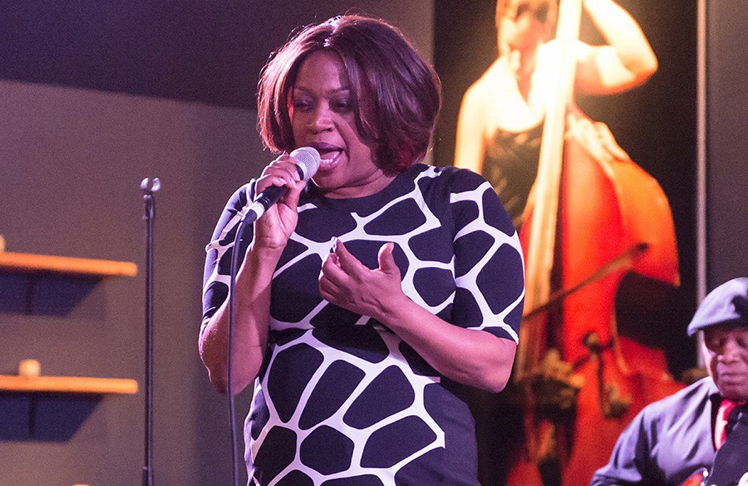
“Know your body,” says Seattle Songstress Josephine Howell, as she reflects on her ongoing battle with COVID. “As Black women, African American women, we tend to push past the pain, know your body so you can tell when something is wrong. Don’t ignore the pain.”
Prior to contracting COVID-19, Howell was a busy woman. As an artist, actor, singer, producer, public speaker, writer, grandmother, mother, sister and daughter Howell could not keep still. She has to be moving, be involved, working, and stay busy. As an artist, as a conscientious Black woman, her imagination will not let her rest.
But then, Howell contracted the coronavirus and all that had to change, but not without a fight.
“I contracted COVID in March,” said Howell. “At least that is when I got tested. But I could not tell where I got it from. I am involved in so many things, I couldn’t tell you where I got it from.”
“I do know that it took me for a loop,” continued Howell. “I was not expecting to contract COVID, I don’t know why because I have a lot of the pre-existing conditions, but I contracted it and it had me down until June.”
Hearing the reports on how long COVID symptoms could last, Howell’s children were surprised and dismayed at how long the virus was active in their mother’s body.
“Hearing that COVID-19 was only supposed to last for two weeks before relief only to learn, sadly, that this was not true [was difficult],” says Howell’s daughter, Chyee Howell of her mother’s bout with COVID. “It lasted three months and not knowing how it would affect her body was the most-scariest thing.”
During the early stages of her bout with the virus, Howell said she experienced headaches. According to Howell, she never gets headaches, and wondered aloud ‘is this what happens to people who get migraines, is this what they feel like? How can they function?’ But Howell, being the strong Black woman that she is, pushed through the pain.
In the coming days, body discomforts like aches, pain and itching began to set in. Once again, despite having pre-existing conditions, Howell continued to push through the pain for the better part of a week.
Despite the warning signs, Howell did not consider COVID as the cause of her discomfort, as she was one to believe that she was not going to get the virus, but she finally succumbed and called her physician. Because of her pre-existing conditions her doctor advised her to get tested for COVID.
Fast forward to June, four months later, and Howell was still battling the disease without any real understanding except for the fact that this disease is real. Her doctor’s advice after relaying the news that she was positive was to rest, drink lots of fluids, get more rest and to quarantine.
“My doctor said to rest and drink lots of fluid, get a lot of sleep, in which, that I did not do it all,” says Howell. “The main thing my doctor told me to do was to rest, but I couldn’t rest. My lifestyle doesn’t allow me to rest. I did quarantine, but I’m thankful to God that I could not rest like she wanted me too, because I really believe the things that I was doing at home, my activities helped me with the pain and discomfort.”
Quarantine is not Howell’s disposition, on the contrary. Howell’s love of life is to be involved and active, from motherhood to performing to community activism. So, from her perspective quarantine and rest were the worst of the anecdotes. According to Howell, her inability to be active was her greatest battle.
“I think one of the hardest things about having COVID was the isolation,” Howell reflects. “I am an artist, so I have a creative mind which can be good and bad cause you creatively start thinking of things when you’re by yourself. I live by myself, so the isolation was one thing that had me shaken.”
“Your imagination can often times go wild, so I tried my best not to listen to the news or anything,” continued Howell. “It is like someone has cancer and they are listening to the news and all day they are talking about people dying of cancer, you don’t really want to hear that. So, I try not to listen to it.”
Her family circled her with support and love as Howell tried to understand and battle with what was going on in her body and mind. She refused to give her mind and imagination any fuel that would negatively impact her mission to overcome the virus.
Josephine Carson, one of Howell’s thirteen children, who works in the medical field, says that the experience was not only difficult for Howell, but it was difficult for the whole family.
“I was the drop off lady as far as dropping things off at her door,” says Carson. “She would be so lonely and she would hear me pull up and I could hear her rushing to open the door and I would have to remind her ‘don’t you open that door’ and it was hard not being able to just go in and help her.”
As time went on and Howell continued to test positive for the virus, she began to experience chest pains and breathing complications. In these moments, she also experienced the loss of taste and fatigue set in.
“I got tested three times and tested positive each time,” recalls Howell. “I finally did get a negative test in June. Literally, my doctor told me ‘you’ve had this for a long time you should be better,’ and I was thinking for real, you think?”
Howell says that continuing her routines throughout the day is what kept her going. Staying busy helped her work through the pain, even falling asleep sitting up instead of laying down helped with the pain and this helped her continue to press forward.
“I sat up to go to sleep,” says Howell. “Every time I felt like I had enough energy I would move around,” she added. “I forced myself to sing, I would do my deep breathing and it would be killing me. I would cough for a long time. I took my inhaler, drank lots of tea and hot water, lots of it.”
“One thing that is strange about this is during the day I would not get a temperature, but at night I would get so hot I would be drenched,” added Howell.
Although Howell tested negative in June, she is still experiencing symptoms like fatigue and difficulty breathing and she may be experiencing what doctors call “long-haulers” – patients who test negative after having the virus but still are dealing with COVID-like symptoms. Studies show that 50 to 80 percent of patients continue to have bothersome symptoms up to three months after the onset of COVID 19 – even after tests no longer detect the virus in their bodies.
“Sometimes I still feel tired,” says Howell. “You have to know yourself. Beforehand I had crazy energy, now I get tired sooner. No more headaches but my breathing can be labored. I can tell it is very different.”
Four months after COVID and Howell is surviving, living. She is thankful and feeling blessed that she pushed through it.
“Get to know your body now, not when it is in a crisis state,” advises Howell. “Get familiar with your norms, so that when things are not normal you can identify it. Never blow anything off. Stop pushing past your pain. I know being a Black woman, African American women, sometimes it’s almost like a medal of honor to push past your pain and just keep going. But pain is an indicator that something is wrong and we need to pay attention to pain.”