By Aaron Allen, The Seattle Medium
A newly implemented policy in Seattle Public Schools (SPS) to divide high school lunch periods into two shorter sessions has triggered student protests and raised concerns among educators and community members. While district officials cite compliance with state law and improved meal access as key drivers behind the change, students argue it limits club participation, social engagement, and access to academic support—and that it was implemented without sufficient student input.
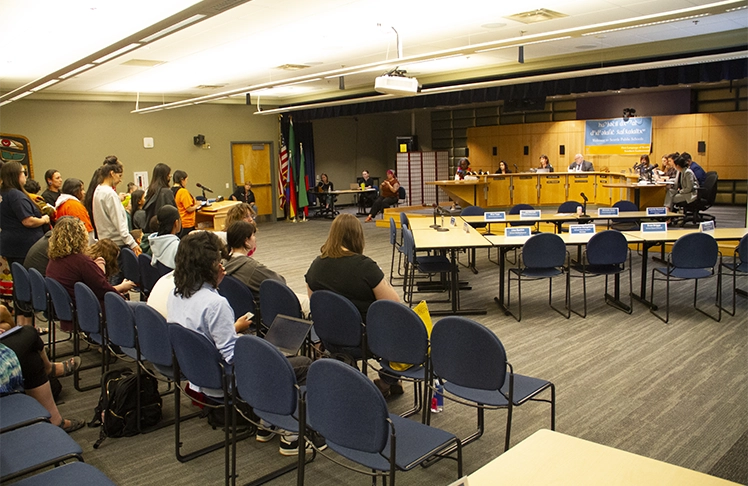
Last week, students walked out of classes in protest ahead of a school board meeting where the issue was discussed further. The split-lunch schedule, now being phased in across schools, began at some campuses on Sept. 15, with others required to implement the change by Oct. 6.
SPS officials say the revised schedule ensures compliance with state requirements for instructional time, allows adequate time for students to eat, and improves operational efficiency for lunch staff by reducing overcrowding and long lines.
Acting Superintendent Fred Podesta acknowledged the challenges involved in balancing competing priorities.
“I think we’re trying to balance many logistical issues and academic issues and student support issues,” said Podesta. “So, we’re going to need to keep work on it to figure out how can the school day accomplish all the things that we’re trying to do, and we appreciate students speaking out about what their needs are.”
Students and educators, however, have expressed concerns about the unintended consequences. Many student-led clubs—typically held during the previously unified one-hour lunch period—face uncertainty under the new model. Students also worry about reduced opportunities to meet with teachers and a diminished sense of school community.
Laura Lehni, Ballard High School’s activities coordinator and a humanities, ethnic studies, and leadership teacher, emphasized the impact on marginalized student groups, especially students of color.
“Part of my role at Ballard High School is to facilitate student leadership, which includes our coordination of clubs, events during lunchtime, and community activities, and because of my role, I am hearing from students and their concerns about what’s going to happen to the communities that they created,” Lehni said.
“Ballard is a historically white school, but our students of color for the educational justice, our students of color who are creating groups together to find that community that doesn’t always exist in a space that is majority white, are some of our most impacted groups by this change.”
Lehni said the policy is already affecting students’ ability to organize and plan activities.
“I’ve had multiple students come in and say to me, ‘Can we have our club?’ ‘Do we fill out the form?’ And I don’t have an answer for them because we keep getting this idea of there may be two lunches, there may be a change in the schedule. What do I say to students?”
“And so that fear or that concern is also already impacting our students at our school,” she added. “I want to make sure that this school and this school district is realizing the impacts that may not be intended, but are going to happen to our students.”
The school board is continuing to gather feedback from students, educators, and families as it evaluates the rollout and potential adjustments to the lunch schedule.