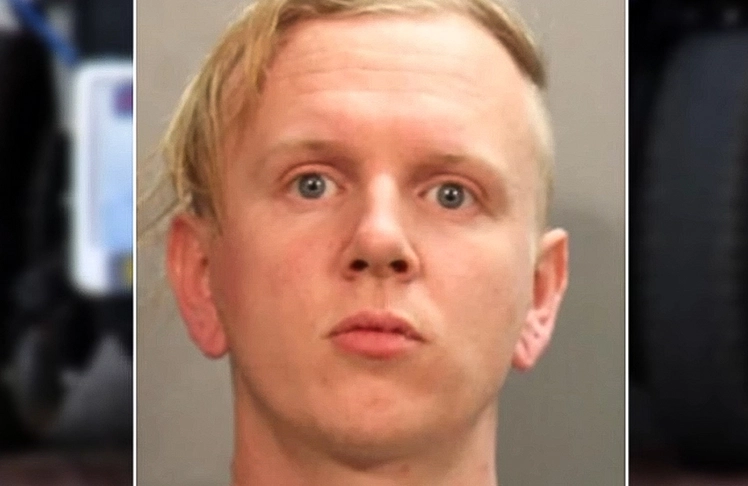
The man accused of shooting a wheelchair-bound veteran along Seattle’s waterfront is now facing a felony assault charge, marking another instance of his controversial behavior that has garnered national attention.
Seattle police arrested 32-year-old Gregory Timm following a shooting last Thursday afternoon near the bustling Alaskan Way boardwalk. While he has no prior convictions in Washington state, Timm gained notoriety in 2020 when he drove a van through a tent of Trump supporters in Florida, an incident that caught the attention of former President Donald Trump.
According to prosecutors, Timm confronted the victim, an elderly man in a wheelchair adorned with a military patch, demanding proof of his veteran status. Witnesses reported that the victim had been soliciting money. Timm allegedly ripped off the patch, which led the victim to draw a knife and then a holstered airsoft gun. In response, Timm reportedly pulled out a firearm and shot the man in the chest.
The victim was subsequently transported to the hospital in serious condition, while Timm is being held on $750,000 bail. Casey McNerthney, spokesperson for the King County Prosecuting Attorney’s Office, emphasized that under state law, the first aggressor in an altercation loses the right to claim self-defense.
In the earlier Florida incident, Timm was convicted in 2021 of criminal mischief for crashing his van into a tent of Trump supporters in Jacksonville. While no injuries occurred, the act unsettled those present and prompted a social media response from Trump, who warned, “Be careful tough guys who you play with!” Timm now faces a first-degree assault charge in King County.