By Aaron Allen, The Seattle Medium
Following the death of his mother, Charles Tatum Jr. began thinking about the women who had helped hold Seattle’s Black community together, and how many of them didn’t receive recognition for their contributions while they were alive.
That reflection eventually led Tatum and longtime Seattle community leader Carl Copeland to create the Black Butterfly Awards, an annual celebration honoring Black women whose work in education, health care, mentorship, culture and community service has shaped generations of Seattle residents.
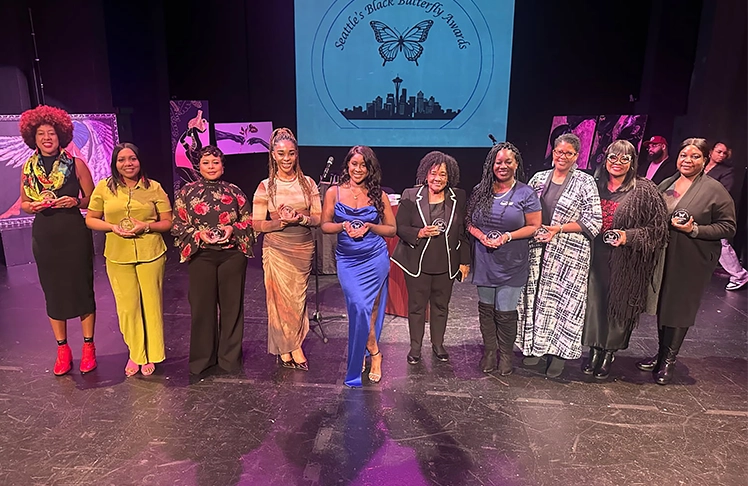
This year’s Black Butterfly Awards will be held Sept. 26 from 3 to 7 p.m. at the Langston Hughes Performing Arts Institute in Seattle. The ceremony will recognize women from across the community, including special lifetime achievement awards for Gertrude Peoples and Charlotte Grady.
For Tatum, an artist and peer counselor educator, the origins of the awards remain deeply personal. Growing up near 29th Avenue and East Charles Street in Seattle’s Central District, he watched his mother, Jo Evelyn Tatum, make an impact on families around her without seeking attention for what she did.
A former teacher who later worked as a cook and seamstress, Jo Evelyn Tatum sewed clothes for neighborhood children so they could attend school with dignity. She connected her family to community institutions including the Langston Hughes Performing Arts Institute and Odessa Brown Children’s Clinic and used her connections to support her husband’s construction business.
“My mother was very shy, she didn’t want recognition, she just wanted to make sure it got done,” Tatum reflected.
After her death, Tatum began thinking not only about his mother’s contributions, but about the many Black women whose work sustained families and neighborhoods without formal recognition.
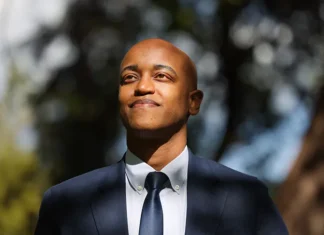
Drawing on his background as an artist, Tatum initially envisioned a visual art piece paying tribute to the resilience and beauty of Black women. He eventually connected with Copeland, a retired banker, coach and community leader, to develop the idea into an event that could recognize women while they were still able to receive that recognition themselves.
“I talked to Carl about what could I do to actually bring recognition to this and to show the importance of the Black woman and her role in our community from the beginning of time,” Tatum explained. “She’s our first educator and our last educator. [It’s about] giving her just a small recognition saying that we see you, that we recognize you, and that we honor you and giving her that right now while she’s here.”
For Copeland, the idea resonated with his own upbringing in Seattle’s historically Black Central District. Growing up near 26th Avenue and East Jackson Street, Copeland remembers a neighborhood in which women played an important role in looking after children and families beyond their own households.
“When they talk about raising, ‘it takes a village,’ it all comes back from that,” Copeland shared.
He recalled women sitting on front porches and making sure neighborhood children had sandwiches after school, as well as community figures such as May Campbell and Loretta Woot, whom he credited with helping establish early Black cultural institutions, including the Local Number 8 Singers Hall. Copeland also pointed to Blanche Lavizzo and her work serving Black families at a time when racial discrimination restricted access to medical care.
Those memories helped shape the purpose of the Black Butterfly Awards, with Tatum and Copeland viewing the recognition as a way to acknowledge women whose contributions have often taken place outside the spotlight.
The butterfly itself was chosen as a symbol of evolution, growth and transformation, reflecting the organizers’ view of generations of Black women whose roles in families and communities have continued to evolve.
Copeland said recognizing those women during their lifetimes remains central to the awards.
“Any real Black man is aware of how powerful Black women have been in our lives. My motivation is getting it out there now where they can get their flowers.”
This year’s honorees include Charita Tatum, Josephine Howell, Daphne Cross, Toni Harrell, Vivian Phillips, Olympia Edwards, Denise Bouldin, Devon Love, Trina Hall, Shaunyce Omar, Whitney Nelson, Ebonee Heller, Marvina Kemp, Laquetha Bell and Ze’lla Adams. Gertrude Peoples and Charlotte Grady will receive special lifetime achievement awards.
Barbara Laners, a local attorney and longtime Seattle media personality who recently died, has also been added to this year’s honorees and will be recognized posthumously.
Laners was known for her years as host of Community Potpourri on radio stations KRIZ, KYIZ and KZIZ, where her work helped bring Black community issues and culture to local audiences.
Peoples has long been recognized for her work supporting and mentoring student-athletes at the University of Washington.
The awards also recognize the contributions of health care workers and grassroots advocates serving Black residents, reflecting the organizers’ broader emphasis on women working in education, health, culture, mentorship and community service.
As Seattle’s Black community has become more geographically dispersed, Tatum and Copeland say the awards also provide an opportunity for people to come together and recognize those who have helped preserve the community’s history and culture.
“In this day and age, I think we’ve begun to lose our identity of who we give recognition to and who we actually see in our communities as nurturers, as role players, as guardians of our culture,” Tatum stated. “It is them. From the beginning to the end, it is them who exemplified the best mannerism. We need her to be at her best, and the only way to do that is to honor her in the smallest to the greatest way.”
For Copeland, honoring those contributions is also about making sure younger generations of Black women can see examples of women continuing to make a difference in their communities.
“I think it’s very, very important that we give these women their recognition, while they can enjoy it. This award and these women receiving this can motivate younger Black women to get involved and know that there’s people out there that look like them that are still movers and shakers in the community.”