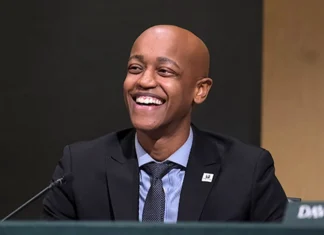
By Kiara Doyal, The Seattle Medium
Washington State Superintendent of Public Instruction Chris Reykdal is proposing a new mandatory yearlong “postsecondary launch” course for high school seniors, a graduation requirement he says would better prepare students for life after graduation by combining civics, financial literacy and postsecondary planning into a single class.
The proposal would add a half-credit graduation requirement by expanding the state’s existing semester-long civics course into a full-year class. Students would complete practical milestones such as applying for college, a job, an apprenticeship or the military while also learning financial literacy skills and participating in civic engagement activities.
Because the proposal would add a new statewide graduation requirement, it would require approval by the Washington State Legislature before it could be implemented. If approved, the Office of Superintendent of Public Instruction would develop learning standards and a model curriculum that school districts could adapt to meet local needs.
“We constantly hear from families about more financial literacy, but not everyone really knows what that means. And then, there is this growing push to grab students at this critical time during the first semester of their senior year, when they are applying to colleges and financial aid,” said Reykdal. “If we could put all of this together, it would be the most efficient way to get a lot of the students’ needs met.”
The proposed course builds on Washington’s existing civics graduation requirement, but Reykdal said extending it into a yearlong class would allow students to receive hands-on guidance during one of the most important transitions of their lives.
“If you ended up in the new course in the second semester of your senior year, you would miss out on all the hands-on services of the new course,” said Reykdal. “We had to figure out how to bring those essential components together into a single course that merges civics with contemporary world problems.”
Rather than separating civic education from career and financial preparation, the course would connect the subjects through real-world experiences students are likely to encounter as they prepare to graduate.
“You are a student about ready to leave high school, and you are playing the real world. We want you to register to vote as part of this class. So, let’s talk about voter suppression issues, and how to make sure elections are done with fidelity,” said Reykdal. “It kind of worked out perfectly for the senior students to see all of these life-changing events emerging with civics and contemporary world problems for this one course.”
Reykdal said the course is designed to support students regardless of whether they plan to attend college, enter the workforce, join the military or begin an apprenticeship. Under the proposal, every student would complete a financial aid application while also receiving individualized support based on their chosen educational or career path.
“We want every student to fill out the financial aid, even though they may not take part in it right away. We want them to leave with either a college application, job application, or application to the military or apprenticeship,” he added. “It is not one size fits all. It is a course where it’s safe for them to explore and then get support while they are there, depending on what path they want.”
Adding another graduation requirement would present logistical challenges for school districts, Reykdal acknowledged, particularly because students would have one fewer elective available during high school and schools would need time to adjust class schedules and identify instructors.
“The way that the state really supports that is having a clear set of learning standards, which we already have,” said Reykdal. “Then the bill proposes that we would work with a third party in the system to build a model curriculum that districts don’t have to use, but something that they could grab a hold of.”
Financial literacy is expected to be a major component of the curriculum, reflecting the financial decisions many students begin making shortly after high school graduation.
“Everyone wants to apply for a credit card when they’re independent. They are probably going to be taking out some loan for school or buying their first car, and they are just being asked to dive into financial issues,” said Reykdal. “Unequivocally, the timing is really critical. It is such a predatory world right now. Everyone has free money on the front end, and then you pay the price on the back end. So, I don’t think that it has ever been more critical for students to leave high school with really important financial literacy skills.”
The proposal is expected to be considered during the upcoming legislative session, where lawmakers will determine whether to add the course to Washington’s graduation requirements.