By Aaron Allen, The Seattle Medium
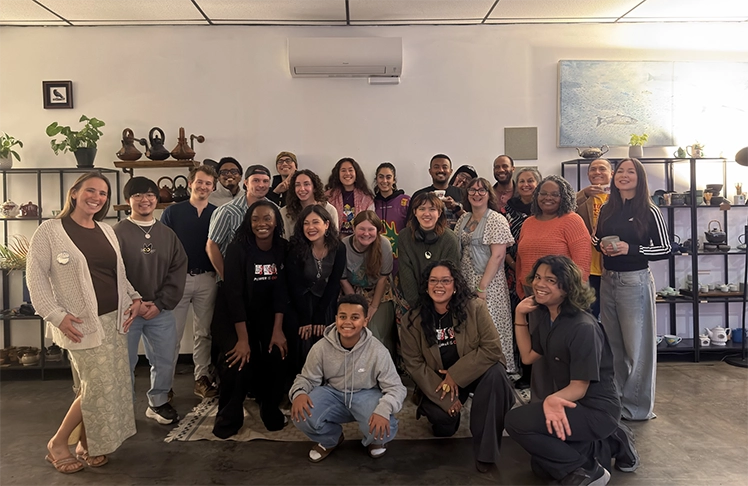
Political candidates traded traditional debate questions for games, humor and personal presentations Saturday, Oct. 24, at Third Place Teas in downtown Renton, where young voters gathered for “Elections Unfiltered: Candidates Tell All,” a forum designed to make local politics more accessible and encourage civic participation.
Co-hosted by The Washington Bus Education Fund and the Urban League of Metropolitan Seattle, the event invited candidates running for office across King County to deliver five- to 10-minute presentations on topics they felt passionate about rather than respond to identical questions in a conventional debate format.
Inside the local tea shop, the usual structure of candidate forums gave way to an unusual mix of policy discussions, regional humor and audience participation. The presentations offered attendees an opportunity to see a different side of political candidates while exploring issues ranging from environmental policy and taxes to Washington’s driving habits and its unofficial devotion to coffee.
One state legislative candidate delivered a humorous critique of Washington drivers, arguing that residents lack basic driving skills. Another proposed making tea Washington’s official state beverage, a fitting topic for the setting. A third turned the presentation into an interactive game show, asking attendees to decide whether political statements were true or false.
The format created opportunities for candidates to share their personalities and opinions while giving attendees a different experience from the prepared speeches and structured exchanges common at traditional political forums.
One attendee described the range of presentations in a comment shared after the event.
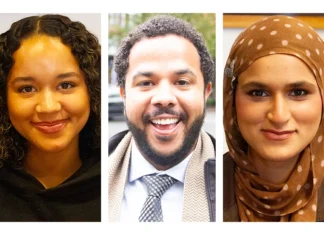
“Awesome night with The Washington Bus,” shared one event attendee following the gathering, highlighting the venue provided by the Downtown Renton Tea Bar host. “Got to hear from candidates all around on driving, environment, taxes, tea, and a little Jeopardy. Bailey & Carmen thanks for another fun political evening! Debra Entenman, Kelabe Tewolde, Tatiana Brown can’t wait to get more done with y’all in Olympia.”
Bailey Medilo, communications manager at The Washington Bus, said organizers wanted to move beyond traditional campaign dynamics and create an environment where candidates could connect with young people through more personal and spontaneous presentations.
“Elections Unfiltered was a really exciting, and the first event of its kind that we know of in Washington,” Medilo explained. “Instead of a typical candidate forum where candidates are pitted against each other and answer the same questions over a period of time, we instead asked candidates to give an honest and unfiltered 5 to 10-minute presentation on a hot take or a policy or a specific thing that they are passionate about.”
Medilo said the gathering also demonstrated the importance of creating political spaces where young people feel included and candidates can be seen as individuals rather than simply public figures seeking office.
“One thing that I really noticed about this event was just how much community turned out and how much community was looking for a space where young people could be centered and valued, but also where candidates could be human and candidates could be experienced as people rather than just politicians on a screen or on a stage.”
For The Washington Bus, creating opportunities for young people to interact directly with candidates is part of a broader effort to make civic participation more accessible and encourage engagement beyond individual election cycles.
Founded in 2007 by a group of young political organizers, The Washington Bus was modeled after Oregon’s Bus Project, now known as Next Up Oregon. The organization’s name comes from an actual bus purchased by its founders to transport young organizers across Washington for voter registration drives and door-to-door canvassing.
The organization grew from those early efforts into a statewide network focused on youth leadership, civic education, voter engagement and community organizing. Its history reflects an approach that combines traditional voter outreach with creative events intended to make political participation more approachable.
“We believe in building the political power of young people in Washington state, which means that whatever young people need, whatever young people’s perspectives are, we are responsive to that regardless of what party or partisan nature it is,” Medilo said.
The Washington Bus operates through two separate legal entities. Its 501(c)(3) Education Fund focuses on nonpartisan civic education, voter registration and voter mobilization, while its 501(c)(4) organization engages in political advocacy, legislative efforts and electoral organizing.
Its programs reach young people from high school students ages 15 to 18 to adults as old as 35, with its primary fellowship and internship opportunities focused on young adults ages 18 to 25.
According to the organization, The Washington Bus hires and pays approximately 50 young leaders annually, mentors hundreds through volunteer networks and makes thousands of direct voter contacts across college campuses and communities throughout Washington.
While increasing participation among younger voters remains an ongoing challenge, Medilo said the organization does not view lower turnout as evidence that young people are uninterested in politics. Instead, its approach emphasizes helping young people develop the knowledge, confidence and habits needed to participate.
“We believe in two things: one, that young voters are not apathetic, and number two, that voting is a skill that is built,” Medilo stated. “We don’t believe that young people just don’t care. We believe that the political system has not been historically designed with young people’s voices in mind.”
To address those challenges, The Washington Bus uses programs such as its Campus Voter Project, which hires students to organize voter engagement efforts at their own colleges.
The organization also employs a strategy known as “vote tripling,” which encourages registered voters to reach out to three friends or peers and encourage them to participate in elections. By relying on personal relationships, the strategy seeks to extend voter outreach beyond traditional campaign communications.
Those efforts are supported by year-round activities that include a paid summer fellowship program, candidate canvassing events, election night ballot box celebrations featuring live music and the annual “Candidate Survivor” event.
Together, the programs provide opportunities for young people to gain organizing experience, build relationships and remain engaged in civic life between elections.
The Washington Bus marked its 18th anniversary in 2025, reaching the same age at which young people become eligible to vote. The milestone reflects how the organization has evolved from a small group of young organizers traveling across Washington into a broader effort to cultivate future generations of civic leaders.
As the organization looks toward expanding its statewide reach, Medilo said its long-term goal is to help young people become consistent voters while creating a political community in which they feel a sense of belonging and ownership.
“Over the next couple of years, the Washington Bus hopes to really galvanize and build that base of habitual voters across Washington state,” Medilo said. “The Washington Bus seeks to build a political home for young people in Washington state that is non-exploitative and truly belongs and believes in building their leadership with no expectation of anything other than their interest and willingness to be involved.”