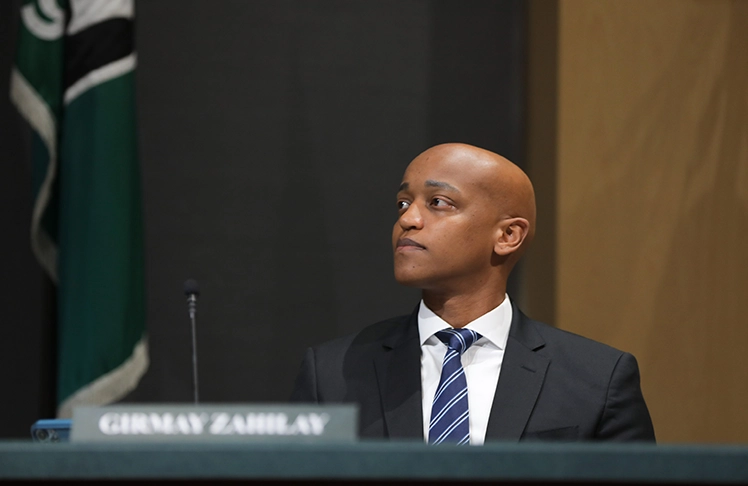
King County Executive Girmay Zahilay has proposed $100 million for 57 conservation projects that would protect approximately 1,500 acres across the county while expanding access to parks and greenspace, restoring salmon habitat and preserving farmland, forests and natural areas.
The proposal, which must be approved by the King County Council, includes projects in communities ranging from SeaTac and Tukwila to Skyway, Bellevue and the Green River Valley. The investments would use existing revenue sources, with $86.7 million coming from the county’s Conservation Futures Program and $13.8 million from the King County Parks Levy.
“One of the most powerful tools we have as a local government to promote healthy, connected, resilient communities throughout King County is land conservation. Based on the priorities of the communities we serve, my conservation plan will create, protect, and enhance parks, trails, forestland, farmland, river corridors, and natural areas throughout our region that contribute to our quality of life,” said Zahilay. “By protecting these places today, we are building a King County where every generation has access to clean air and water, opportunities for recreation, and pristine natural spaces.”
Among the projects is a proposal to permanently protect a portion of North SeaTac Park, part of 220 acres the city has leased from the Port of Seattle since 1991. The property is designated for aviation commercial use, but the city wants to preserve it as parkland. According to the county, the park receives an estimated 650,000 visitors annually.
In Skyway, the King County Department of Natural Resources and Parks would acquire property from willing sellers for a regional stormwater park. The project would create recreational space while treating stormwater runoff from approximately 234 acres before it reaches the Duwamish River.
The county says the project would also add stormwater capacity for surrounding homes and streets while reducing costs that future affordable housing developers could otherwise face.
Along the Duwamish River in Tukwila, the county’s Water and Land Resources Division would transform a large gravel parking lot into salmon habitat. The project would create habitat for salmon transitioning from freshwater to saltwater while adding a trail and interpretive signage for the surrounding community.
The Tukwila project would build on an earlier restoration effort known as Chinook Wind, which transformed a paved property containing a deteriorated hotel into habitat for endangered Chinook salmon.
Another project would connect greenspace with affordable housing in Bellevue’s Factoria neighborhood. A partnership between the City of Bellevue and Habitat for Humanity would preserve a community garden and orchard next to a planned 25-unit affordable housing development for families with children.
The proposal also includes conservation projects east and south of Renton. King County would acquire property in the Fairwood area to allow Molasses Creek to be restored to a more natural condition rather than replacing a deteriorating stormwater pipe beneath a park. A 2023 feasibility study identified restoring the creek as a longer-term approach to aging infrastructure while improving salmon habitat.
Near Petrovitsky Park, King County Parks would acquire property to secure permanent ownership of the Lake Youngs Trailhead and support a future trail connection to the nearby park.
The proposal would also permanently protect eight farms on the Enumclaw Plateau and in the Green River Valley through agricultural conservation easements. According to the county, preserving the properties would support the local food economy while transferring development rights from farmland to urban areas, where they could contribute to increased housing availability.
Zahilay announced the proposal at Cheryl Chow Park in Seattle’s Rainier Valley, a property that previously received $2.8 million in Conservation Futures funding for acquisition and $500,000 from the King County Parks Levy for construction costs and amenities at its ADA-accessible playground. The property had previously been degraded before being acquired for park development.
King County Councilmember Rhonda Lewis, whose District 2 includes Cheryl Chow Park, connected the county’s conservation efforts with the need for accessible open space as communities add housing and become more densely populated.
“Open Space addresses a basic human need – to be outside, in sunshine and with nature. As we build more housing and increase density, it is critical that there are parks and trails, playfields and playgrounds for people who live, work, and play in King County,” said Lewis. “Protecting northwest farmland, forestland and watersheds is important now and as a legacy for future generations. I applaud this commitment of $100 million to purchasing/protecting the last, best 65,000 acres of open space. We welcome everyone to Cheryl Chow Park in the heart of District 2 – my district and home to many fans of parks, trails, and open space.”
The funding package is based on recommendations from the Conservation Futures Advisory Committee, a 16-member volunteer board that reviews applications for open-space preservation funding. Its membership represents all nine King County Council districts and includes urban and rural communities.
All land acquisitions funded through Conservation Futures and the King County Parks Levy would be voluntary and require agreements between purchasers and property owners. The proposal also includes $2.1 million for site stabilization, including demolition and fencing, while improvements are being developed.
The 57 proposed projects are part of King County’s broader Land Conservation Initiative, which seeks to protect 65,000 acres of remaining open space, including urban greenspace, farmland, forests, river corridors, trail corridors and natural areas.
The funding sources have previously received substantial voter support. King County voters approved restoring the Conservation Futures tax to its original rate in 2022 and renewed the six-year King County Parks Levy in 2025. Both measures received more than 70% approval.
The $100 million package now goes to the King County Council for consideration. If approved, funding would be distributed among the 57 proposed conservation projects throughout the county.