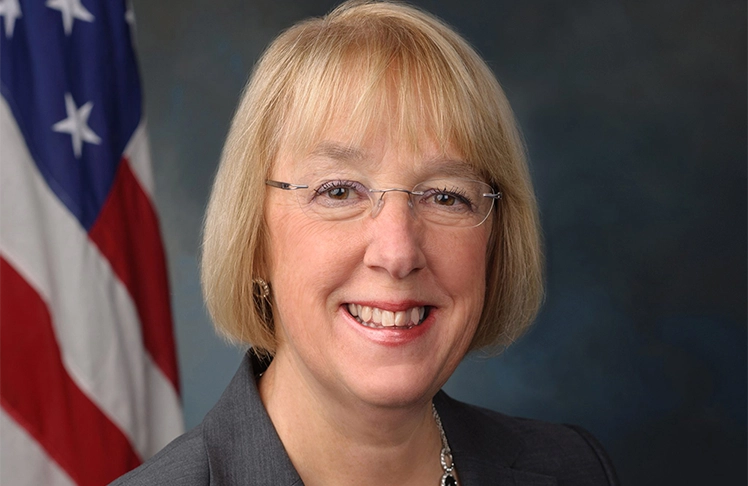
By Aaron Allen, The Seattle Medium
U.S. Sen. Patty Murray and Washington Head Start advocates are sounding the alarm over a sweeping federal proposal that would eliminate or shift numerous national standards governing the early childhood program, warning that the changes could weaken protections involving class sizes, health screenings, teacher qualifications and services for children with disabilities.
The Department of Health and Human Services says the proposed rule would reduce federal bureaucracy, give states and local programs greater flexibility and lower administrative costs while potentially allowing Head Start to serve more children. Murray, a former preschool teacher and longtime Head Start advocate, argues the administration would accomplish that by weakening standards designed to protect children and ensure consistent program quality.
“This morning, the Department of Health and Human Services proposed shredding the rule book that has protected kids in Head Start for 60 years,” said Murray. “133 pages of standards, gutted. And I want to be really concrete about what is in those pages that they are throwing away.”
The proposal has not taken effect and is subject to a 60-day public comment period before HHS can finalize the rule.
Head Start serves more than 750,000 children nationwide through more than 17,000 centers, providing early childhood education along with health, nutrition and family support services.
The proposed rule would revise federal requirements governing child-to-staff ratios, teacher qualifications, program hours, home-based services and health screenings. It also would shift standards involving background checks and transportation practices toward state requirements and reduce the amount programs generally may spend on administrative costs from 15% to 5%.
The proposal also includes language instruction changes that Murray and early childhood advocates describe as an English-only requirement, which they say could particularly affect children from multilingual households.
Murray said many of the standards have practical consequences inside Head Start classrooms, including requirements governing how many children an adult can supervise, staff training to recognize and report child abuse, health screenings and protections for children with disabilities.
“For countless families, Head Start is the first place anyone will ever check their child’s hearing, or vision, or teeth. Ignoring these kids’ health today costs us more tomorrow,” said Murray.
She also rejected the administration’s characterization of many existing requirements as unnecessary federal burdens.
“Background checks for the adults who are alone in a room with your four-year-old. Safety standards for the buses that drive your toddler to school. Vision and hearing screenings for your kids. That is not red tape that’s all important stuff to keep our kids safe and healthy,” said Murray. “Your child’s safety should not depend on their zip code.”
The proposal follows earlier clashes over Head Start during President Donald Trump’s second term. The administration has reduced staffing at HHS offices responsible for Head Start and child care and closed five of 10 regional offices, including one in Seattle that served programs across Washington. Murray also has accused the administration of improperly delaying congressionally approved Head Start funding.
At the center of the latest disagreement is whether reducing federal requirements would give programs greater flexibility and allow them to serve more children without compromising quality. HHS says reducing administrative costs and compliance requirements could preserve or expand access while allowing programs to respond more effectively to local needs.
Murray argues that expanding access should not come at the expense of federal standards.
“They’re saying they might be able to serve more children by promising each child less. If they wanted to serve more kids, they could ask Congress for more funding. I would write that bill this afternoon,” said Murray.
U.S. Sen. Ben Ray Luján of New Mexico, one of only two current U.S. senators who attended Head Start as a child, credits the program with helping establish the educational foundation that eventually took him to Congress.
“Make no mistake, what President Trump is up to is to dismantle, to eliminate, to go after Head Start,” said Luján. “I’ll translate the title of his rule for you: This is a stomach punch. This is a punch in the gut to families across the country.”
“Head Start got me to the United States Senate. I’m very proud of that, and that’s why I join friends and colleagues for standing up for Head Start as well,” continued Luján.
For Washington providers and families, advocates say the debate is also about how programs would operate if national requirements are replaced or revised.
Joel Ryan, executive director of the Washington State Association of Head Start, said the existing standards are rooted in decades of research on early childhood development and warned that reducing federal requirements could create significant differences in services depending on where children live.
“It’s a sweeping new rule that’ll strip away decades of research-based standards and jeopardize America’s most successful investments in young children,” said Ryan.
Ryan also raised concerns about reducing the administrative spending cap to 5%, arguing that administrative funding supports functions necessary to operate programs and meet safety and accountability requirements.
“Literally nobody wants this. This proposal is not a standalone, they are trying to dismantle it piece by piece from the inside,” said Ryan.
Lori Pittman, chief strategist for the Washington State Association of Head Start and co-founder of the Washington State Parent Ambassador Program, said another proposed change would weaken the authority of parent policy councils, which currently give parents a direct role in program governance.
“Right now, parents have a governing role in Head Start. To make them advisors removes a level of power that parents currently have,” said Pittman.
“They are taking that frame and demolishing it. The house is going to fall on itself,” added Pittman.
Ruth Friedman, an early childhood expert who helped craft the bipartisan 2007 Head Start reauthorization, said Head Start’s federal performance standards were developed around child development and should not be viewed as interchangeable with basic state child care licensing requirements.
“What they are aiming to do is save costs by reducing the number of Head Start teachers in classrooms, lower teacher qualifications, training, and support, cutting program hours, eliminating health and mental health services,” said Friedman. “This is a dismantling of the program, not a modernization. It would be utterly terrible for children.”
HHS argues that greater state and local flexibility would allow programs to operate more efficiently while maintaining requirements established by the Head Start Act and other federal laws.
With the rule still in the proposal stage, Murray, Luján and advocates are encouraging parents, educators and Head Start supporters to submit comments during the 60-day public comment period.
Luján also urged families to raise the issue with elected officials during congressional town halls.
“President Trump is going to try to sneak this rulemaking through. He’s hoping that you’ve given up, that you’ve given in, and that he has silenced your voices,” said Luján. “Show up to these town halls. Make your voices heard. Make sure that we are going to stand together to prevent Donald Trump from slamming the door closed on Head Start in America.”
Murray said she intends to continue challenging the proposed changes through congressional oversight and federal budget negotiations.
“This rule is not final,” said Murray. “There is a public comment period, so I want parents to weigh in. I want teachers to weigh in, because I have seen what happens when enough ordinary people refuse to let something get ripped away from them. Together, we will beat this rule and save Head Start.”