By Margaret SummersNNPA Guest Commentary (NNPA) – Until I began working at the National Coalition to Abolish the Death Penalty (NCADP), I never thought of myself as a “murder victim’s family member.” Now it’s part of my self-definition: African-American-female-divorced-mother-death-penalty-abolitionist-murder-victims’-family member. An uncle and a cousin on my late mother’s side of the family were murdered. My mother and her surviving brothers never discussed why my uncle was shot. Maybe it was too painful. Maybe they were ashamed. Apparently, it was a matter of his being in the wrong place at the wrong time with some very wrong people. I only know I’m deprived of an uncle as they were deprived of a brother. I have little information about him. Most relatives who knew him have long since died. My cousin was seven or eight years old when I saw him last, a happy, energetic boy with sandy, curly hair and dimples. As an adult, my cousin was shot by his girlfriend’s father. My cousin had come to visit her and their baby. My cousin’s daughter, who grew up without paternal love and guidance, was frequently in trouble with the law, in and out of jail. To this day, I don’t know where she is. We’ve never even met. I should be a major supporter of the death penalty as murder shattered my family – but I’m not. Race is a significant factor in death sentencing. Of the 138 people exonerated from death row between 1973 and today when DNA and other evidence overturned their convictions, 71 are African-Americans. More prisoners of color are sentenced to death when their victims are White. I didn’t lose immediate family members, but grief is grief. Executing their killers will not help me “heal.” Many of us who lost relatives, whether immediate or distant, are angry and hurt beyond measure. Nevertheless, many of us learn through bitter experience that we will not achieve some magical “closure” when the killer is strapped to a gurney and injected with a three-drug cocktail that renders the person unconscious, paralyzes, and ultimately stops a beating heart, just like the one which once beat within our loved ones. We still go home to sorrow, emptiness and absence, a yawning void that the execution will never, ever fill. Even victims’ families who favor capital punishment are frustrated by this policy, which ignores their anguish and needs. I bring up my particular story in connection with National Crime Victims’ Rights Week, observed each April. Established in 1981 by the U.S. Department of Justice Office of Victims of Crime (OVC), communities, surviving violence victims, and families of victims who did not survive, hold events that week to promote victims’ rights, honor crime victims, and express gratitude for their supporters. There is an additional way to advocate for murder victims’ families beyond this observance. NCADP has launched a program called Rachel’s Fund. It is named for Rachel King, a former Chair of NCADP’s Board of Directors who died in 2008. Throughout her life, Rachel worked to strengthen ties and enhance understanding between death penalty abolition organizations, families with loved ones on death row, and murder victims’ families. In her memory, Rachel’s Fund brings them together with concerned citizens on a local level. The goal of Rachel’s Fund is to encourage and assist NCADP Affiliates in their efforts to build such coalitions. Together, we work toward the day when states stop wasting money on capital punishment – a policy which is expensive, doesn’t deter murder, mistakenly convicts and executes innocent people, and drains resources from programs like grief counseling, solving unsolved “cold case” murders, and other efforts that would help ease the pain of violence victims’ survivors. Every National Crime Victims’ Rights Week, and thereafter, please take a moment to look into Rachel’s Fund, contribute, and tell your legislators that real healing for victims’ families is only possible when capital punishment, which exacerbates our pain, is finally, forever, abandoned. Margaret Summers is the communications director for the National Coalition to Abolish the Death Penalty.
Must Read
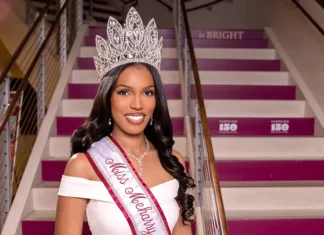
Seattle Native Kyla Marks Becomes First Miss Meharry From Washington State
Kyla Marks, a fourth-year dental student at Meharry Medical College, has been crowned Miss Meharry in 2025, becoming the first student from Washington state to earn the prestigious title and highlighting her commitment to inspiring future generations and serving underserved communities through healthcare.