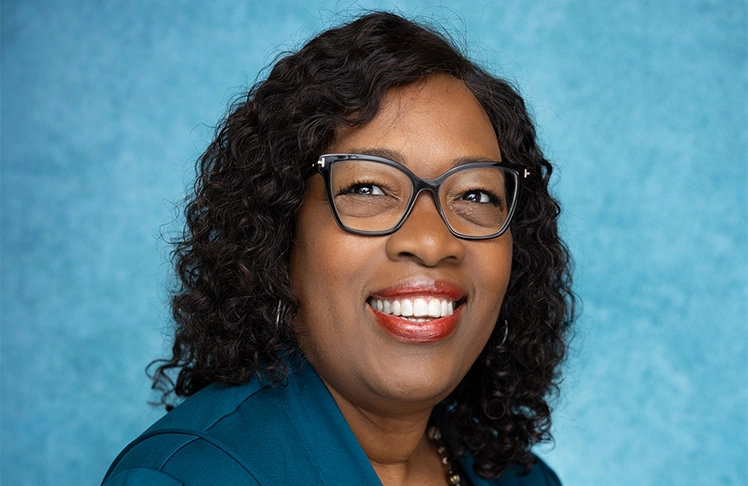
By Kiara Doyal, The Seattle Medium
Byrd Barr Place, a Seattle-based nonprofit organization, is leading a statewide Community Needs Assessment (CNA) designed to elevate the voices and lived experiences of Black people across Washington state. The initiative, called For the Record, is a bold, community-centered effort focused on listening, documenting, and taking action to address the challenges facing Black communities.
According to CNA Project Director Chelsea Amable-Zibolsky, this CNA is the brainchild of Byrd Barr CEO Dr. Angela Griffin, who is determined to understand where and why community displacement is happening.
“She has heard from community members over the years that the Central District used to be a majority Black community, and so she wants to understand where that community has gone,” said Amable-Zibolsky. “We have seen a decrease in the Black and African American population throughout the Central District, and her goal is to understand where people gone, what their needs are, and how Byrd Barr can extend their expertise, knowledge, and understanding of the Central District and the legacy here to communities that have been displaced outside of the Central District.”
Conducted in partnership with a coalition of community action agencies and grassroots organizations, For the Record seeks to uncover the barriers, strengths, and unmet needs that shape everyday life—particularly for communities that have historically been underrepresented in data and decision-making.
While the primary focus of the CNA is to understand the housing needs of the Central District, the assessment also helps identify additional needs impacting Black communities not only within the Central District but across the state.
“There have been conversations about being able to use this data, not just for housing, but for community needs. Throughout Washington, there are questions specifically based around housing and displacement, and backgrounds for potential reparations data and policies around reparations, but the goal is to understand where the need is so that we’re not making assumptions,” Amable-Zibolsky said. “Having the community tell us what their needs are directly will help impact how Byrd Barr looks to the future strategically over the next few years.”
Byrd Barr Place, like many nonprofit agencies, is required each year to conduct a form of community engagement. According to Amable-Zibolsky, the CNA initially began as a requirement that needed to be fulfilled. However, it quickly evolved into something far more relevant and necessary for the Black community, especially given the current climate.
“We do have a requirement to engage with the community for some of our funding streams, but we understand that, with the way that the current climate is now, more than ever, it is important to capture community needs as they change and evolve in real time,” said Amable-Zibolsky. “It started as a necessity, and it’s just gotten stronger because of the need to serve our communities.”
Amable-Zibolsky and Byrd Barr Place believe that displacement is not only impacting where Black people live, but also weakening the sense of Black community, both in Seattle and statewide.
“I think that Black folks in the Central District, especially from what we have heard from the survey and some of our community engagement sessions is that folks feel like they are outsiders in their own community now,” Amable-Zibolsky said. “Outside of the Central District, we are hearing that folks are nervous to go receive services in certain areas because of this. These people are leaving a historically Black neighborhood and going to different places, and they’re feeling that sense of loss of community.”
Amable-Zibolsky views the CNA not as a tool to examine the Black community’s experiences, but as a way to amplify them.
“I don’t think it’s necessarily examining. It’s amplifying, right? We can assume as an organization what the community needs, but this is about the community telling us their story so that we can buy into what they’re saying,” said Amable-Zibolsky. “For so long, there have been historical gaps in data, and there’s mistrust in gathering data, right? So, this is for the community by the community. Byrd Barr Place is Black-led and Black-serving at the core of its mission, so this is really about amplifying those stories, and telling policymakers, and other organizations, this is what’s happening and here’s the data to back it up.”
Given the current state of the country, Amable-Zibolsky wants Black individuals and families who may feel unheard or unseen to know that their feelings and experiences are valid.
“Byrd Barr Place wants to be right by your side and share those experiences and feelings. Our organization is situated to talk to policymakers and lawmakers and to be that voice out in those spaces,” Amable-Zibolsky said. “We want people to know that this isn’t just about numbers, this is about telling the community’s story.”
“Byrd Barr isn’t afraid to stand up in times of struggle and uncertainty. They have done that historically and are now doing it as an organization to have a better understanding of how to serve the community,” added Amable-Zibolsky.
As part of For the Record, Byrd Barr Place and Amable-Zibolsky encourage community members to participate in the Community Needs Assessment and ensure their voices are heard.
The survey takes approximately 15 to 30 minutes and is completely anonymous. It is available in multiple languages and formats, including both digital and paper versions. All responses will be used to develop a public report in 2026.
To participate in the assessment, visit : https://byrdbarrplace.org/for-the-record.