By Aaron Allen, The Seattle Medium
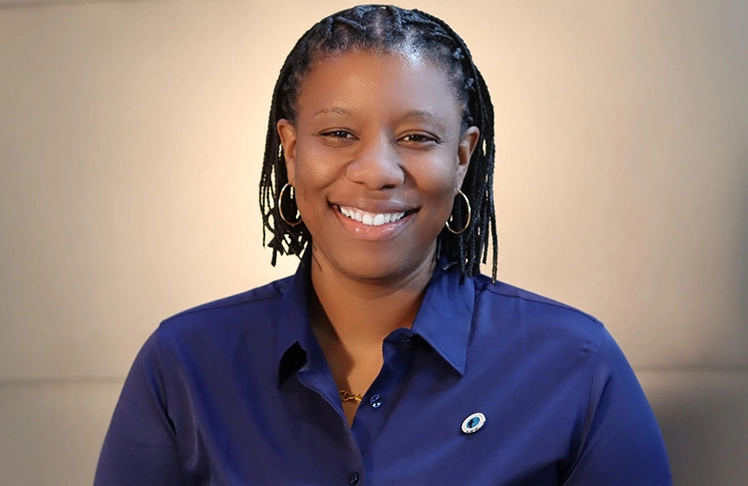
As Seattle’s City Council prepares to vote on its 2027-28 budget, Council President Joy Hollingsworth is making the case that improving essential city services and investing in historically underserved neighborhoods should go hand in hand.
Her priorities range from protecting emergency response resources to supporting maternal health, youth violence prevention, small businesses and cultural programs. At the center of her approach is a proposal to direct millions of dollars toward the Central District and Southeast Seattle, where concerns about decades of disinvestment continue to shape conversations about the city’s future.
Among the proposals under consideration is the Central District and Southeast Seattle Reinvestment Program, which would provide grants to community-based organizations seeking to expand services and strengthen neighborhood institutions.
The proposal initially called for $6.4 million over two years. A revised version under consideration would provide approximately $6 million in one-time funding for 2027 and 2028, rather than establishing a permanent funding commitment.
Hollingsworth said the grants are intended to help smaller organizations develop the resources and experience needed to compete for larger funding opportunities.
“It’s not supposed to sustain your program; it’s supposed to get you a jump-off,” explained Hollingsworth.
“We’re not talking about millions of dollars. We’re talking about, ‘Hey, here’s $50,000. $30,000 is a lot of money to someone where you never had nothing, who can now go do a lot with it, and then we can continue to build their capacity,'” said Hollingsworth.
The proposal reflects Hollingsworth’s concerns about the distribution of public resources and the lasting effects of disinvestment in Seattle’s Black communities.
“When I look at the data and the statistics, our community has been severely under-invested in, divested in,” said Hollingsworth.
She connects those concerns to Seattle’s history of neighborhood investment, pointing to the federal Model Cities program of the 1960s and 1970s. The initiative helped support community development and institutions associated with Seattle’s changing neighborhoods, including the Langston Hughes Performing Arts Institute and El Centro de la Raza.
Hollingsworth believes similar investments today can help preserve neighborhood identity, support local organizations and create opportunities for longtime residents.
Her budget priorities include $200,000 for Byrd Barr Place’s maternal health program, which addresses racial disparities in maternal health, and $200,000 for Atlantic Street Center’s Summer Academy, which provides educational opportunities for children.
Another $100,000 would support the Central Area Parents and Coaches Association, known as the CD Panthers, and its youth gun violence prevention work.
Other proposed investments include $50,000 for meals and direct assistance to unhoused residents in Cal Anderson Park, $75,000 for community celebrations in Judkins Park and $200,000 for a creative marketplace on Capitol Hill.
The arts and cultural investments complement Hollingsworth’s support for small businesses through the Office of Economic Development’s Back to Business and Storefront Improvements programs, which help local enterprises maintain and improve their operations.
While neighborhood reinvestment is a central priority, Hollingsworth has also emphasized the importance of reliable transportation, safer crosswalks, park programming, quality utilities and accessible public bathrooms.
She has supported efforts to reverse a proposed $7.1 million annual reduction to the Seattle Fire Department’s overtime budget. Fire officials have raised concerns that the reduction could affect the availability of emergency response units and the department’s ability to maintain service levels.
Hollingsworth has also co-sponsored a medical debt relief proposal introduced by Councilmember Dionne Foster. The measure seeks to use public funding to reduce qualifying residents’ medical debt, potentially providing relief beyond the city’s initial investment.
“I co-sponsored, I think it was one of the most creative budget proposals that have a small investment for big impact,” said Hollingsworth. “District 3 will have the most relief. We have the most folks that have medical debt in this district. I was like, ‘I’m on board.’ I was on board regardless, but really being intentional about, you know, also helping the district as well.”
The City Council’s budget committee is scheduled to vote Thursday, Nov. 19, followed by a full council vote Friday, Nov. 20. Until then, the proposed allocations remain subject to change.
“I think that people just want government, no matter if it’s local, state, county, federal. They want to help them improve their lives. So, if this is something that we can do and we have access to do, I’m all for it,” said Hollingsworth.