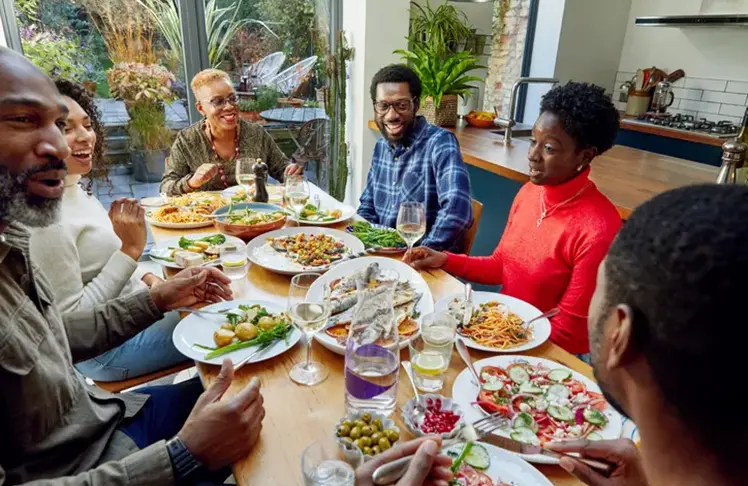

Black Americans are intensely aware of the connection between food and health but face economic and structural barriers that limit what they can actually put on the table, according to a new report from Word In Black’s Insights & Research Division.
The report, At The Table: Food & Health In Our Community, published September 3, finds that Black Americans have major concerns about the nation’s food safety and their ability to access healthy food choices at prices they can afford.
Among the starkest findings: Six in 10 don’t trust that the food they buy in grocery stores is safe, and rising grocery prices are pushing families toward cheaper, less nutritious options.
“What we found is a community that knows exactly what it needs to eat well and simply cannot get there on the current terms,” said Christa Mahlobo, Ph.D., Insights & Research Director for Word In Black. Mahlobo is a research scientist who works independently from the newsroom.
When it comes to healthier eating, “The barrier isn’t awareness,” Mahlobo says. “It’s price, proximity, and a food system that too often asks Black families to choose between what they can afford and what will keep them healthy.”
Price, Food Safety Concerns
The report draws findings from a survey of 1,249 Black Americans conducted between April 22 and June 8, 2026. Respondents were readers of Word In Black and 10 partner publishers, legendary Black news outlets operating nationwide. Roughly one-third of the respondents have postgraduate or professional degrees, and the largest group had annual incomes of $100,000 or more.
Respondents also want to see improvements in the nation’s food quality and availability, as well as better access to nutrition education. Roughly 3 out of 4 respondents said prices for healthy foods such as fresh fruits and vegetables need to be lowered. Forty-two percent of respondents want more grocery stores in their neighborhoods, while 38% want more nutrition education.
The barrier isn’t awareness. It’s price, proximity, and a food system that too often asks Black families to choose between what they can afford and what will keep them healthy.
Dr. Christa Mahlobo, Insights & Research Director, Word in black
More than 60% of respondents reported concerns about the nation’s food safety, reflecting a broader erosion of confidence in the American food system. In July, a Quinnipiac University poll of likely voters found 55% of respondents have little or no confidence in the government’s oversight of food safety. A KFF survey found that less than half of voters approve of the Trump administration’s handling of food policy.
This comes as news headlines have been filled with weekly reports of food recalls due to salmonella, E. coli, and the continued cyclospora outbreak that has killed two people and sickened more than 11, 000.
KEY FINDINGS
Health vs. Affordability
While many respondents did not report being food insecure, the survey found that rising grocery prices are forcing difficult trade-offs.
Respondents described “trading down” — swapping higher-priced foods or brands for cheaper alternatives, such as buying store brands or swapping chicken for steak. They also look for manager’s specials, use coupons and mobile apps for additional savings. Some also rely on local food pantries.
Although the most recent government figures estimate that it’s possible to meet federal fruit and vegetable recommendations for roughly $2.50–$3.00 per day, that report—using data from 2022—seems out of step with current conditions.
A noticeable segment of WIB survey respondents reported they’ve begun buying fewer fresh fruits, vegetables or meat, bypassing organic foods. They’re also more willing to accept lower-quality food, or skip healthier options altogether.
One respondent described her mindset while grocery shopping: “Put it back or find a cheaper unhealthy version.”
The report warns this practice could signal a widening gap in Black Americans’ access to healthy food, which appears to be affecting the larger population.
A Pew Research Center survey conducted last year found that 90% of U.S. adults said healthy food has gotten more expensive in recent years. Seventy-seven percent of lower-income adults report it’s now harder to eat healthier, while at the same time, 46% of lower-income adults said it’s “a lot” harder to eat healthy, versus 15% of upper-income adults saying the same.
Price also shapes where people shop.
Two in five respondents said reasonably priced food is the most important factor in choosing a grocery store — ahead of taste, convenience, and healthfulness. This differs from national survey findings, where taste has been the leading driver of food and beverage purchases since 2006.
The Word In Black survey found it’s common for respondents to eat out, especially among younger adults
More than one in three respondents reported dining out—including fast food, takeout, or restaurants—three or more times per week. But this finding skewed younger, with 41 % of respondents aged 18 to 34 saying they were more likely to eat at a restaurant three or more times per week than respondents aged 55 and older.
Food Is Life— And Culture
The survey found Black Americans remain strongly tied to their food heritage.
Roughly 32% said their knowledge of food came from how they were raised and what their family cooked at home, while 29% said their current food knowledge was shaped by their own research and expanding their food horizons as adults.
When asked whether they still want to eat the way they were taught, roughly 47% said they try to balance traditional foods with healthier choices. But a quarter of respondents said they still eat mostly the same foods they grew up with, and about 12% have moved away from their traditional diet for health reasons.
Meanwhile, 46% of survey respondents strongly agreed that food in the U.S. contributes to diet–related diseases such as type 2 diabetes, high blood pressure, and heart disease.
Many Say Their Diet Is In A Good Place
When grading the healthfulness of their own diets, a little more than half of respondents gave themselves a B. That’s around the same percentage as the 51% of respondents in a broader survey who gave themselves the same grade. Nine in 10 agreed that what they eat affects their mental and emotional well-being.
Self-reporting diet grades also tracked closely with respondents’ impressions of their overall health. Among respondents who gave their diet an A, more than 85% rated their general health as excellent or very good, compared with 48% who graded their diet a B, 10% who gave it a C, and 5% who gave it a D.
Low Awareness of the “MAHA” Program
While the Trump administration’s Make America Healthy Again program is reportedly having some success among Republican voters, but not so much among WIB survey respondents. Nearly half of them either heard very little about the official government-approved food and nutrition guidelines, had heard of the guidelines but were unaware that Health and Human Services Secretary Robert F. Kennedy Jr. had them updated in 2025, or had never heard of them at all.
But survey respondents are having conversations with healthcare providers: 73% said a doctor, nutritionist, or other caregiver had regularly or occasionally spoken with them about their diet or eating habits.
What People Say Would Help
Asked what would help them eat healthier, respondents pointed to structural changes.
Seventy-three percent want lower prices for fresh fruits, vegetables, and whole foods, while 42% want more grocery stores or fresh food markets in their neighborhoods. But 38% also want more public education about food and nutrition—an appetite for knowledge the report calls an important entry point for public health interventions.
The report concludes by calling on policymakers, community health organizations, and food retailers to expand access to healthy foods through subsidies, invest in culturally relevant nutrition programs, and partner with trusted community leaders to deliver health education where Black Americans already live, work, worship, and gather.
At The Table: Food & Health In Our Community was produced by the Word In Black Insights & Research Division, which launched in 2025 with support from the MacArthur Foundation and the Knight Foundation. The MacArthur Foundation made the research possible.