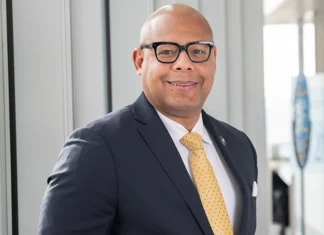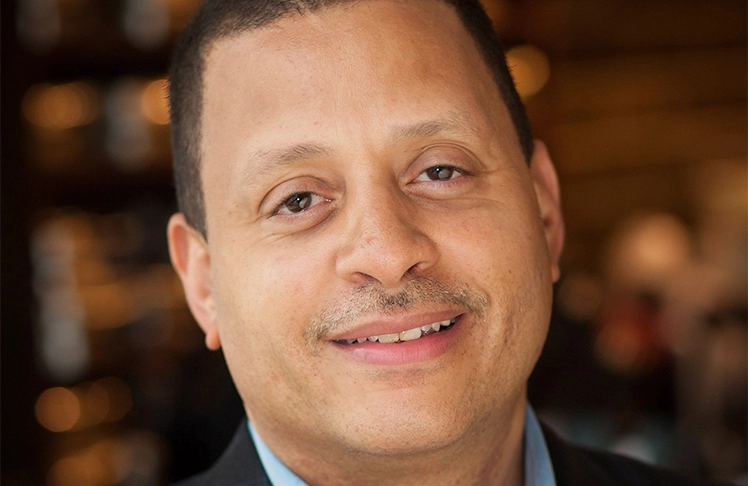
By Chris B. Bennett, The Seattle Medium
Blair Hamilton Taylor has spent much of his career helping organizations solve problems.
Whether it was working alongside Howard Schultz at Starbucks, leading President Barack Obama’s My Brother’s Keeper initiative, heading the Los Angeles Urban League or advising some of the nation’s largest corporations, Taylor has built a reputation as someone who believes people are capable of accomplishing more when they work together.
Now, Taylor is bringing that philosophy to one of the region’s most influential nonprofit organizations as the incoming CEO of United Way of King County.
But for Taylor, accepting the position was never about adding another title to an already impressive resume.
“What motivates me is, I get up, literally, I kid you not every day and think about, how can I make the world a better place?” Taylor said. “How can I do whatever God-given skill, talent, the little thing that I have, how can I contribute in a way that changes things, and hopefully changes them for the better at scale?”
At a time when communities across the country are grappling with economic uncertainty, workforce disruption, housing instability and growing social divides, Taylor sees the role as an opportunity to help bring people together around solutions.
“I think we’re living in probably the most vulnerable period of this country in a long, long time,” Taylor said. “But I’m an optimist. I actually believe most, if not all, of the issues that we face are solvable.”
A nationally recognized leader whose experience spans the nonprofit, corporate and public sectors, Taylor will officially assume leadership of one of the nation’s largest United Way affiliates on July 14.
The appointment represents something of a full-circle moment for Taylor, who previously served as chair of the United Way of King County Board of Directors and now returns to lead the organization during a critical period for both the nonprofit sector and the communities it serves.
In a one-on-one interview with The Seattle Medium, Taylor discussed his new role, his commitment to service and collaboration, and how he hopes to create greater opportunities for future generations.
His ties to Seattle run deep.
In addition to his years at Starbucks and his previous leadership role with United Way, Taylor currently serves as chair of the Seattle Urban League Board of Directors and has remained actively engaged in efforts to expand opportunity for underserved communities.
For Taylor, the assignment is less about leading an organization and more about helping shape the future of a community he has called home for more than a decade.
As the father of four, Taylor said he often thinks about the challenges facing young people today and whether society is adequately preparing them for success in a rapidly changing world.
He pointed to rising college costs, workforce disruptions driven by technological advances, widening economic inequality and persistent educational achievement gaps as issues that require urgent attention.
“When I went to college, you could actually work your way through college,” Taylor said. “I’ve got a young person in college right now, the last of my four, and I’ve got to tell you, writing these checks, this is some serious stuff.”
Taylor also expressed concern about whether educational institutions are preparing students for the realities of a 21st-century economy.
“Our educational systems are nowhere near where they need to be in the 21st century,” he said. “Are we preparing people for the jobs of the future? Are we graduating enough students from secondary schools with the skill sets and the preparedness they need to be able to support themselves in the 21st century?”
He believes workforce development, skills training and leadership development will become increasingly important as artificial intelligence and emerging technologies continue reshaping industries and career pathways.
“If you look at some of the issues that are forming on the horizon and rapidly so, and even upon us now, with respect to joblessness, with respect to skills training, skill enhancement and upskilling of the workforce in the AI era that we’re living in, I think that’s a tremendous opportunity,” Taylor said.
Taylor also highlighted the importance of mentorship and leadership development, particularly for young people who may have talent and ambition but lack access to guidance and opportunity.
“How can we expect people to lead in tumultuous times if we’re not training them with the basic skills that are necessary to lead?” he asked.
For Taylor, helping young people succeed is not simply about helping them find jobs. It is about preparing them to become leaders, mentors and contributors in their own communities. He believes investing in future generations today will ultimately determine what kind of community Seattle becomes tomorrow.
While Taylor said his first responsibility as CEO will be listening to staff, partners and community stakeholders, he acknowledged that several issues—including youth homelessness, workforce readiness, leadership development and economic opportunity—are likely to be areas of focus moving forward.
“My first job is to listen really carefully,” Taylor said. “Listen to the people around me, listen to the staff, listen to the board, listen to the partners that we’re working with to really try to get underneath what is going on.”
At the core of Taylor’s leadership philosophy is a belief that lasting change happens when organizations and institutions work together.
Drawing from leadership experiences in the corporate boardroom, nonprofit organizations and public service, Taylor argues that no single institution has the resources or capacity to solve today’s most pressing challenges alone.
“I don’t think one sector can solve these problems, not at scale,” Taylor said.
Having spent his career moving between the corporate, nonprofit and public sectors, Taylor believes some of the most effective solutions emerge when leaders from different backgrounds come together around a common purpose. He sees United Way as uniquely positioned to serve as that bridge.
Instead, Taylor envisions United Way serving as a convener capable of bringing together businesses, nonprofits, philanthropy, government and community leaders around common goals.
“We have to figure out how to bring the private sector into these social issues that we have to solve,” Taylor said. “We have to figure out how to do that better and we have to figure out how to do it at scale.”
He believes organizations often spend too much time competing for resources and recognition when the focus should be on solving problems.
“There hasn’t been a lot of incentive for nonprofits to work together,” Taylor said. “I’ve always been about collaboration.”
His commitment to collaboration is rooted in a broader philosophy of servant leadership that has guided him throughout his career.
“I don’t look at myself at the top of the pyramid,” Taylor said. “I look at myself at the bottom of the pyramid.”
Rather than viewing leadership as a position of authority, Taylor sees it as a responsibility to support others, build capacity and create opportunities for future leaders to emerge.
He recalled a young employee who once walked into his office and boldly told him that he wanted Taylor’s job.
Rather than viewing the comment as a challenge, Taylor embraced it.
“I looked at him and I said, ‘Well, let’s figure out how to get you this job,'” Taylor recalled.
For Taylor, leadership is measured not by how indispensable a person becomes, but by how effectively they help others grow and succeed.
“One way to define a great leader, or define a leader period, is look behind them,” Taylor said. “Is there anybody behind you?”
As he prepares to lead one of Washington state’s largest and most influential nonprofit organizations, Taylor said his goal is not simply to manage an institution, but to help build the partnerships, leadership pipelines and organizational capacity necessary to create lasting change.
He believes successful leaders establish a clear vision, invest in developing future leaders and leave organizations stronger than they found them.
“My dad used to say growing up, ‘If you don’t know where you’re going, any path will take you there,'” Taylor said. “We have to have a strategy. We have to have something that we’re setting out to do.”
That philosophy extends beyond his own tenure.
“I’m not seeking a position of permanence,” he said. “I’m seeking a position that’s catalytic.”
For Taylor, being catalytic means creating momentum, developing people, building partnerships and helping establish a foundation for progress that extends well beyond any one individual. It means building systems that can create opportunity and impact at scale for generations to come.
Despite the challenges facing the region, Taylor remains optimistic about Seattle’s future.
While his experience spans the country, from Los Angeles to Washington, D.C., Taylor believes Seattle remains uniquely positioned to address many of the challenges facing urban communities. The region’s culture of innovation, strong philanthropic community and long history of civic engagement, he said, provide a foundation that many cities would envy.
“The greatness of Seattle is still there. The opportunities of Seattle are still there,” Taylor said. “But I think this moment requires some innovation and requires maybe some different approaches.”
As he prepares to begin his tenure at United Way, Taylor said he is excited about the opportunity to help bring together diverse voices and organizations around a shared vision for the future.
For a leader whose career has been defined by service, collaboration and community impact, the assignment is clear: help build a stronger Seattle for the generations that follow.
“This is a time where you either have to step forward and say, I’m going to be part of solving this, or you recede into the background and let it happen,” Taylor said. “I’ve never been a recede-into-the-background person.”