Parenting Today
A note for parents: If you have kids who become easily attached to inanimate objects, this activity might not be for your family. Ideally, kids will be eating the characters they create, which may be upsetting for sensitive little ones.
Mealtime gets a lot more interesting when the broccoli has a name and the toast has teeth.
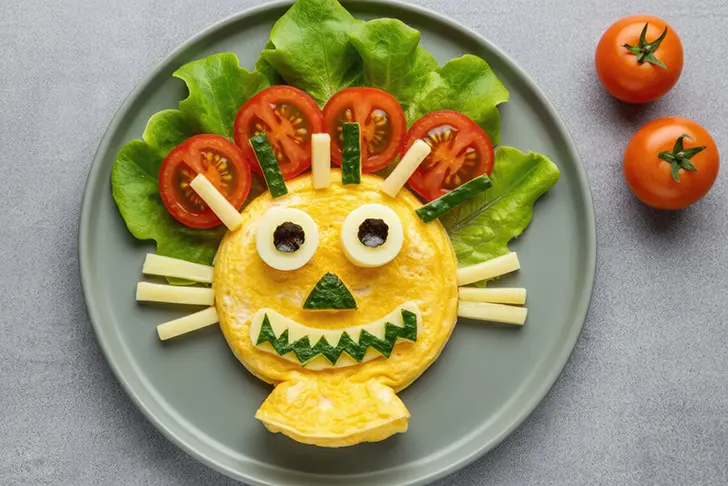
With a few everyday ingredients, kids and parents can turn breakfast, lunch, or snack time into a chance to build their own edible monsters and tell some creative stories. Fruit, cheese, vegetables, toast, and spreads can all become faces, horns, eyes, and claws.
The real fun comes after the monster is finished, when kids give their creation a name and a personality. Here’s how to unleash your own little Dr. Frankenstein on the breakfast table.
Start With a Simple Base
Begin with a food that can act as a monster’s face or body. A slice of toast, a tortilla, half a bagel, a rice cake, or even a large apple slice can all work.
Next, add a spread to help smaller ingredients stick. Peanut butter, jam, cream cheese, hummus, mashed avocado, or yogurt can act as edible glue while adding flavor.
From there, let kids choose their monsters’ defining features. Maybe one has cucumber eyes, shredded-cheese hair, and a strawberry tongue, while another has banana-slice ears, blueberry eyes, and carrot-stick horns.
There’s no right way to build a mealtime monster. A monster with three noses and one giant eye may be much more interesting than one with a perfectly symmetrical face.
Parents and caregivers can prepare ingredients ahead of time and set them out in small bowls, then let children mix and match as they like. If your kids are usually picky or hesitant eaters, this activity may also be a great opportunity to expose them to some new flavor combinations and healthy foods.
Give Your Monster a Personality
Once the food creature is finished, it’s time to turn it into a character. Start with a name. Kids might invent something silly like Picklefang, Captain Cruncher, or Strawberry Stomp.
Then, ask a few questions to help the character come to life. Is their monster shy or loud? Does it live under a bed, inside a refrigerator, or on another planet? Is it afraid of anything? Does it have a special power?
The answers don’t need to make sense. In fact, the stranger they are, the better your kids’ stories may become.
One child might decide that their cheese-and-apple monster can only speak in rhymes. Another may create a toast monster that loves to dance but is terrified of bananas. Think of this as a silly way for your kids to start or decompress from their day.
Decide What Your Monster Eats
Every good monster needs a favorite food.
Ask kids what their creature would choose if it could order anything for dinner. Their answer could connect to the ingredients already on the plate, or it could be completely imaginary.
A cucumber-covered creature might love crunchy green foods. A berry monster could insist on eating only purple snacks. Another monster might claim its favorite meal is moon rocks with ketchup.
This can also create an easy opening for kids to explore new foods. If the monster loves red peppers, perhaps its creator will be willing to try one too.
Turn Mealtime Into a Story
After every monster has a name and personality, bring your kids’ characters together.
Ask what would happen if they all met. Would they become friends? Compete in a race? Search the kitchen for a missing snack? Try to escape before someone eats them?
Each person can add a sentence to the story while everyone eats. The story can be quick and silly, or continue over several meals, with new monsters joining the cast.
The goal is not to create the neatest plate or the most impressive food art; it’s simply to give kids another way to play, create, tell stories, and even bond. By the end of the meal, the monster may be gone, but its name, personality, and latest adventure can stick around for next time.