By Keith Magee
(Trice Edney Wire) – The 2026 midterm elections have delivered a substantial rebuke to President Donald Trump and his administration, with many voters citing the economy and the state of democracy as their top concerns. Analysis shows voters under 30 and those on incomes below $50,000 shifted significantly toward Democrats, as did Hispanic and Black voters, especially Black men. History has been made: Hakeem Jeffries is poised to become the first-ever Black Speaker of the House, while Georgia’s Keisha Lance Bottoms will be the first Black female governor.
Democrats have retaken control of both chambers of Congress, making notable gains in states and districts that had been considered firmly Republican territory. Yet I keep asking myself something that goes deeper than which party won: what kind of democracy do we want now?
The United States marked its 250th anniversary this year with unresolved questions about equality, inclusion, economic opportunity, and the meaning of citizenship. These can’t be settled through electoral victories alone. For me, the larger issue is whether this moment can open a more sustained conversation about the moral and institutional foundations of American democracy.
I’d begin that conversation by asking the left to broaden its vocabulary. I worry the language of democratic socialism, despite its important intellectual and policy traditions, carries associations in the wider American imagination that can constrain debate. The term “socialism” can cause people to respond to an ideological label rather than engage with vital underlying questions of economic fairness and public responsibility.
I’m interested in developing a wider proposition of Common Good Democracy.
This is an emerging intellectual and civic framework, but it’s one that anyone, whatever their political leanings, can take up. It’s focused on what democracy should make possible for the people who live within it and what kind of society it should engender.
The philosophical foundations for this inquiry are well established. Michael Sandel’s work on the common good and the moral limits of markets asks what citizens owe one another. Martin Luther King Jr.’s vision of the Beloved Community connected racial justice with an end to poverty and the transformation of democratic life.
Democracy, as King understood so well, is about economics, but also constitutional responsibility and civic belonging. It must be considered through the conditions people experience in their everyday lives: whether they can afford a home, access healthcare, secure meaningful work, educate their children, and have a genuine voice in decisions affecting their communities. It depends on equal voting rights that are unassailable. And a healthy democracy can only exist if its citizens are able to disagree without dehumanizing each other.
The challenge of Common Good Democracy is to devise a civic space in which disagreement can be productive and where people can work together on problems that affect their lives, even when they arrive at different political conclusions. This calls for practical, nonpartisan opportunities for citizens to participate in shaping public priorities. I envisage community conversations and People’s Assemblies where residents can examine local challenges and consider evidence before developing recommendations to which public institutions are expected to respond. The work of Unify America and the American Academy of Arts and Sciences’ Our Common Purpose offers useful reference points for thinking about how democratic participation might be strengthened and polarization reduced.
There is, of course, a potential objection to the idea of finding common ground that I don’t want to ignore. To people whose voices have been marginalized for too long, calls for national unity can sound like demands to forget past and ongoing harms. And no individual or community should be expected to enter a coalition, extend trust, or reconcile with those whose conduct endangers their safety. We need a parallel reckoning about the unequal conditions that have historically shaped American citizenship and access to wealth, and the threats still posed by racism and political extremism.
Common Good Democracy must be based on a clear commitment to racial justice as well as to the constitutional principles that make pluralism possible. People may disagree profoundly about public policy and the role of government; that disagreement belongs in democratic life. The equal humanity and citizenship of others, however, cannot be treated as negotiable.
I believe Common Good Democracy can help create a democratic culture in which more Americans truly respect other people’s right to hold views that diverge from theirs while recognizing that the future of our republic is a shared responsibility. The 2026 election represented, in electoral terms, the triumph of the Democratic “blue wave” over the red Republicans. After future elections, instead of being divided into winners and losers, I hope we can celebrate the positive impact of a purple wave.
Common Good Democracy begins with the conviction that the dignity and flourishing of every person should matter in how we organize public life. Its full meaning must be developed through scholarship and public dialogue, but also, crucially, through the active participation of ordinary citizens. If we build it together, Common Good Democracy can help America finally keep the promise it made 250 years ago.
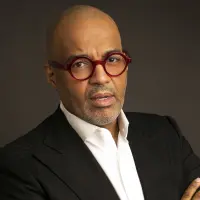
The Reverend Professor Keith Magee is Chair of Social Justice at Newcastle University School of Law and Professor of Practice in Social Policy at University College London Institute of Innovation and Public Purpose, where he leads the thinktank and social platform Black Britain and Beyond and Senior Fellow at UCL’s Centre on U.S. Politics. He also continues to serve in pastoral ministry. Magee advises political and faith leaders, written for CNN, TIME, The Guardian, The Root and is the author of Prophetic Justice: Race, Religion and Politics (2024) and A Season’s Journey (2026).