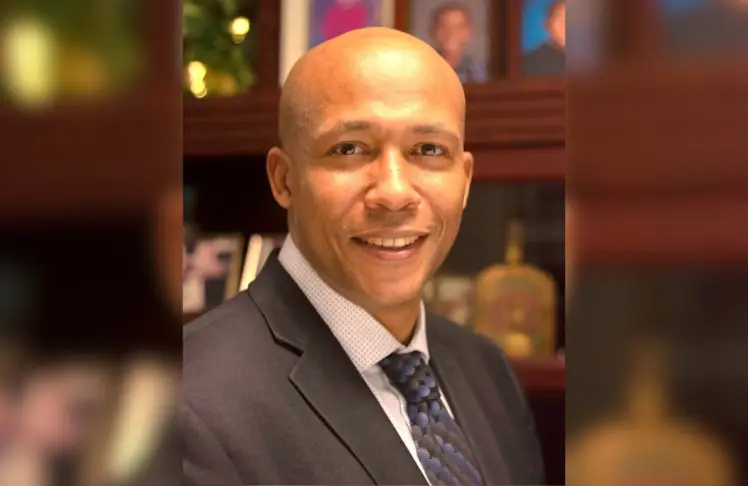
By Attorney James Bible
I woke up on Martin Luther King Jr.’s birthday and walked down the steps into my dining room. Waiting for me were my two boys and my wife, moving through the familiar rhythm of an ordinary weekday morning. LunchesTere being packed. Breakfast was being eaten. Backpacks were stacked near the door. It was a quiet, unremarkable scene—yet one filled with meaning.
I smiled as I thought about the academic achievements of my sons. One is a junior in high school. He speaks multiple languages, is on the honors list, and has already begun turning his attention toward the university he will attend in the near future. The other is just beginning middle school and recently earned a 3.75 GPA. More important than grades or accolades, however, is the fact that both of them are kind, thoughtful, and good to others. Watching them grow into young men is a privilege that fills me with gratitude.
As I stood there reflecting on the joy of this moment, my thoughts turned to the immense sacrifice of Dr. Martin Luther King Jr.
At the time of his assassination in 1968, Dr. King had young children of his own. Like any parent, he undoubtedly carried hopes and dreams for them. He wanted to watch them grow, to see them graduate, to experience their adult lives, and eventually to hold his grandchildren on his lap while telling stories of the past. That desire—to be present for our children, to protect them, and to witness their futures—is nearly universal.
Yet Dr. King chose a path that put all of that at risk.
He spoke often of reaching the mountaintop, knowing full well that he might not arrive there himself. He took positions that many of us, even those who deeply value justice, might hesitate to take because of what they could cost our families. Dr. King understood that his actions could—and likely would—cut his own life short. Still, he pressed forward because he knew that his sacrifice could help secure a better future for millions of other families.
I am a civil rights lawyer. My children have high expectations for their futures. They walk into schools, communities, and institutions shaped by laws and norms that were profoundly influenced by Dr. King and the movement he helped lead. He faced fire hoses, police dogs, bomb threats, imprisonment, and ultimately death, all with the hope that this nation might one day live up to its highest ideals. His sacrifice is difficult to comprehend.
Remarkably, he was not alone.
Dr. King represents a much larger movement made up of countless individuals whose names may never appear in history books. Men and women were shot, burned out of their homes, assassinated, beaten, and maliciously incarcerated simply for standing up for fairness. Some died nearly anonymously. Others sat in jail cells knowing no one was coming to rescue them. During the civil rights movement, it did not matter whether you were a famous figure like Medgar Evers or a local janitor, domestic worker, or student—you were equally subject to the violence of oppression if you dared to demand justice.
Even in the face of that reality, parents looked into the eyes of their children and made a painful decision: change would only come if they took authentic stands in the name of justice. Many understood they might never see the mountaintop, but they marched forward anyway.
And it was not only adults who carried this burden. Children played a paramount role in pushing the movement forward. During the Birmingham Campaign of 1963, thousands of Black children left their classrooms to march for desegregation. They were arrested, jailed, blasted with fire hoses, and attacked by police dogs. Parents were often paralyzed by fear—fear rooted in love and survival—and it was the courage of their children that helped reignite momentum and force the nation to confront its conscience.
We owe those children an enduring debt of gratitude. Many lost parents too soon. Some lost their own lives. All lost the innocence that childhood should have afforded them.
Today, in our current environment, Dr. King’s legacy asks us a question that cannot be ignored: Who among us has the courage to do what is right? Who is willing to sacrifice comfort, status, or safety for the greater good? Justice is not self-executing. The mountain does not climb itself.
Each generation inherits both the benefits of past sacrifices and the responsibility to continue the work. We may not all be called to lead marches or deliver speeches that echo through history, but we are all called to act—to confront injustice, to speak truth, and to move forward even when fear whispers that the cost is too high.
Thank you, Dr. King, for leading the way.