By Kiara Doyal, The Seattle Medium
As young people face increasingly complex financial decisions earlier in life, financial literacy advocates say building strong money management skills before adulthood is more important than ever.
April, recognized as Financial Literacy Month, highlights the importance of equipping individuals with the knowledge to make informed decisions about budgeting, saving, investing, and managing debt—skills that can shape long-term financial stability.
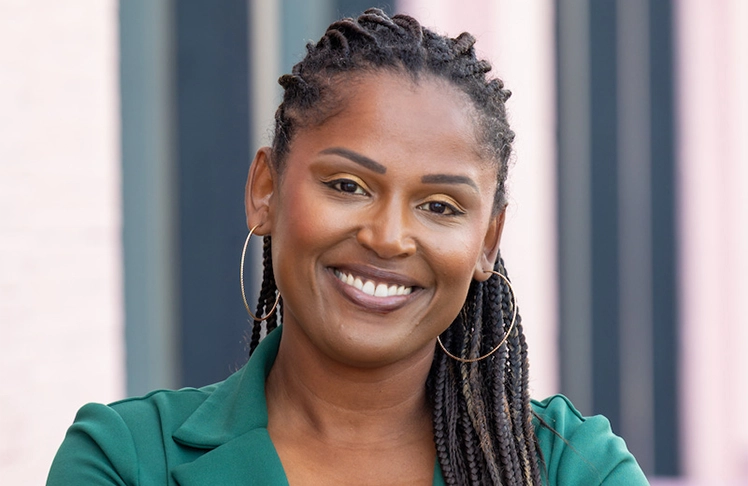
Dr. Paris Woods, a bestselling author and education leader, said those lessons should begin well before young people enter the workforce.
“So many choices are made early. At 18, you can start to take out credit cards, student loans, car loans, and all of a sudden you are faced with very adult decisions and choices that can have ripple effects for decades,” said Woods. “Financial literacy is so important for this age range to create a safety net for yourself before you step into the job market, so that when the inevitable ups and downs happen, you will be able to weather them and not suffer.”
Woods’ recent book, The Student’s Guide to Financial Freedom, reflects that early-intervention approach. Adapted from The Black Girl’s Guide to Financial Freedom, the book is designed to reach students before financial habits are formed, helping students avoid common mistakes and build a stronger foundation.
The book outlines a range of practical strategies aimed at helping students build financial independence early, including how to graduate with less debt, begin investing with limited income, and make informed decisions about credit and banking.
Woods also emphasizes the importance of developing income streams and long-term financial planning, encouraging students to think beyond short-term spending and instead focus on building what Woods describes as a “Freedom Fund” to support future goals such as travel, entrepreneurship, or career flexibility.
Additional guidance includes avoiding common financial mistakes, selecting appropriate financial tools, and creating simple, sustainable systems for managing money—skills that Woods said many students are not taught in traditional academic settings.
“I got my college degrees and started a really meaningful career in education. So, I was feeling good about work, but I had this wake-up call at 30, sort of looking around at what I had accomplished, and yet feeling like I was really struggling financially,” said Woods. “There’s so much distraction and misinformation in the financial space that we lose out on the basics, and the students’ guide can help you before you make the [financial] mistakes.”
“[It helps you think about] What are some actions you can take in high school and college that will put you on the path to having as much freedom, agency, and choice in adulthood as possible, and sort of live the dream that so many of us are starting late,” Woods continued.
Woods said financial habits begin forming far earlier than many people realize, often shaped by observation and environment during early childhood.
“We know that 90% of a young person’s brain is formed before age five, and so we may not think we are intentionally teaching kids, but they are picking up cues from what they see and hear. Children are constantly learning, and it is our job as adults to curate what we want them to learn and pay attention to,” said Woods. “There are ways to make finances relevant and interactive at all ages, and your actions change based on the age group that you are talking to.”
One of the most common misconceptions Woods identifies among young people is the normalization of debt as a standard part of adulthood.
“When I graduated from high school, I had the dream of having credit cards. Like, that’s so cool. I got my credit cards, a car note, and was just dreaming of debt. When I speak to young people, everyone wants to ask about building their credit,” said Woods. “So, we have trained them that debt is actually the goal, and you need to figure out how to get access to it, how to use it, and how to manage it, right? So, there’s this normalcy around debt that causes problems.”
In addition to misconceptions about debt, Woods said many people are intimidated by investing and money management, often believing the process is more complicated than necessary.
“We need to equip young people with the knowledge that money ought to be simple, right? It’s actually not hard. You don’t have to outsource it. You don’t have to take unnecessary risks. It ought to be boring. Just put a couple of dollars away in an index fund, and you will be a millionaire,” said Woods. “There’s actually nothing complicated about it. And I think what’s so powerful about that is that once you realize that the money part ought to be simple, it frees up all of this brain energy to focus on what you should be, which is, what do you want to do with your life? What dreams do you want to pursue?”
Beyond technical knowledge, Woods emphasizes the importance of mindset—particularly how young people think about money and its purpose.
“It is a mindset shift that we want to get young people in. The first thing you think about when you have money is that you can use it to buy things, and that is one purpose of money, but how can we expand that?” said Woods. “Let’s say you want to buy a car. It is now a bigger goal where you have to practice the skill of saving up over time and experience delayed gratification for something that you really want. You could set that goal, and then you could actually watch yourself take consistent action over time to achieve that goal, and that is a really important muscle that you will continue to need when you are older.”
“There are age-appropriate situations, so the difference between spending and saving, I think, is a great one to start practicing in high school,” Woods continued.
When asked to share one key piece of financial advice, Woods pointed to the importance of intentional decision-making in a fast-paced, information-rich environment.
“I think so many of the choices we make are just on autopilot, and just saying yes and checking off things to get to the next. This is true, not just for money, but for life, living life on autopilot. So, pause and then think about what you really want,” said Woods. “We live in a world that’s so full of information and resources, and so many people are excited to mentor you and help you, right? So, if we could just pause and get off autopilot, it opens us up to whatever resources there are to help us actually achieve the goals that we have.”