By Lisa Eadicicco, CNN
(CNN) — Google’s new smart glasses, like Meta’s, light up to show when they’re recording. But once you know someone is recording, what do you do next?
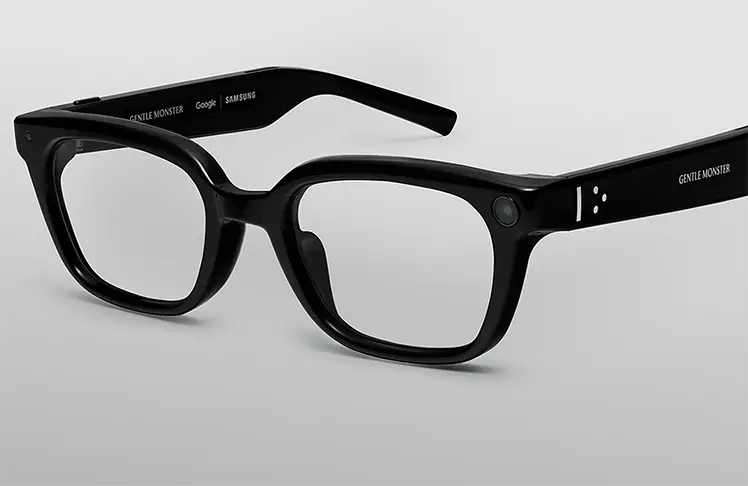
That’s one of many key privacy issues Google and other tech companies are under pressure to solve as they bring new AI-powered glasses to market. Google on Thursday announced that the smart glasses it developed with Samsung and eyewear designers Warby Parker and Gentle Monster will launch on December 10. The release comes after Meta’s glasses have caused widespread controversy over their ability to discreetly record others, prompting bans in some venues in cities like New York and London.
None of this is lost on Google. The company says its glasses have additional privacy protections, like preventing the glasses from capturing faces when the camera is used to interact with Google’s AI agent, Gemini. But it still hasn’t solved the core privacy problem: Many people are generally uncomfortable with glasses that can record them without their consent, even with an indicator light. And that could present a major blow to the AI ambitions of companies like Google and Meta.
Juston Payne, senior director of product management at Google, told CNN the company is looking into new privacy features for its smart glasses, like more ways to alert bystanders when glasses are nearby.
But these systems are still in the early research and development phase and may not adequately solve every privacy headache.
Smart glasses on the rise
Google’s new glasses are meant for easier interactions with Gemini. They have cameras and microphones, which allow users to take photos and videos and speak to Google’s AI agent without taking out their phone.
During a demo of the glasses, CNN asked Gemini to suggest a mocktail recipe based on a list of ingredients on a table, for example.
The glasses come in styles designed by Warby Parker and Gentle Monster, with the former starting at $395 and the latter beginning at $449.
“The ability to see the world, hear the world, sense the world around the user, and also have fast real-time interactions with Gemini has always been one of the compelling use cases” for smart glasses, Shahram Izadi, who leads product development and strategy for devices like smart glasses at Google, told CNN.
Smart glasses are becoming increasingly popular despite the privacy concerns. Shipments increased by 54% year-over-year in the second quarter of 2026, according to market research firm The International Data Corporation, growing much more quickly than other types of wearable tech like wireless earbuds. EssilorLuxxotica, the eyewear giant that Meta partners with for its glasses, said earlier this year that 7 million pairs of its AI glasses were sold in 2025.
Still, many consumers are wary about smart glasses because of the privacy concerns they present, according to Benjamin Chan, an analyst at market research firm ABI Research.
Google says its glasses have a tamper-resistant light, along with other protections. When using the camera to ask Gemini questions, the faces of nearby people are redacted before images are sent to Gemini. This only applies to situations when the camera is being used for a Gemini inquiry, not when a user is recording videos or photos to save to their camera roll.
Data captured by the camera is encrypted, Google says, and isn’t used for ad targeting or training its models. Apps must also ask for permission before accessing the glasses’ camera.
‘What am I meant to do now?’
The company is researching other privacy measures, Payne told CNN in an interview ahead of the glasses’ launch. There are two areas Google is looking into: more ways to notify users that glasses are nearby, and potential location-based privacy features.
Restricting the camera’s functionality based on location would be tricky because the user could potentially work around that by putting their phone in airplane mode, Payne said. And doing so would still likely raise privacy concerns because of how location data is used.
The company has also explored a phone notification system for letting people know when the glasses are nearby, similar to third-party apps that already do this. But developing a system that’s actually useful and doesn’t spam users’ phones with notifications is a challenge. And just alerting bystanders doesn’t do much to help, Payne said.
“It can actually be weirdly disempowering to you in that you’re like, ‘What am I meant to do now?’” he said.
A person might not feel safe asking a stranger to stop recording them, or a worker might not want to confront their boss at the office, said Calli Schroeder, director of the AI and human rights program at the Electronic Privacy Information Center.
Privacy experts agree that these challenges exist, but they also say an LED light isn’t sufficient to protect bystanders’ privacy. A visually impaired user wouldn’t be able to see it, for example, and those unfamiliar with the technology may not know what that light means. Izadi pointed out that glasses like Google’s could potentially flag to a visually impaired user whether someone nearby is wearing glasses with the recording light activated.
Earlier this year, a report from The New York Times indicating Meta was working on facial recognition for its glasses heightened privacy concerns about the technology. Izadi told CNN that Google has no plans to add facial recognition to its glasses now or in the future.
Payne said additional privacy measures are still in the research phase while the company continues to test them. He didn’t provide additional details or release timing.
“It’s not to say that we’re not pursuing them,” he said. “We are, we just want to make sure that when they’re rolled out, they’re genuinely robust.”
The-CNN-Wire
™ & © 2026 Cable News Network, Inc., a Warner Bros. Discovery Company. All rights reserved.