By Aaron Allen, The Seattle Medium
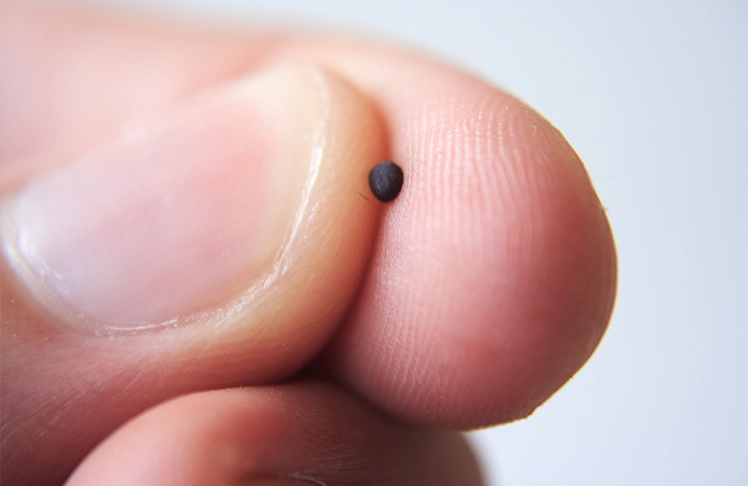
A medical breakthrough in Switzerland is generating international excitement as researchers have developed a microrobot, no larger than a grain of sand, that can be steered by magnets to deliver medication with pinpoint accuracy inside the human body. This cutting-edge innovation represents a major leap in the field of microrobotics and offers new hope for treating hard‑to‑reach diseases while minimizing the harmful side effects that limit many current therapies. Scientists believe this advancement could redefine how conditions like brain tumors, aneurysms, and other vascular disorders are treated, marking the beginning of a new era in precision medicine.
Microrobots in medicine are becoming a growing and optimistic tool in the fight against disease, and researchers at ETH Zurich are at the forefront of this scientific advance. Experts such as Bradley J. Nelson, a lead author of a paper on this discovery and a professor of robotics and intelligent systems at ETH Zurich, describe the work as only the beginning of what microrobotics might achieve.
“We’re just at the tip of the iceberg,” Nelson said, referring to the potential applications described in the paper published in Science. “I think surgeons are going to look at this. I’m sure they’re going to have a lot of ideas on how to use the microrobot.”
The paper has generated excitement across the robotics community. David Blaauw, a professor at the University of Michigan who works in robotics technology and computer chip design, agrees with Nelson that the technology points to major future possibilities.
“I think it’s a very interesting area of research in general, and I think the paper in Switzerland is the latest addition to the work that’s very interesting,” says Blaauw. “It’s a very thriving area where we’re seeing a lot of progress. I think people are discovering that tools being very, very small gives you advantages and lets you do things and get to places that otherwise you couldn’t get to.”
Blaauw says what makes the Swiss research stand out is the ability to deliver drugs through blood vessels to specific locations, a task that demands extreme miniaturization.
“The Swiss work is interesting because it shows that they can deliver drugs through blood vessels, potentially to particular locations, and to do that you have to be very small,” says Blaauw. “This whole field of microrobotics is trying to exploit that idea that when you become very small, you can go places and do things that otherwise you couldn’t do and see things that you couldn’t otherwise see.”
The mechanism behind this innovation involves a capsule, about the size of a grain of sand, that is steered by magnetic fields. According to researchers, this technology could be used to treat aneurysms, highly aggressive brain cancers, and abnormal connections between arteries and veins known as arteriovenous malformations. By navigating the microrobot to exact locations, doctors could deliver drugs precisely where they are needed most, potentially reducing side effects and improving treatment outcomes.
While the implications for specific diseases remain under study, experts emphasize that the technology itself is race‑neutral and designed to benefit human health broadly. Blaauw says that future applications could be adaptable enough to address health issues affecting diverse populations and improve outcomes for those who historically have had limited access to medical breakthroughs.
“I think partly we don’t know exactly yet because the technology is still very young and in its infancy, exactly which diseases will benefit from this,” says Blaauw. “It’s very hard to predict exactly if it will therefore particularly help for diseases in people with a certain ethnic or racial background. Our hope, of course, is that it will have a very broad impact and especially for people that may not have had as much access or have not had as much medical attention paid to their diseases.”
Blaauw says that the early stage of development focuses on proving that the system works before determining specific clinical applications.
“The first part of any kind of technological development is first to see if we can get the technology to work, and after we get it to work, then we get people in the application fields, medical doctors and physicians interested in it,” says Blaauw. “Then we start seeing more clearly where it can be used, and I think we’re just not quite at that point yet. So, I think it’s just very hard to say.”
To date, the magnetic capsules have been successfully tested in pigs, which have vasculature similar to humans, and in silicone models of blood vessels. These models are used in medical training and research, and according to ETH Zurich, human trials are still several years away, with an estimated three‑to‑five‑year timeline before testing in people can begin.
One of the major challenges in drug development is that many medications circulate throughout the body rather than concentrating in the area that needs treatment. For example, when someone takes aspirin for a headache, the drug spreads through the bloodstream and is absorbed by the entire body. This indiscriminate distribution often leads to side effects and limits the effectiveness of many treatments.
The Swiss capsules, however, are designed to be navigated into precise locations by a surgeon using a device similar to a PlayStation controller. The navigation system uses six electromagnetic coils positioned around the patient, each about eight to ten inches in diameter. These coils create a magnetic field that can push the capsule in one direction or pull it in the opposite.
“By combining these fields and controlling them individually, you can get the precise kind of motion you want to move through the blood vessels or the cerebrospinal fluid,” Nelson said.
The research shows that the magnetic field is strong enough to move the capsule even when it is traveling against the flow of blood.
The capsules are made from materials already known to be safe for medical use. Tantalum, a dense silvery metal, is included so doctors can see the capsule on X‑rays. Tiny iron oxide nanoparticles embedded in the capsule give it magnetic properties. These nanoparticles were developed by a team at ETH Zurich led by chemist Salvador Pané. The nanoparticles, tantalum, and the medication itself are bound together using a gelatin protein structure.
Although the capsule moves quickly through the body, doctors can track its progress through blood vessels using X‑ray imaging. When the microrobot reaches its target, researchers say they can trigger the capsule to dissolve.
Although he was not involved in the study, Marc Miskin, an assistant professor of electrical and systems engineering at the University of Pennsylvania, said the research is significant.
“Biomedical applications have been one of the most coveted applications in robotics but also one of the most challenging,” says Miskin. “Robotics is hard to begin with, biomedical engineering is hard, and nanofabrication and nanoscience are hard, and this is a problem that basically sits at the interface of all of these.”
Miskin predicted the Science paper will be remembered as a key milestone in the field.
“This is going to be a big step forward,” he said. “Actually showing a technology that looks like a clinically ready technology, that’s going to change the way people think about it.”