By Aaron Allen, The Seattle Medium
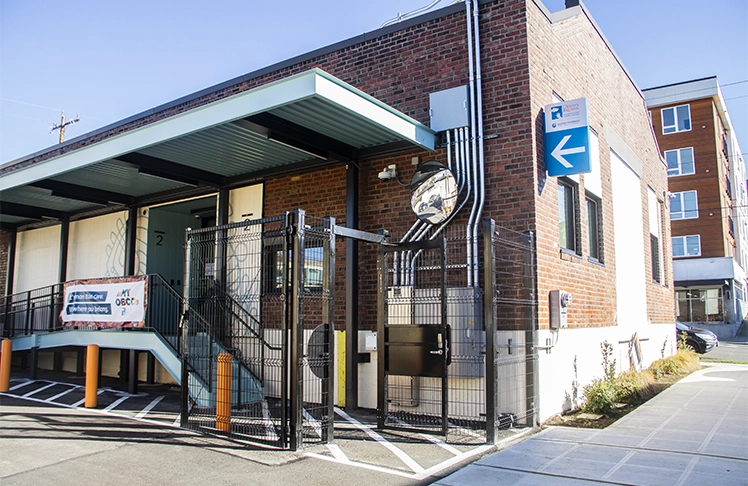
Odessa Brown Children’s Clinic has completed the second phase of its expanded Central District campus, reinforcing its mission to provide high-quality, culturally relevant health care to children and families. Located at 1711 S. Jackson St., the new facility held its grand opening last week and now offers expanded medical and trauma services, including full-spectrum primary care and immunizations.
The expansion follows the opening of Phase 1 in 2023, which focused on behavioral and mental health services for children, along with some limited medical care. With Phase 2 now complete and operational, the two adjoining buildings function as a comprehensive, integrated care hub for pediatric patients.
Shaquita Bell, MD, Associate Vice President and Chief Medical Director of OBCC, explained the distinct roles of the two buildings and how they work together to serve the community.
“Right now, building two or phase two is now complete and operatable. The building across the way is building one. Building one has a little bit more space and emphasis on behavioral health services,” said Bell. “Building two is a little more emphasis on medical services. This is where most of our pediatric providers will be. People go between both. Ideally, it won’t be the patients going between both. It’ll be us. But this has our lab. It has a lot more supplies. It also has our vaccine refrigerators, so we can do full spectrum primary care here.”
Since its founding in 1970, Odessa Brown Children’s Clinic has upheld the vision of its namesake, a community organizer and advocate for health equity. What began as a small pediatric center has grown into a regional model for culturally competent, community-based care. OBCC now serves families in both South Seattle and the Central District, in partnership with Seattle Children’s Hospital and numerous local organizations.
Over the decades, the clinic has expanded not only its locations but also its approach, addressing the broader social and environmental factors that influence health outcomes. From behavioral care and trauma recovery to prevention and family advocacy, OBCC’s programs reflect a full-spectrum understanding of pediatric health.
Cora Weed, Director of Service Lines at OBCC, described how the clinic’s design and artwork reflect its commitment to cultural connection and identity.
“All throughout our new building here at OBCC Central, you will see art, which is the exact same artwork that is in building one of our Central District clinic and it’s also the exact same as the artwork down at our Othello clinic,” said Weed. “It’s all identity art. Most of the artwork is done by South Seattle artists themselves and we really wanted the look and feel of all our clinics to be the same. So that when you walk into any one of our buildings, you feel like you are home.”
As the city continues to face challenges such as youth gun violence, the lingering impacts of the pandemic and community trauma, OBCC has responded by expanding services beyond traditional medical care. One new initiative is the development of “care clinics,” co-created with community partners to focus specifically on trauma healing and prevention.
“We started creating care clinics about 18 months ago in partnership with many community organizations like Community Passageways, Choose 180, Seattle Indian Health Court, Urban League, Solid Ground,” said Bell. “The list keeps going. Our primary question was, what is our community missing right now? Where are the gaps, where are the opportunities? What do people want us to focus on? Firearm violence keeps coming up. It continues to be, unfortunately, a devastating plague on our community. And so, we worked for the last 18 months in community with these organizations and some survivors and some youth to say, what can we do? And that’s what the care clinic is.”
According to Bell, the newly expanded Central District location allows OBCC to offer an “all-in-one” model of care that strengthens both access and trust.
“You get your behavioral health, you get your medical care, you get referral to services, case manage, all of that in one place,” said Bell. “It also really allows people to start thinking about prevention. What’s primary prevention look like? What does secondary prevention look like? How do we prevent it from happening again? How do we reinvest in our community through these partnerships?”
With Phase 2 now open, the Odessa Brown Children’s Clinic campus in the Central District serves as a fully integrated resource for families navigating the challenges of pediatric health, trauma, and healing.