By Lornet Turnbull
Special To The Medium
It can be pretty rough trying to make it on the outside after a long stint in prison.
Even after finding work and place to live, ex-offenders can struggle upon re-entry into a society where technology has reordered so much of how we live and where the neighborhoods they left are nothing like they remember.
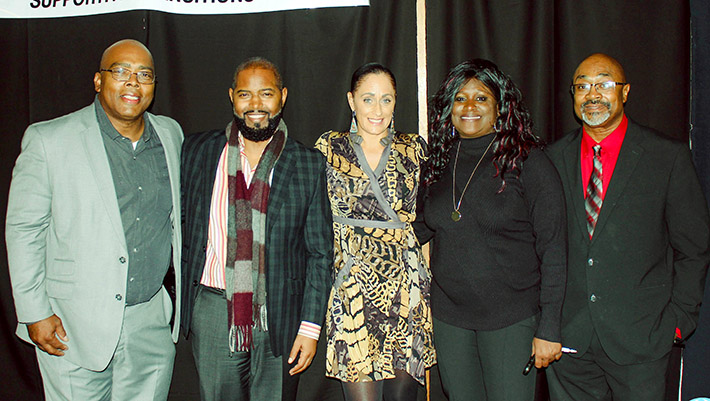
For the last two years, a small organization in Auburn called Being Empowered Thru Supportive Transitions (BEST), has been going into prisons to work with inmates as they near their release dates and prepare for life on the outside and, once they are out, has been helping them navigate their new path.
BEST staff and volunteers – many ex-offenders themselves – serve not only as mentors but also as examples. They may pick up inmates on the day of their release if there’s no one else to do it, take them to appointments and accept middle-of-the-night phone calls from those overwhelmed by the demands of sudden self-reliance.
“For a lot of people coming out of prison after 10, 15 years, the world has changed… and it can all feel pretty overwhelming…” said Jimmie James, executive director of BEST.
Many of the former prisoners BEST works with don’t have family here, he said. “They’ll ask us, ‘who’s going to help me?’ They are concerned about being alone. ‘Where do I go when I have a question?
“We tell them, ‘if you need us, we’ll be here for you.’ It’s literally walking alongside them in areas most of us take for granted,” says James.
BEST was one of several organizations that benefited from Second Chance Act grants, federal funds distributed to states with the aim of reducing recidivism rates by improving outcomes for people returning from prisons, jails, and juvenile facilities. Organizations received funding to help provide both pre-release and post-release services for inmates and ex-offenders – from mental health and job preparedness to housing. Many of them were churches and other community groups that had been doing some of this work all along.
What James and his team of mentors do best isn’t tangible, like housing or job placement; it’s not something you can put on a checklist. To explain it, he often refers to the 1994 movie, Shawshank Redemption, and the kind of loneliness and despair that ultimately drove the character Brooks (played by actor James Whitmore) to take his own life.
For inmates as well as ex-offenders, “the biggest issue is trust,” James said. “I’ve never been to prison…but when my associate director walks in and says ‘I’m Pastor Charles and I did 15 down time’…that gains trust.”
Franklyn Smith, community resource program manager with the Washington Department of Correction’s transitional specialist team works to ensure successful re-entry for ex-prisoners.
According to Smith, people are released from prison and jails every day and it’s easy for them to slip back into old habits and lifestyles that got them into trouble in the first place.
“BEST is the type of program, when other programs go home, their phones are always on,” said Smith, who himself has served time inside. “They are getting calls at 2, 3 in morning from someone panicking because they feel they have no alternatives.”
“You are only as intelligent as the information you’ve been exposed to,” he said. “Why not surround yourself with people you can call to make sure you’re not making those poor choices that led you to prison in the first place?”
While Second Chance funding ended this year, James said BEST’s work is continuing. He has formed partnerships with other grassroots and mentorship organizations — including Reclaiming Our Expected Ends (ROEE) and Restore. Assemble. Produce. (RAP) – to enhance the work being done on behalf of the community.
Partnering with other groups, BEST hosts community forums and workshops, mostly in South King County, to engage the community — neighbors, friends, family members — to be part of the solution. One recent event was aimed at building bridges between residents and the police. They are also working on a program that will give ex-offenders an opportunity to farm land.
BEST got its start 13 years ago as HOPE, a faith-based effort James founded to help the homeless in South King County navigate the limited system of services at the time. In 2015 he formed BEST with the goal of creating policy changes to address disturbing trends around crime and poverty that were beginning to emerge.
The following year, as a co-founder of the Washington Christian Leaders Coalition (WCLC), James worked with other leaders to get a bill passed in the Legislature that addressed the lack of community input around prisoner re-entry. African Americans, he pointed out, were overrepresented in the prison system and the high rate of recidivism had greater impact on those communities. Yet they had little or no voice on the issue of re-entry.
The result was the creation last year of the Washington Statewide Reentry Council, a 15-member body whose stated goal is to “improve public safety and outcomes for individuals reentering the community.”
Smith said one of the hardest things for ex-offenders to cope with is the image they believe society has of them.
“We have to continue to encourage these guys and educate them on how to answer that criminal history question: how do you articulate what happened in your life and what have you done to address those issues…,” Smith said.
He said he himself struggled with that as an ex-offender and even after being released from prison, it took living on the streets for six years for him to figure it out.
He had met James back in the late 1990s when James was operating a faith-based program in local jails and state prisons. He believes if there had been a program like BEST at the time it wouldn’t have taken him six trips to prison to finally get it right.
“Credible messenger, that’s what BEST is,” Smith said. “They meet you right where you are.
“What Best does that is so beneficial is develop personal relationships that come from peer-based mentoring,” added Smith. “When you can go inside and successfully establish relationships inside that institution then we feel there are people and communities for (inmates) to come out to.”