By Kiara Doyal , The Seattle Medium
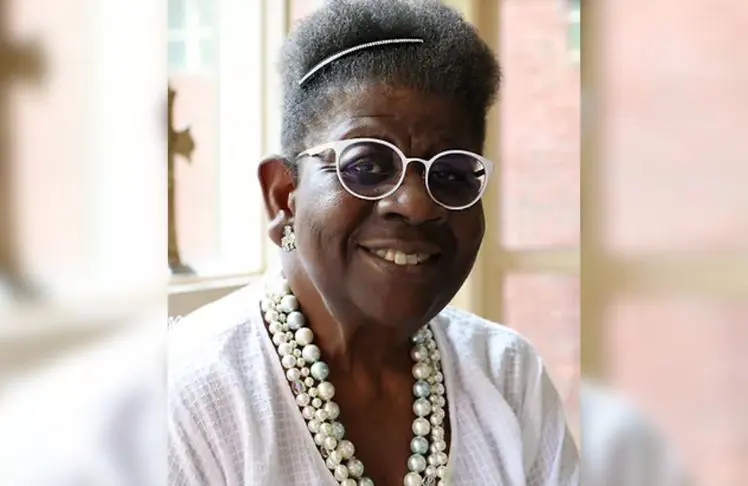
Catherine Meeks, an Atlanta-based racial justice leader, author and educator, has spent the past 50 years working in the field of racial healing. Throughout that time, she has closely examined the ways racism continues to shape American society and affect the lives of marginalized communities.
That work has led Meeks to a troubling realization: many of the nation’s major marginalized communities remain disconnected from one another and often struggle to work collectively toward racial healing and justice.
With Juneteenth approaching, Meeks believes that reality underscores why the holiday remains so important.
More than 160 years after enslaved African Americans in Galveston, Texas, learned they were free, Meeks believes Americans are still grappling with many of the same questions about power, equality and belonging that have shaped the nation’s history. For her, Juneteenth is not simply a celebration of freedom achieved. It is a reminder of the work that remains.
“You don’t have to look very hard to see that the fight is unfinished. I think that it is really important for us to remember that freedom did come, even in the midst of that kind of environment [slavery], and we need to be encouraged,” said Meeks. “I think we get a little too weary too quickly, because we have so many resources that they didn’t have. I think when we celebrate Juneteenth, we remind ourselves of the history and the capacity for resilience, and that freedom and change are possible.”
For Meeks, one of the greatest barriers to progress is the tendency of marginalized communities to focus on their differences rather than their shared interests.
She traces many of today’s divisions among Black, Latino, Native American and Asian communities to narratives rooted in slavery and white supremacist ideologies. Over time, she believes those narratives have encouraged competition rather than collaboration.
“I think that the people of color groups have sort of internalized that narrative, and we started being suspicious of each other rather than looking at how we are all in the same boat. I talk about something called oppression Olympics, and it is like we try to see who is the most oppressed,” Meeks said. “You think about how much power could exist if these four groups [Black, Latin, Native, Asian] were really united. The power structure is not interested in that kind of empowerment among the people, and we bought it without probably too much thought.”
According to Meeks, meaningful change becomes difficult when people focus on ranking oppression instead of building community.
“We are so quick to come up with a hierarchy of human value, and when we do that, that doesn’t lead to community; it leads to division,” Meeks added. “It hasn’t helped that we have had these last few years of a public display of viciousness, and I think we have gone down a really bad trail here, and we really got to get ourselves off of it.”
Meeks also sees connections between those divisions and the ongoing debates surrounding diversity, equity and inclusion initiatives.
While many organizations embraced DEI programs in recent years, she believes some institutions viewed them more as symbolic gestures than genuine opportunities to create lasting change.
“You’ve got a fancy office, and put somebody in it and call them a vice president, give them a big salary, but nothing changes in the institution. Their work is hamstrung by the fact that there was never any intention to actually change the structure,” said Meeks. “The board stays the same in corporations, faculty stays the same in schools, and then soon as Trump came in, he wanted to punish people, and you see how quickly they got disbanded. If there had been a real commitment to it, that would not have happened.”
For Meeks, the rollback of many DEI initiatives reveals how fragile progress can be when institutions fail to commit to meaningful transformation.
She sees similar challenges in ongoing debates over voting rights and civic participation.
“Oftentimes, I truly have to sit down and think about how it is 2026, and we are still talking about voting,” she said.
“What is the matter with us? I thought we settled that in the 60s, but obviously we didn’t. Because, anybody who wants to have all of the power, doesn’t want to have any pathway for other people to get power,” said Meeks. “Throughout the whole history of our country that has been a problem, that power holders, the major power holders, which has always, unfortunately, been mostly white men with money. But, it boils down to power and wanting to hold on to it, and assuming that you have the right to that, because your skin is white.”
As a person of faith, Meeks is also troubled by the role religion has sometimes played in reinforcing division rather than fostering healing.
“Back in the day people would go to church and then leave early to go watch the lynching, so that is a pretty strange combination. We are not that bad anymore, but there are so many ways in which religion helps to foster the separation, and some brands of religion actually contribute to making things worse,” said Meeks.
At the same time, she believes faith can be a powerful force for unity when grounded in a belief in the equal worth of all people.
“I do believe that if people have faith and people really begin to understand that God doesn’t have one group of people that are better than another group, then that’s really helpful. Many think they are the only one God is interested in, and I think that has been going on a lot in the religious world, and I don’t like it.”
Despite the challenges she sees, Meeks remains hopeful that healing is possible. She believes change begins when individuals make a conscious decision to connect with people outside their own communities and reject the divisions that too often define public life.
“I think we as marginalized people have to do that for ourselves, because if we don’t, we are just going to keep them in this horrible circle of death, destruction, marginalization, and separation that makes no sense,” said Meeks. “There’s so much negativity at the present moment, and so much not telling the truth. I think it’s so urgent for us to start tearing down some of these walls that exist between us and start seeing each other as equal human beings.”
As communities gather to commemorate Juneteenth, Meeks hopes the holiday serves as more than a symbolic observance.
For her, Juneteenth is both a celebration of freedom won and a reminder of the responsibility that freedom demands. It is an opportunity to reflect on the sacrifices of previous generations, examine the challenges that remain and recommit to building a more just and inclusive society.
“I hope people will try to think about what the holiday is really about and what does it have to do with me. I know that is a big hope to have, because we are so good at performing, because that is just how our culture has socialized us,” said Meeks. “But, I wouldn’t want to see us go through this season of celebrating freedom without reflecting about what I am being called to do in this present moment.”